7 BEST Places to Visit in USA in 2026
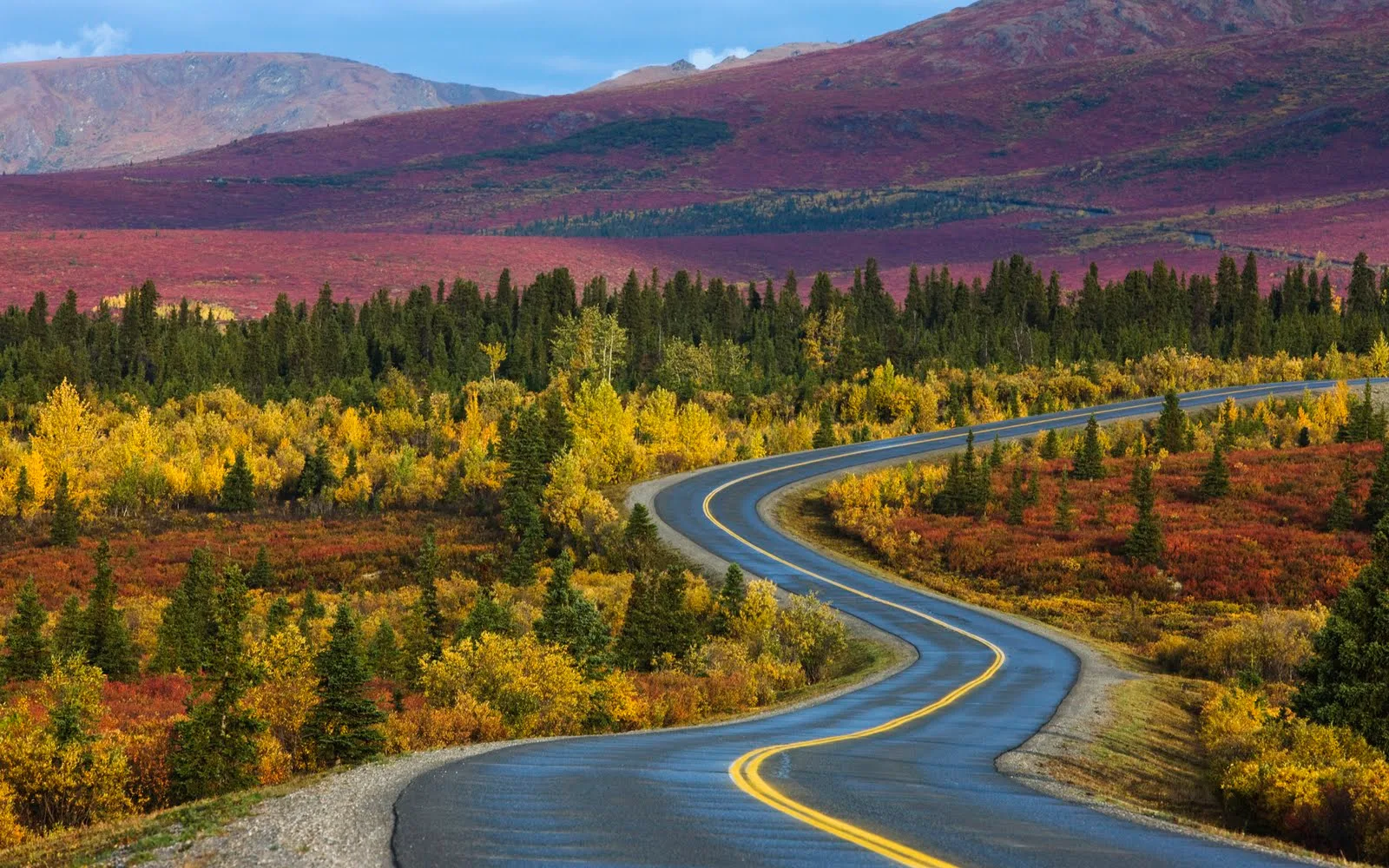
Seven American states, dozens of places most listicles skip entirely, and a honest reckoning with what makes the United States one of the most endlessly surprising countries on the planet to travel in.
America is so vast that generations of travelers have grown old visiting the same ten cities. Las Vegas. New York. Miami. The Grand Canyon at sunrise seen from the South Rim, shoulder to shoulder with a thousand other people doing the same thing with their phones out. There is nothing wrong with any of that. But there is so much more, and that is precisely the problem: the travel infrastructure of the internet has trained itself on clicks, and clicks love what is already famous.
This guide does something different. It draws on two decades of personal travel writing across the United States to point toward the places where something genuinely surprising happens, where the landscape or the culture or the sheer weirdness of American life produces a moment that you will not find in a video you have already watched. These seven states carry enough within their borders to fill a lifetime of exploring. The notes below are a starting point, not a finish line.
One practical reality worth naming: unlike most of Europe or large parts of Asia, public transit in the United States outside of its biggest coastal cities is functionally non-existent. A car is not optional in Wyoming, Montana, Alabama, or Nebraska. It is the trip. That is not a bug. Driving these states is the experience, and the freedom that comes with it rewards those willing to leave the itinerary open at the edges.
Wyoming
The Forever West Most Visitors Never See
People come to Wyoming for Yellowstone. They often leave without understanding that Yellowstone is simply the most famous room in a house with hundreds of remarkable ones. Wyoming is the tenth largest state in the country. It has the lowest permanent population of any US state, which means that outside the national park gates you can drive for an hour and not pass another vehicle. That is either terrifying or exactly what you have been looking for.
The Great Divide Basin is a landscape so alien that it genuinely stops the mind. This depression in the Rocky Mountains is one of the few places on earth where precipitation never reaches either ocean. Water that falls here simply evaporates or soaks into the earth. The basin looks like the surface of another planet and very few people know it exists. South Pass City, a crumbling gold-rush settlement on the southern edge of the Wind River Range, has been partially restored and on a weekday in October you can walk its single street alone with only the wind for company.
Devils Tower in the northeastern corner of the state is known to most people as the alien landing zone from a 1977 film. In reality it is a sacred site for over twenty Native American tribes, and the morning light on its columnar basalt face is one of the most astonishing things you can witness from a car window anywhere in the country. The climbing routes up its 865-foot vertical face draw serious alpinists from across the world. A walking trail circles its base in about ninety minutes.
Wyoming has the lowest population density of any US state. Outside Yellowstone, the roads belong to you. That is the whole point.
The Chinese Joss House in South Pass City is one of Wyoming's least-visited surprises: a tiny reconstructed temple serving the Chinese miners who made up a significant portion of the gold-rush labor force. The medicine wheels of the Bighorn Mountains are ancient stone structures of unknown age, still used in ceremony by Indigenous peoples, sitting at 9,642 feet elevation with views across four states on clear days. These are not tourist attractions in any commercial sense. They are places that require you to bring your own silence.
Cheyenne, Wyoming's largest city, drops below freezing for roughly six months of the year. In summer the Frontier Days rodeo is one of the largest in the world. Outside of peak summer season the whole state empties out in a way that feels like a gift to anyone who has ever felt that travel had become too crowded to be travel at all.
Local Knowledge
Avoid the road between Rawlins and Rock Springs in winter. Wyoming's Interstate 80 closes more often than any other stretch of US highway during blizzards. Check the Wyoming DOT road condition map at 511.wyo.gov before any winter drive. The Beartooth Highway connecting Wyoming to Montana via Red Lodge is open only from late May through mid-October and is widely considered the most spectacular paved road in the United States.
Montana
Big Sky, Bigger SecretsMost Montana first-timers head straight to Glacier National Park and discover, correctly, that it is among the most beautiful places in North America. The question is what happens after Going-to-the-Sun Road. The answer: a great deal, spread across a state so large that the entire country of Japan could fit inside it with room to spare.
Missoula sits in a valley surrounded by five river valleys and five mountain ranges, which creates a microclimate that is milder than most of Montana and a cultural scene that punches far above the city's 75,000-person population. The independent bookstore culture here is remarkable, the fly-fishing on the Clark Fork River runs directly through downtown, and the University of Montana gives the city a restless intellectual energy that surprises people expecting a purely rural mountain town.
Whitefish is a different proposition entirely: a mountain town with a western-artsy sensibility, lined with independent restaurants and galleries, and anchored by the Big Mountain ski resort at Whitefish Mountain. The Nordic ski trails at Glacier Nordic Center, just below the alpine ski runs, are among the most enjoyable cross-country skiing accessible from any town in the country. In summer the same terrain transforms into exceptional mountain biking.
The stretch of Montana beyond the Hi-Line, the eastern plains that run along the Canadian border, is almost entirely overlooked by travelers who do not know what to look for. The Charles M. Russell National Wildlife Refuge is the second-largest wildlife refuge in the contiguous United States and sees a fraction of Glacier's visitor numbers. Elk, pronghorn, and bighorn sheep share the landscape with the remains of homesteaders who arrived during the brief wet years of the 1910s and were driven back out by drought within a decade. Their abandoned homestead shacks still dot the grassland like punctuation marks in an old letter.
The Deer Situation
Montana has a deer population that regularly wanders into towns. In Missoula, deer graze in front yards with complete indifference to human presence. This is charming until after dark on a rural road. Drive cautiously after sunset: Montana has one of the highest rates of vehicle-deer collision of any US state. Dawn and dusk are peak movement times.
The going-to-the-sun road is only open between mid-June and mid-October. If you visit outside those dates, Logan Pass (the road's highest point) is not accessible by vehicle. This is not widely understood by first-time visitors and is a source of genuine disappointment. Plan accordingly, or embrace the alternative: snowshoeing into the closed road on a winter morning when the park holds roughly 1% of its summer crowd is one of the most extraordinary quiet experiences available anywhere in American travel.
Alabama
Space, History and the Deep South at Its Most Genuine
Alabama gets overlooked by travelers who mistake it for a state with nothing to offer outside of football. The reality is one of the most genuinely surprising travel destinations in the eastern United States, carrying within its borders a world-class space museum, the oldest Mardi Gras celebration in North America, some of the most pristine Gulf Coast beaches on the continent, and ten thousand years of documented human history in a single cave.
Russell Cave National Monument in the northeastern corner of the state near Bridgeport contains evidence of continuous human habitation stretching back approximately 10,000 years. Artifacts recovered from the cave document the full arc of Native American cultures in the Southeast. The monument covers 310 acres and on most weekdays sees fewer than fifty visitors. A walking trail leads directly to the cave mouth where you can stand at the entrance to one of the longest records of human occupation in the eastern hemisphere with almost no one else around you.
Huntsville has reinvented itself into one of the most interesting mid-sized American cities. The US Space and Rocket Center there holds the world's largest collection of space memorabilia, including Saturn V rockets, Mercury capsules, and Apollo mission hardware. The scale of the Saturn V alone, displayed horizontal in its own dedicated building, defies comprehension at first sight. The adjacent Space Camp program, which you can visit even as an adult without enrolling, has sent over a million young people through hands-on aerospace training since 1982. Huntsville's Cummings Research Park, the second-largest research park in the United States, makes the city feel nothing like the Alabama that exists in the national imagination.
Mobile held its first Mardi Gras in 1703. New Orleans did not hold its first until 1718. Mobile is where Mardi Gras in America began, and it is infinitely less crowded.
The Gulf Shores and Orange Beach stretch of Alabama coastline runs for 32 miles along the Gulf of Mexico and contains some of the finest white-quartz sand beaches in North America. The sand here is so fine and white because it originated from the Appalachian Mountains and was carried south by rivers over millions of years, eventually deposited and bleached by the Gulf sun. The water temperature stays comfortable for swimming from May through October. Unlike the Florida Panhandle beaches directly to the east, Gulf Shores remains significantly less developed and significantly less crowded.
Eufaula National Wildlife Refuge on the Alabama-Georgia border covers 11,000 acres of wetlands and hosts over 300 bird species throughout the year. During winter migration the number of waterfowl present is staggering. The lake that forms the refuge's core, Lake Eufaula, is one of the best largemouth bass fisheries in the southeastern United States. The town of Eufaula itself has a remarkably intact antebellum historic district that has been filmed as a location stand-in for 19th-century settings dozens of times by television and film productions.
Birmingham's Vulcan Park sits atop Red Mountain and contains the world's largest cast-iron statue, a Roman god of the forge standing 56 feet tall. The observation deck directly beneath the statue offers the best panoramic view of a city that has been genuinely transforming itself since the 1990s. The Pepper Place Saturday Market is one of the finest farmers markets in the Southeast. The food culture around Five Points South has developed into something worth a dedicated trip on its own.
Hawaii
Beyond Waikiki's Shadow
The common Hawaii itinerary lands in Honolulu, spends four days in Waikiki, and flies home. It is a perfectly good trip. It is also roughly equivalent to visiting France and spending four days at the Eiffel Tower gift shops. The island of Oahu alone contains landscapes so different from Waikiki's hotel corridor that first-time visitors often cannot believe they are on the same island.
Ko Olina on the southwestern corner of Oahu was engineered from what was originally an industrial coastline into one of the most thoughtfully designed resort areas in the Pacific. Four circular lagoons were created by removing lava rock and allowing the ocean to fill the resulting basins. The lagoons are calm even when the open ocean is rough, making them genuinely ideal for families with young children. Unlike Waikiki, the shoreline is not lined with competing high-rise buildings and the sunsets, facing west across open Pacific, are extraordinary. The Disney Aulani resort anchors the southern end of the Ko Olina strip and even if you are not a Disney guest the public beach access path along the lagoon front is open to all.
The North Shore of Oahu operates on a completely different frequency. The summer months bring calm, flat water ideal for snorkeling and kayaking. Between November and February, the same beaches transform as the Banzai Pipeline and Sunset Beach deliver waves that can reach 30 feet or more, drawing the world's best big-wave surfers. Attending a surf competition here as a spectator, standing on the beach watching human beings ride mountains of ocean, is one of the few genuinely humbling experiences still available to a tourist in America without a permit or an entrance fee.
Overtourism is Real in Hawaii
Hawaii has been actively asking visitors to reconsider their behavior since 2021. The phrase the tourism board uses is malama Hawaii, care for Hawaii. Specific beaches have been closed due to overcrowding and environmental damage. Haena State Park on Kauai now requires reservations for the Kalalau Trail, and they run out months in advance. If you are booking a Hawaii trip in 2026, look at the state's Responsible Tourism page before you finalize your itinerary. The best Hawaii experiences increasingly require planning, not spontaneity.
Lanai, the smallest publicly accessible island in Hawaii, receives perhaps 5% of the visitors that Maui does. There are two luxury lodges, roughly 3,000 permanent residents, and 141 miles of unpaved roads. A four-wheel drive vehicle and a willingness to get lost are the primary requirements for exploring it properly. The Garden of the Gods, a surreal landscape of eroded lava rocks in reds and oranges, sits about 7 miles from Lanai City and looks like nothing else in the Hawaiian Islands. The only restaurant in town that serves the kind of food Lanai residents actually eat is a small plate lunch shop that has no visible signage and no online presence worth speaking of.
Delaware
The Coast the Crowds ForgotDelaware is the second smallest state in the Union and the one most people can name without being able to locate on a map. It sits on the Delmarva Peninsula between the Chesapeake Bay and the Atlantic Ocean, flanked by Maryland and New Jersey, and is traversed by most East Coast travelers at 70 miles per hour on the way to somewhere else. This is a significant navigational error.
The coastal towns of Lewes, Rehoboth Beach, and Bethany Beach form a 20-mile stretch of the Atlantic shore that the residents of Washington DC, Baltimore, and Philadelphia have quietly treasured for generations without feeling the need to broadcast it. Rehoboth has a main boardwalk, a relaxed gay-friendly culture, and excellent seafood restaurants that stay open year-round. Bethany Beach is calmer and more family-oriented, with a strongly enforced no-high-rise-hotel policy that has kept the character of the shoreline intact for decades.
Cape Henlopen State Park at the northern edge of the beach corridor contains 5,000 acres of maritime forest, dunes, and shoreline including the site of Fort Miles, a World War II coastal defense installation. The concrete gun battery bunkers still stand on the dunes and you can walk through them. The park's multi-use trail system, which connects across the entire coastal headland, is one of the genuinely underappreciated cycling routes on the entire East Coast. The state of Delaware maintains it free for all visitors.
The Lewes-Cape May ferry, running across the mouth of the Delaware Bay, offers a 70-minute crossing that is one of the best deals in East Coast maritime travel. You can bring your car. The combination of the ferry crossing and a drive up the Cape May peninsula on the New Jersey side makes for a road trip loop that feels like a completely different era of American coastal travel.
Delaware's Tax Situation
Delaware has no state sales tax. This makes it, alongside a handful of other states, effectively cheaper for shopping than almost anywhere on the East Coast. The outlets at Rehoboth Beach draw day-trippers from the entire mid-Atlantic region specifically for this reason. If you are traveling with a tight budget and need to make any significant purchases during your trip, doing so in Delaware rather than in neighboring Maryland or New Jersey saves a meaningful amount on anything over a few hundred dollars.
Nebraska
One Million Cranes and Zero HypeIf you suggest Nebraska as a travel destination to most Americans, you will be looked at with a combination of pity and confusion. This is precisely why it is one of the most underrated states in the country for a particular kind of traveler: the one who values the genuinely rare over the merely famous.
Every March and April, the central Platte River valley near the town of Kearney hosts one of the most astonishing wildlife events on earth. More than one million sandhill cranes, roughly 80 percent of the entire global population of the species, descend on a 75-mile stretch of river to rest and feed before completing their migration north to Arctic breeding grounds. They arrive in waves throughout March, roosting on the river's broad, shallow sandbars at night and fanning out across the surrounding cornfields during the day. At dusk, the sound of a million birds settling onto the river is something that does not translate into language particularly well. You need to be there.
Eighty percent of all sandhill cranes on earth gather in a 75-mile stretch of Nebraska river every spring. This is one of the largest wildlife migrations anywhere on the planet and most people have never heard of it.
The Audubon Society and several private ranches operate viewing blinds along the river where small groups can watch the evening roost from ten feet away in complete silence. The blinds require advance booking and fill up weeks ahead of the peak period, which typically runs from mid-March to mid-April. This is not a tourist infrastructure that announces itself. You have to seek it out. That is, again, precisely the point.
Chimney Rock, a 325-foot volcanic formation rising from the North Platte River valley in the western panhandle, was the most written-about landmark in all of 19th-century American travel writing. Every wagon train on the Oregon Trail used it as a reference point. The National Historic Site beside it has been recently renovated and contains genuinely compelling exhibits on westward migration. The formation itself, visible from 30 miles away on a clear day, looks like something out of a landscape painting that was slightly exaggerated for dramatic effect. It was not.
Carhenge, near Alliance in the western panhandle, is a precise recreation of Stonehenge built from 38 vintage American automobiles painted grey, arranged in the exact configuration and proportions of the English original. It was built in 1987 by Jim Reinders as a memorial to his father and has no practical function whatsoever. It is completely free to visit, sits in the middle of a field about a mile from town, and is one of the purest expressions of American eccentricity in existence. The surrounding Car Art Reserve, a collection of car-based sculptures installed around Carhenge over the years, adds to the effect.
Omaha, Nebraska's largest city, has one of the finest zoo facilities in the United States. The Henry Doorly Zoo consistently ranks in the top three US zoos by visitor experience and is one of the few in the country to house a functional desert dome, indoor rainforest, and submarine voyage all within walking distance of each other. The aquarium section contains species that most coastal aquariums cannot house due to tank size. For a landlocked city in the middle of the Great Plains, it is an improbable wonder.
New York State
Past the Five Boroughs and Into the WildNew York State is not New York City. This distinction matters enormously and is missed by the majority of international visitors who land at JFK, spend five days in Manhattan, and leave with the impression that they have seen New York. Manhattan is extraordinary. It is also the most covered square mile of American geography in existence. The state that surrounds it is a different proposition entirely.
City Island, tucked into the western edge of Long Island Sound within the Bronx borough itself, is one mile long and half a mile wide and occupies a universe entirely separate from the New York City of movies and television. The island's permanent character was set by the fishing and boat-building industries of the 19th century, and it has retained that character in ways that are increasingly rare in the outer boroughs. Fishing boats still leave the docks before dawn. The seafood restaurants that line the main street serve oysters, clams, and lobster at prices that would seem impossible if you were eating the same quality in lower Manhattan. The Pelham Bay Park that separates City Island from the mainland is the largest park in New York City, more than three times the size of Central Park, and contains wetland trails that see essentially no visitors from the tourist economy.
Lake Placid in the Adirondacks hosted the Winter Olympics in 1932 and again in 1980 and still maintains Olympic-grade winter sports infrastructure. The bobsled run, the ski jumps, and the speed skating oval are accessible to visitors at various price points. In summer the same region offers what many serious hikers consider the finest trail system in the northeastern United States, the Adirondack High Peaks, with 46 summits exceeding 4,000 feet. The Great Range traverse, a multi-day route through the heart of the High Peaks, is the kind of hike that people plan for years and remember for the rest of their lives.
Ausable Chasm: America's Oldest Tourist Attraction
Ausable Chasm near Keeseville, a gorge cut through Potsdam sandstone by the Ausable River, has been receiving paying visitors since 1870, making it arguably the oldest continuously operating tourist attraction in the United States. The inner gorge, accessible by guided boat during summer, is a narrow passage of cathedral-scale rock walls that forms one of the most dramatic short walks available anywhere in the Northeast. It sits ten minutes off Interstate 87 on the way to Montreal and is almost never crowded.
Saratoga Springs operates on a calendar that most people outside the Northeast do not know exists. The racing season at Saratoga Race Course, which runs from late July through Labor Day, draws serious thoroughbred racing from across the country, including the Travers Stakes, which has been run continuously since 1864 and represents the oldest major race in North American thoroughbred history. Outside of racing season, Saratoga is a quietly beautiful spa town with Victorian architecture, natural carbonated mineral springs, and the Saratoga Performing Arts Center, the summer home of both the Philadelphia Orchestra and the New York City Ballet.
The North Fork of Long Island, stretching east from the New York metro area along the Long Island Sound shore, is a completely different wine and food landscape from the Hamptons that sit on the South Fork. The North Fork's maritime climate produces Chardonnay, Merlot, and Cabernet Franc of genuine quality from vineyards established since the 1970s. The road that connects the wineries along Route 25 passes through farmland that still produces most of the East Coast's cauliflower and Brussels sprouts, and the farm stands that line it in autumn operate on a honor-system pricing model that feels like a different century.
Frequently Asked Questions
What are the best lesser-known places to visit in the USA?
The Great Divide Basin in Wyoming, Russell Cave National Monument in Alabama, Cape Henlopen State Park in Delaware, City Island in New York's Bronx borough, and the Platte River crane migration corridor in Nebraska all belong on any serious list. These are places with extraordinary natural or historical significance that simply do not have the marketing budgets of Yellowstone or the Grand Canyon.
Which US state is best for a road trip?
Wyoming and Montana consistently reward road travelers more than any other states. Wyoming has the lowest population density in the country, which means open roads and landscapes that appear unchanged for hours. Montana's Beartooth Highway, Going-to-the-Sun Road in Glacier, and the Hi-Line across the northern plains are among the most spectacular driving routes in North America.
What is the best time of year to visit Wyoming?
Late June through September offers the most accessible conditions. Yellowstone and Grand Teton are fully open, temperatures are manageable in the valleys, and the wildflower bloom in the Wind River Range and Bighorn Mountains peaks in late July. Winter brings extreme cold and road closures but also world-class cross-country skiing near Jackson Hole.
Is Alabama worth visiting as a US travel destination?
Genuinely and emphatically yes. The US Space and Rocket Center in Huntsville holds the world's largest collection of space artifacts. Gulf Shores has white-quartz beaches rivaling anything in Florida at lower prices. Mobile's Mardi Gras is older than New Orleans. Russell Cave documents 10,000 years of human habitation in a single accessible site. Alabama consistently outperforms expectations for visitors who arrive without assumptions.
What is the sandhill crane migration in Nebraska and when does it happen?
Every March and April, more than one million sandhill cranes gather in a 75-mile stretch of the Platte River near Kearney, Nebraska. This represents approximately 80% of the entire global crane population and constitutes one of the largest wildlife migrations on earth. The peak viewing window runs from mid-March through the first week of April. Audubon Society viewing blinds require advance booking.
What hidden gems exist in New York State beyond New York City?
City Island in the Bronx offers an authentic fishing-village atmosphere with exceptional seafood. Lake Placid still maintains Olympic sports infrastructure open to visitors. Ausable Chasm has been operating as a tourist attraction since 1870 and remains one of the most dramatic gorge walks in the Northeast. The North Fork of Long Island has thirty-plus working wineries along a scenic agricultural route that sees a fraction of Hamptons traffic.
Do I need a car to travel in the USA?
For all seven states covered in this guide, a car is effectively mandatory. Wyoming, Montana, Alabama, Delaware, and Nebraska have minimal to nonexistent public transit outside their largest cities. New York City is the one exception: Manhattan and the outer boroughs are entirely navigable without a car. But New York State outside the city requires one. Hawaii is technically manageable on Oahu with some effort, but a car unlocks the island dramatically. Plan to rent if you are visiting any of these destinations.