15 Best Things to Do in Kuala Lumpur in 2026
Kuala Lumpur earns its space in every Southeast Asia itinerary, yet most visitors spend all their time within a two-kilometre radius of the Petronas Twin Towers. This guide pushes well beyond that orbit. You will find the usual icons covered honestly, but equal weight goes to the genuinely underplayed corners of the city that make return visitors shake their heads and ask why nobody told them sooner.
Kuala Lumpur did not grow up slowly. It was hacked out of a river confluence by tin miners in the 1850s and has been reinventing itself at speed ever since. Today, colonial-era Moorish government buildings cast shadows over gleaming supertall towers. Tamil temples operate next to mosques that face Buddhist halls. The result is a city with no single dominant aesthetic, which is precisely what makes exploring it absorbing. The food alone justifies the flight.
A word before you go: the city runs hot and humid year-round. Plan outdoor attractions for the first hours after sunrise. Buy a Touch 'n Go card at the airport, covering all rail, LRT, MRT and monorail lines and eliminates the frustration of ticketing queues. Download Grab for taxis. These small moves change the quality of the whole trip.
Skyline Icons: Petronas Towers, Merdeka 118 and KL Tower
The KL skyline is one of the most photographed in Asia, and 2026 adds a chapter that no previous visitor could have read. Three structures define the view, and each offers a meaningfully different experience.
Between 1998 and 2004, the Petronas Twin Towers were the tallest buildings on earth at 451.9 metres. That record is long gone, but no other building in Malaysia holds quite the same emotional weight for Malaysians. The towers were designed by Argentine-American architect César Pelli and take their geometric motifs from Islamic art, with each floor plan based on an eight-pointed star.
The Skybridge connecting the towers at floors 41 and 42 is the observation stop most visitors choose. Tickets are limited and go fast, particularly on weekends and during school holidays. Book online at least two days ahead. The more generous views come from the observation deck on the 86th floor of Tower 2, which opened in 2020 and gives a proper 360-degree perspective across central KL. From up there, the scale of the city's forest cover surprises most first-time visitors. Green fills more of the frame than concrete at this altitude.
One thing tour guides rarely mention: the KLCC Park immediately below the towers was landscaped by Roberto Burle Marx, the Brazilian landscape architect responsible for Rio de Janeiro's Copacabana promenade. The fountains in the park run a synchronised light-and-water show every evening from 8 PM and again at 9 PM, and it costs nothing to watch from the grass. This is genuinely one of the best free things to do in KL at night.
At 678.9 metres, Merdeka 118 is the second-tallest building in the world and the tallest in Southeast Asia. The name ties directly to Malaysian history: the word "Merdeka" means independence in Malay, and the tower stands near the Merdeka Stadium where Prime Minister Tunku Abdul Rahman declared independence from Britain in 1957. The building was officially opened by the King of Malaysia on 10 January 2024, though internal fit-out continued well into 2025.
The View at 118 observation deck, positioned at 500 metres above street level on levels 116 and its mezzanine, is the highest observation deck in all of Southeast Asia. What makes it genuinely different from other observation decks in the region is the Edge Walk on level 116X, an outdoor walkway where visitors can walk on a glass floor outside the building while attached to a safety harness. The high-speed lift rises at 8 metres per second and reaches the top in 65 seconds, with glass panels along the way offering a vertigo-inducing preview of the city below.
The 118 Mall at the building's base opened in late August 2026, adding 328 stores and 12 cinema halls to what is already one of KL's most significant architectural addresses. The Park Hyatt hotel, occupying floors 97 to 112, opened in August 2025 and is now one of the highest hotels in Southeast Asia. A stay there puts you above the cloud line on misty mornings.
At 421 metres, KL Tower is not the tallest structure in the city, but it sits on top of Bukit Nanas hill, which pushes its observation deck 94 metres higher than the Petronas Towers' Skybridge. The 360-degree observation deck at level 26 (276 metres above sea level) gives the clearest unobstructed view of the Twin Towers from any publicly accessible point in the city, which is why photographers consistently prefer it for the classic KL skyline shot.
The 2025 refresh added the Sky Box, a glass-floored protruding platform off the main observation deck, and the Orbit revolving restaurant one level below offers a full panorama meal that completes roughly one rotation per 90-minute sitting. Visitors can also combine the tower visit with entry to KL Forest Eco Park, which begins at the base of the hill and can be walked up through the trees, an experience described in detail further below.
Heritage Lanes and Colonial Squares
Kuala Lumpur's relationship with its own past is unsentimental and layered. The city has demolished more than it has kept, which makes the surviving pockets of heritage architecture all the more worth seeking out.
The padang (open field) in front of the Sultan Abdul Samad Building is where the Union Jack was lowered at midnight on 31 August 1957 and replaced by the new Malaysian flag. The flagpole standing at the far end of the square, standing 100 metres tall and one of the world's highest free-standing flagpoles. It was erected later, but the emotional weight of the site remains enormous for Malaysians.
The Sultan Abdul Samad Building itself, completed in 1897, is the one colonial structure in KL that photographers return to repeatedly. Its copper domes, Moorish arches and 40-metre clock tower were designed by A.C. Norman in a hybrid Mughal-Venetian style that the British architects working in Malaya called "Saracenic." The building currently houses the Ministry of Information. Photography is straightforward from the square, and the evening light after 5 PM turns the domes a warm copper that digital cameras struggle to do full justice to.
Across the road stands the Royal Selangor Club, the old colonial social hub where British administrators once drank gin and played cricket. The pitch in front, the padang, is still used for rugby and cricket matches on weekends. Few visitors register this is a functioning sports ground rather than a decorative lawn.
Most people walking down Petaling Street in KL's Chinatown never notice the narrow passage branching off Lorong Panggung. Kwai Chai Hong, whose name translates loosely as Ghost Boy Lane, was a back alley of pre-war shophouses that stood quietly derelict for decades before a 2019 restoration project transformed it into one of the most honest pieces of urban heritage anywhere in the city.
The walls carry large-format murals depicting the actual daily lives of early Chinese settlers in this part of KL: hawkers, craftsmen, children playing by well water, old men reading newspapers in doorways. Unlike purely decorative street art, these murals were created from historical photographs and oral history interviews with elderly residents of the neighbourhood. The result feels like a visual archive rather than a tourism installation.
At the end of the alley sits Fung Wong, a fourth-generation confectionery that moved from its original site a few streets away. The bakery has been making traditional Cantonese pastries, including red bean paste cakes, wife biscuits and egg tarts, for over 80 years. The current owners transformed the space into a cafe that keeps the original recipes and display cases while adding proper seating. The pineapple tarts and cocktail buns are worth pausing for regardless of hunger levels.
The Art Deco building on Jalan Hang Kasturi was built as a wet market in 1888 and refurbished in 1986 into a cultural and craft marketplace. The ground floor vendors selling batik, pewter, keychains and mass-produced souvenirs are easy to skim past. What most visitors miss is the upper floor, where independently run galleries exhibit rotating work from Malaysian painters, illustrators and photographers, and where live cultural performances such as traditional dance, dikir barat and wayang kulit shadow puppetry take place on weekend afternoons.
The Central Market also connects via an overhead walkway to Kasturi Walk, a shaded pedestrian street with street food stalls and craft sellers that is significantly quieter and more atmospheric than Petaling Street. The whole complex is fully air-conditioned, which on a KL afternoon is not a trivial consideration.
Temples, Caves and Sacred Spaces
The limestone outcrop at Batu Caves is roughly 400 million years old. The caves inside it have been used as Hindu shrines since 1891, when the first altar to Lord Murugan was installed by K. Thamboosamy Pillai. The 42.7-metre gilded statue of Lord Murugan at the entrance, the tallest statue of the deity in the world, was added in 2006 and is now the landmark most people associate with the site before they even know the cave's name.
The 272 steps leading to the Cathedral Cave are painted in a rainbow gradient and form one of the most photographed staircases in all of Southeast Asia. At the top, the Cathedral Cave is a vast cavern, roughly 100 metres high at its peak, housing three Hindu temples inside its limestone chambers. Wild macaques patrol the staircase and the cave entrance, so keep food in sealed bags and do not make eye contact if they approach.
What most day-trippers miss entirely is Cave Villa, a separate set of caves and gardens at the base of the hill to the right of the main staircase. Cave Villa charges a small entrance fee and as a result sees a fraction of the Cathedral Cave crowd. Inside, a series of chambers have been turned into tableau displays of Hindu mythology, with statues, painted dioramas and lighting creating something between a museum and a living temple. The complex also contains a small reptile house and a fish cave where carp swim in clear underground pools. It warrants an extra 40 minutes that most visitors never allocate.
Perched on a hill in Seputeh, about three kilometres south of the city centre, the Thean Hou Temple is one of the largest Chinese temples in Southeast Asia and one of the most architecturally layered. The six-tiered structure is dedicated primarily to Mazu, the Taoist sea goddess, but also incorporates shrines to Guanyin (the Buddhist goddess of mercy) and the Goddess of Motherhood from Confucian tradition. This syncretism across three religious traditions within a single building is characteristic of Malaysian Chinese religious practice and is rarely explained in standard tourism coverage.
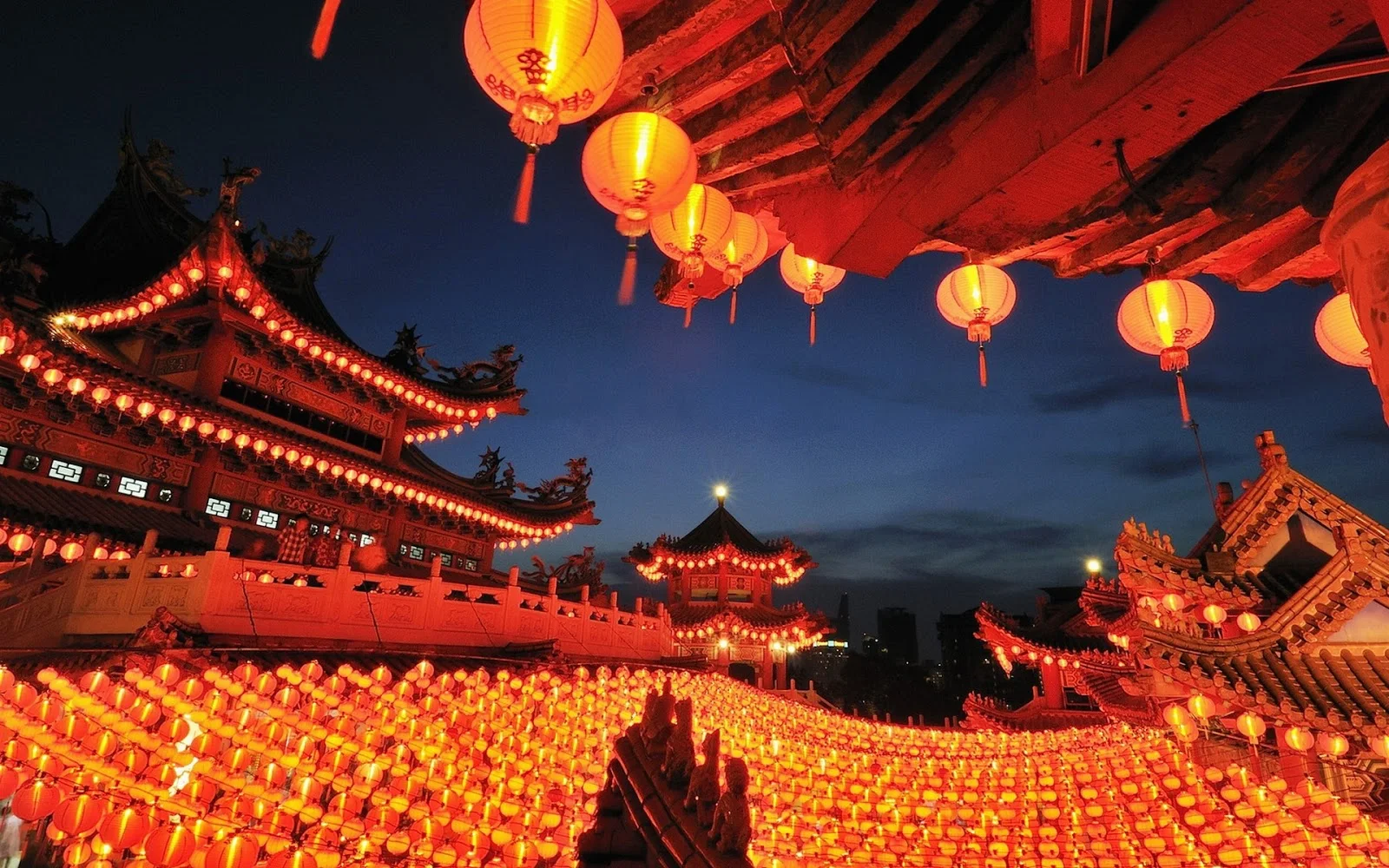
The temple operates daily from 8 AM to 10 PM, and the first important thing to know is that the daytime visit and the night visit are essentially different experiences. By day, the intricate carvings, mosaic columns, painted ceilings and city views from the upper pavilion are the draw. After dark, the entire structure is illuminated in gold and red light, and the temple becomes one of the most photogenic spots in the entire city. The hill location means you get the KL skyline as a backdrop to every frame.
The temple hosts a major festival market during Chinese New Year and the Thaipusam period, when hundreds of paper lanterns are hung throughout the grounds. Even outside festival seasons, the souvenir shops on the lower terrace stock genuine incense, prayer accessories and traditional craft items that are harder to find in more tourist-oriented markets.
Buried between shophouses on Jalan Tun H.S. Lee in Chinatown, Sri Mahamariamman is the oldest Hindu temple in Kuala Lumpur, established in 1873 by Tamil immigrants who came to work in the rubber and tin industries. The gopuram, the elaborate entrance tower, rises five tiers and is encrusted with hundreds of individually fired ceramic figurines representing deities, celestial beings and mythological narratives. The craftsmanship is extraordinary at close range.
Technically free to enter, though a small informal charge is collected at the entrance to store your shoes, a reasonable arrangement given the security involved. Inside, the air is thick with incense smoke and the sound of bell-ringing from devotees making daily prayers. Despite sitting in the middle of one of KL's busiest tourist districts, the temple interior maintains a devotional atmosphere that the crowds outside barely penetrate. Visiting during morning puja (prayer service) between 7 and 8 AM offers a completely different experience from an afternoon visit.
A Jungle in the City: KL Forest Eco Park
A functioning tropical rainforest with a canopy walk sits in the geographical centre of Kuala Lumpur, adjacent to a telecommunications tower, and the majority of visitors to the city never enter it. This is one of the most remarkable urban anomalies in Southeast Asia.
The KL Forest Eco Park, formally known as Taman Eko Rimba KL and earlier as Bukit Nanas Forest Reserve, covers 10.5 hectares and was gazetted as a Wildlife Reserve in 1934 and a Bird Sanctuary in 1950. Kuala Lumpur was literally hacked from jungle to build itself, and this patch survived because the hill was considered too steep for development. The forest is now home to over 200 tree species, 25 bird species and 12 mammal species including the silver leaf monkey and long-tailed macaque.
The main draw for visitors is the canopy walk: a 200-metre aerial bridge of wood and steel suspended 21 metres above the forest floor. The walk passes at eye level with the upper canopy of the tallest trees, some of which are several hundred years old, including Jelutong trees and Merawan Batu that predate the city itself. Looking up from the canopy bridge, the fronds of ancient trees frame the sky. Looking outward, the KL Tower and the glass faces of modern office blocks rise above the treeline. It is one of the most visually striking juxtapositions in the entire city.
The park is closed on Fridays and shuts if lightning is detected in the area, a real possibility given KL's equatorial weather. Three main trails run through the reserve: the Penarahan Trail, the Jelutong Trail and the Arboretum Trail. The most efficient route is to enter from Jalan Raja Chulan, walk uphill through the canopy walk trail, and exit at the KL Tower carpark, combining the forest experience with a tower visit in a single morning.
The GoKL City Bus Purple Line stops nearby and is completely free to ride. This is genuinely one of the best free things to do in Kuala Lumpur for travellers of any type.
- Silver leaf monkeys are most active in the early morning and late afternoon near the upper trails close to KL Tower.
- The long-tailed macaques near the lower entrance are accustomed to humans. Do not feed them and keep food sealed.
- Bird activity peaks between 6 and 9 AM. The Jelutong Trail offers the densest canopy for birdwatching.
- After rain, the forest floor is dramatically alive with small frogs, beetles and the smell of wet loam. Waterproof sandals make post-rain visits considerably more comfortable.
Street Food, Night Markets and Local Flavours
Kuala Lumpur's food culture is the product of three major communities: Malay, Chinese and Indian Tamil, operating in close proximity for 150 years, borrowing ingredients and techniques from each other with little ceremony. The result is a culinary tradition that cannot be found in exactly this form anywhere else on earth.
Jalan Alor in Bukit Bintang is the most visited street food destination in the city and is busiest between 7 PM and midnight. The street is lined with open-air restaurants operating folding tables and plastic chairs under fluorescent lights, serving grilled chicken wings, butter prawns, claypot tofu, char kway teow, satay and half a dozen types of fresh seafood priced by weight. The atmosphere on a full evening is loud, crowded and very good.
The honest assessment: Jalan Alor is excellent but not secret. For the same food quality at a fraction of the tourist premium, the hawker courts along Tengkat Tong Shin (a parallel alley one street away) and the covered food centre at Imbi Market serve identical dishes to a mostly local crowd at noticeably lower prices.
Char kway teow from the stalls run by elderly Chinese hawkers who have operated the same wok for 30 years is worth distinguishing from the tourist-facing versions at the street's more prominent restaurants. Look for the stalls with the longest queues of local families rather than the most visible signage.
Kampung Baru is the anomaly that makes the KL property market experts scratch their heads. A 225-acre Malay reserve gazetted in 1900 sits within one kilometre of the Petronas Twin Towers, surrounded by gleaming condominiums on every side. By law, land in Kampung Baru can only be sold to Malay buyers, and the complex ownership structure of many plots has kept the neighbourhood largely unchanged for decades. Wooden houses with corrugated iron roofs, vegetable gardens and neighbourhood mosques occupy land worth extraordinary sums if it were ever released to the open market.
On Saturday and Sunday mornings, the pasar tani (farmers market) and roadside food stalls along Jalan Raja Muda Musa come alive with vendors selling traditional Malay breakfast food: nasi lemak wrapped in banana leaf, roti canai made on cast-iron griddles, bubur lambuk rice porridge, pulut kuning sticky rice with rendang, and kuih-muih, the collective name for Malaysian traditional cakes made from glutinous rice, coconut milk and palm sugar.
This is the most authentic food experience available in central KL, and the easiest to miss. The morning market begins winding down by 11 AM. Arriving after noon means missing most of it.
Hidden Gems Most Visitors Miss
The Islamic Arts Museum on Jalan Lembah Perdana is routinely described by curators from other institutions as one of the finest museums of Islamic art in Asia, yet it operates in near-invisibility among the tourist crowd that passes a few hundred metres away on its way to the KL Bird Park. The building itself is a work of art: Ottoman-tiled domes top a modern structure built around a central courtyard with hand-painted geometric tile patterns across every surface.
The collection spans 12 galleries and covers Islamic art and architecture from Morocco to Central Asia to the Malay world, with particularly outstanding holdings in Quranic manuscripts, miniature painting, textiles and architectural models. The gallery of mosque models, hand-built scale replicas of significant mosques from across the Islamic world, each constructed using period-accurate materials and techniques, is something that people who visit rarely stop talking about. The variety of architectural responses to the same religious requirements across different climates and cultures becomes immediately, visually legible in a way that no textbook can achieve.
On weekday mornings the museum is genuinely quiet. This is one of those rare instances in a major city where you can stand alone in front of a 16th-century Ottoman manuscript or a complete 19th-century Moroccan courtyard reconstruction and take your time.
The most significant traditional Malay house that most visitors to KL never hear about stands in a garden behind the Badan Warisan Malaysia Heritage Centre on Jalan Stonor, walking distance from KLCC. The Rumah Penghulu Abu Seman was originally the residence of a village headman in Kedah. Built around 1910, it was dismantled, transported to Kuala Lumpur and re-erected on this site in 1996 to save it from demolition.
The house demonstrates traditional Malay construction techniques with no nails. The entire structure is joined by mortise, tenon and wooden pegs. Ventilation is engineered through elevated floor gaps, louvred walls and a steep roof pitch designed to shed rain and encourage airflow. The building is a climatically intelligent response to the equatorial environment that predates modern air conditioning by centuries and outperforms it in some respects during the wet season.
Guided tours are run by Badan Warisan staff on weekday mornings and explain both the construction techniques and the social customs of the household that would have occupied such a home. The fee is minimal and the knowledge density per ringgit is exceptional.
APW stands for A Place Where. It occupies a former industrial printing complex on Jalan Riong in Bangsar, a neighbourhood that has quietly become one of KL's most liveable and food-forward areas over the past decade. The complex was repurposed into a campus of independent cafes, design studios, clothing labels, a bar, a pizza restaurant and a deli, all operating within the original industrial framework of the building.
What makes APW worth the short Grab ride from central KL is the quality of the individual operators: PULP by Papa Palheta runs one of the most technically accomplished coffee programmes in Malaysia; Pestle Mortar Clothing produces genuinely original streetwear rooted in Southeast Asian culture; the weekend markets that rotate through the space bring in local ceramicists, plant sellers, illustrators and food producers. It functions as a reliable antenna for what is happening in independent KL culture at any given moment.
Bangsar itself rewards wandering. The streets behind the commercial area contain some of KL's best-preserved bungalow architecture from the 1950s and 1960s, and the morning food market on Lorong Maarof has operated continuously since independence.
Beyond KL: Best Day Trips
Kuala Lumpur's position in Peninsular Malaysia makes it a genuinely useful base for day trips. Several destinations within a two-hour radius offer experiences that are impossible to replicate within the city.
Malacca (Melaka)
Malacca is the argument for taking a bus. The city 150 kilometres south of KL was the most important port in Southeast Asia in the 15th and 16th centuries, passing through Portuguese, Dutch and British hands before becoming part of independent Malaysia. The result is a UNESCO World Heritage city with a layered built environment found nowhere else in the region: Portuguese churches alongside Dutch administrative buildings alongside Chinese temple compounds alongside Malay kampung houses. The Jonker Walk night market on Friday and Saturday evenings is among the better street food experiences in the country, and the antique shops along the same street operate during the day with genuine colonial-era inventory at prices that remain remarkably reasonable. Buses from KL Sentral run frequently and take around 90 minutes each way.
Batu Caves to Kanching Falls
Kanching Falls, 28 kilometres north of KL in the Templer Park forest reserve, consists of seven tiers of waterfalls reaching up a hillside covered in primary rainforest. The lower tiers are easily accessible and popular with weekend families. The upper tiers, particularly tiers four through seven, require a 40-minute uphill hike and see a fraction of the visitor numbers. The water is cold and the pools at each tier are swimmable. Combined with a morning visit to Batu Caves, this makes for a full-day circuit on public transport using the KTM Komuter line.
Genting Highlands
The casino resort city in the Titiwangsa Mountains is the most visited tourist destination in Malaysia by numbers and one of the most counterintuitive. At 1,800 metres elevation, Genting is significantly cooler than KL, often by 10 degrees in the afternoon, which makes the outdoor theme park areas functional during Malaysian summer. The cable car ride from the base station is the quietest way up and offers genuine views across the highland forest. Genting SkyWorlds Theme Park opened in 2021 and expanded significantly for 2024, covering Fox, DreamWorks and other licensed attractions across a mountain-summit campus.
3-Day Kuala Lumpur Itinerary
Skyline and Heritage Core
- Morning: Merdeka Square and Sultan Abdul Samad Building
- Mid-morning: Central Market upper galleries
- Noon: Lunch in Chinatown (bak kut teh or wonton noodles)
- Afternoon: Kwai Chai Hong, Sri Mahamariamman Temple
- Evening: Petronas Twin Towers and KLCC Park fountain show
Jungle, Temples and Heights
- Early morning: KL Forest Eco Park canopy walk
- Mid-morning: KL Tower observation deck
- Noon: Lunch in Bukit Bintang
- Afternoon: Islamic Arts Museum
- Evening: Thean Hou Temple at night
Caves, Village and Merdeka 118
- Early morning: Batu Caves and Cave Villa
- Midday: Kampung Baru lunch and neighbourhood walk
- Afternoon: Rumah Penghulu Abu Seman tour
- Evening: Merdeka 118 observation deck at dusk
Practical Travel Tips
- The Touch 'n Go card works across all rail lines (LRT, MRT, Monorail, KTM Komuter) and most buses. Collect one from the airport immediately after clearing immigration.
- Grab (the regional Uber equivalent) is reliable, affordable and essential for reaching destinations not on rail lines like Thean Hou Temple and APW Bangsar.
- The free GoKL City Bus covers four colour-coded routes through the city centre and is useful for reaching the KL Forest Eco Park area without paying for a Grab.
- Walking between attractions in central KL is viable before 10 AM and after 5 PM. Between those hours, the heat and humidity make taxi use genuinely advisable for anything more than a block or two.
- The Malaysian ringgit (MYR) is generally favourable for visitors from Europe, North America and Australia. A full day of eating (breakfast, lunch, street food dinner) costs under RM 60 (roughly USD 13) if you eat at local hawker stalls and food courts rather than tourist-facing restaurants.
- ATMs in KLCC mall and KL Sentral are reliable. Airport money changers typically offer slightly worse rates than city changers in Bukit Bintang.
- Tipping is not customary in Malaysia at hawker stalls and local restaurants. Service charges of 10 per cent are automatically added at hotels and upscale restaurants.
- Remove shoes before entering mosques, Hindu temples, and traditional Malay homes. This applies without exception.
- Dress modestly when visiting religious sites, with shoulders and knees covered. Sarongs are usually available for rental at major temples if you arrive unprepared.
- Photography inside prayer halls is typically permitted but flash photography during active worship is not. When in doubt, ask.
- During Ramadan, eating or drinking in public in front of Muslim Malaysians during daylight hours is considered disrespectful, though not illegal. Most restaurants remain open during the day, and many offer special iftar menus after sunset that are worth seeking out.