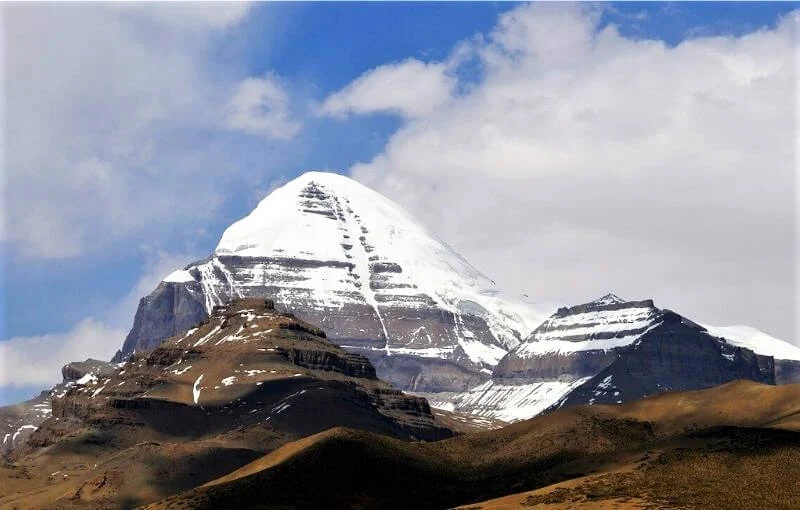
There are pilgrimages, and then there is Kailash. Most sacred journeys give you a destination. This one gives you a reckoning. The 52-kilometre walk around a black pyramid of rock that pierces the sky at 6,638 metres is not technically difficult the way Everest is, but pilgrims who have done it speak of it in ways they cannot quite put into words. Something in the air, they say. Something in the light. Something that was waiting for them long before they arrived.
I have spent years studying and writing about this region. This guide is not a repackaging of brochure language. It is everything that took me years to gather in one place, including the things nobody else writes about, the lesser-known stops, the hidden cosmology, the practical information that actually saves your trip, and the reason 2026 is unlike any year that has come in sixty years.
Why 2026 is the Rarest Window in 60 Years
The Tibetan calendar operates on a 60-year cycle, pairing twelve animals with five elements. Every twelve years brings a Horse Year to Kailash. But 2026 is not simply a Horse Year. It is the Fire Horse Year, the rarest convergence in the entire cycle, returning only once every 60 years. The last Fire Horse Year fell in 1966. The next will not come until 2086.
Tibetan Buddhist tradition holds that completing one circuit of Kailash in any Horse Year earns the same spiritual merit as completing thirteen circuits in an ordinary year. During the Fire Horse variation, certain ancient Tibetan texts put the merit equivalent even higher. This is not a marketing claim by tour operators. It is a centuries-old belief embedded in the Kalachakra Tantra, the foundational astrological and cosmological text of Tibetan Buddhism, which was systematized by Chogyal Phagpa in the 13th century.
Tibetans call 2026 the birth year of Kailash itself. Hindus compare it to a Mahakumbh of the mountains, a once-in-twelve-year convergence of spiritual energy at the axis of the world. For the Fire Horse Year specifically, many pilgrims have been planning this journey for a decade. Accommodation around Darchen fills months in advance. If you have been thinking about this journey for years, this is the year to stop thinking.
Sacred Geography: What This Mountain Actually Is
Mount Kailash sits in the Ngari Prefecture of the Tibet Autonomous Region of China, in the far western corner of the Tibetan Plateau, at 31.07 N and 81.31 E. It is part of the Gangdise Range and stands at either 6,638 metres or 6,656 metres depending on the measuring authority, making it one of the highest unclimbed peaks on earth. Not because it is technically impossible to climb, but because no authority issues a permit to do so, and no serious climber petitions for one.
Geologically it has a near-perfect four-sided pyramid shape, its four faces oriented toward the cardinal directions. The south face in particular, steep, dark, and striated with a vertical fissure and horizontal band of rock, creates the visual impression of a natural swastika, the pre-Hindu symbol of auspiciousness, when seen from below. Geographers have noted that this symmetry is unusual enough to generate theories, none scientifically validated, about artificial origin.
What is geographically documented and remarkable is that four major rivers of Asia originate in the region immediately surrounding Kailash. The Indus flows northwest into Pakistan. The Sutlej flows west into the Punjab plains. The Karnali flows south into Nepal to join the Ganges system. The Brahmaputra, known in Tibetan as the Yarlung Tsangpo, flows east before turning sharply south to carve the deepest gorge on earth. No other mountain on the planet holds this hydrological significance for so many human civilizations simultaneously.
Four Faiths, One Mountain
Kailash is unique in world geography as a site held sacred by four distinct and historically separate religious traditions, each with its own name for the peak, its own cosmological interpretation, and its own ritual of circumambulation.
One mountain. Four independent traditions arriving at the same conclusion across centuries of separate development. Whatever Kailash is, it appears to be unmistakable to the spiritually attuned observer regardless of the framework they carry.
Lesser-Known Facts Nobody Puts in a Guide
Most Kailash articles cover the basics. What follows are the things that regular travel guides skip over, either because they require deeper research or because they are harder to quantify than an itinerary and a permit list.
Milarepa Won Kailash in a Sunrise Race
The story of how Buddhism came to dominate Kailash is one of the most vivid in Tibetan oral tradition. A Bon master named Naro Bonchung and the Buddhist sage Milarepa agreed to a race to the summit, with the winner claiming spiritual dominion over the mountain. Naro Bonchung rode a sacred drum toward the peak at sunrise. Milarepa sat perfectly still until the first ray of light touched Kailash, then rode that single sunbeam to the summit, arriving first. He knocked Naro Bonchung off the drum and sent him tumbling, but showed compassion by letting him settle nearby on a smaller peak. The story encodes the historical transition from Bon to Buddhism in Tibet in the form of a cosmological contest, and is taken as literal history by many Tibetan Buddhists to this day.
Gauri Kund is Only Accessible Three Months a Year
Gauri Kund, also called the Lake of Compassion and Parvati Sarovar, lies on the descent from Dolma La Pass toward Zuthulphuk. This emerald-green lake at around 5,608 metres is frozen for nine months of the year. Hindu tradition holds it as the bathing place where Parvati created Ganesha from the sandalwood paste of her body and breathed life into him. It is one of the most spiritually charged stops on the entire parikrama, yet many tour itineraries mention it only briefly, and a significant number of pilgrims pass it without stopping. The window of access is entirely determined by snowmelt, roughly mid-June to mid-September.
Rakshastal Water Flows Out but Nothing Flows In
Lake Rakshastal, the saltwater twin of Mansarovar lying immediately to its west, has no rivers flowing into it. The Sutlej River is believed to originate from or near Rakshastal, meaning water flows out but no documented surface inflow replenishes it. Scientists have proposed underground springs as the explanation, but this hydrological anomaly reinforces its local identity as a lake that operates by rules different from everything around it. It is also visually distinct from Mansarovar: darker, restless in wind, and unswimmable due to salinity.
Chiu Gompa Monastery Sits Above a Cave Where Guru Rinpoche Meditated
Chiu Gompa is a small monastery perched on a rocky outcrop on the western shore of Lake Mansarovar, reachable in about an hour from the lakeshore. Most tour itineraries mention it as a photography stop. What they rarely explain is that within the cliff on which the monastery sits is a cave where Padmasambhava, the Indian master who brought Tantric Buddhism to Tibet in the 8th century, is said to have spent seven days in meditation. The monastery itself dates from that tradition and is one of the oldest sacred structures in the Kailash region. The view of Mansarovar and Kailash from the monastery terrace at dawn is described by almost every person who has seen it as the single most overwhelming visual moment of the entire journey.
The Darpoche Prayer Flag Pole Ceremony Marks the Start of the Kora Season
At the start of the kora trail, near the village of Tarboche, stands the Darpoche, a tall prayer flag pole that is ceremonially replaced each year during the Saga Dawa festival full moon. Thousands of pilgrims gather for this event, which is considered the official opening of the kora season. Whether the pole, covered in coloured flags and khatas, stands straight after being raised or tilts to one side is interpreted as an omen for the year's harvests and fortunes. This ceremony is not widely covered in English-language travel writing but is one of the most visually spectacular and emotionally charged rituals in the Himalayan Buddhist calendar.
The Four Faces of Kailash Correspond to Four Precious Materials
Ancient Hindu and Buddhist texts describe the four faces of Kailash as being formed from four sacred materials: crystal on the east, ruby on the south, gold on the west, and lapis lazuli on the north. This is cosmological description, not mineralogy, but the fact that the north face is the face most directly visible from Dirapuk Monastery, and that it is the face most dramatically lit at dawn, gives the texts a certain experiential truth. Pilgrims who arrive at Dirapuk after the first day of trekking describe looking up at the north face of Kailash in the early morning and feeling a physical sensation in the chest that they had not anticipated.
Shambhala and Kailash Share the Same Coordinates in Tibetan Geography
The mystical land of Shambhala, the hidden kingdom of perfect enlightenment described in Tibetan Buddhist texts, is placed by many traditional scholars in the general vicinity of the Kailash-Mansarovar region. The Kalachakra Tantra, which contains the primary Shambhala teachings, describes it as having multiple rings of mountains surrounding a central palace. Some scholars of Tibetan geography have argued, without consensus, that the topography of the Kailash region, with its concentric ranges and the central peak, mirrors this description. What is documented is that the area is referred to in Tibetan texts as a beyul, a hidden valley of spiritual sanctuary, accessible only to those with sufficient purification of mind.
All Routes Explained: Which One is Right for You
There are fundamentally three ways to reach Mount Kailash. Each involves a different country of entry, a different duration, a different cost structure, and a different quality of experience along the way. No route is objectively best. The right route depends on your passport, your timeline, your budget, and what you want to see.
Starts with 3 to 4 days in Kathmandu for permits and acclimatization, then an overland drive across the Tibetan Plateau through Nyalam or Kerung, Saga, and on to Darchen. This route passes extraordinary high-altitude landscapes and is the standard option for most Indian and NRI pilgrims. Note that the Kerung border bridge collapsed in July 2025. Entry for most 2026 trips is via the Syabrubesi-Timure-Kerung route or Kodari-Nyalam, depending on conditions confirmed by Chinese authorities at time of travel.
Fly from Kathmandu to Nepalgunj, then a connecting flight to Simikot in the Humla district, then helicopter to Hilsa at the Tibet border. From Hilsa onward the journey is by road through Tibet to Darchen. This eliminates the most grueling overland sections and is well-suited for older pilgrims or those with limited time. There is no helicopter that lands at Kailash itself. The Kailash Kora portion still involves the full three-day walk.
Organized by the Ministry of External Affairs through KMVN (Lipulekh route) and STDC (Nathu La route). Selection is by lottery. Registration typically opens in January or February. Costs are subsidized by the government but the process involves a medical screening in Delhi and assembly periods. The Lipulekh route is traditionally challenging. The Nathu La route via Sikkim is motorable and better suited to senior pilgrims. This route is not available to foreign passport holders or NRIs.
Fly into Lhasa and spend 2 to 3 days acclimatizing while visiting Potala Palace, Jokhang Temple, Drepung Monastery, and Sera Monastery. Then drive overland southwest through Shigatse, Gyantse, past Everest Base Camp (optional extension), through Saga to Darchen. This route offers the richest cultural experience of Tibet but requires more time. The Yamdrok Lake and Gyantse Kumbum stupa are highlights along this route that no other approach offers.
Permits, Visas and Documents
The permit structure for Kailash is more complex than almost any other destination in Asia. All permits for the Tibetan interior must be arranged by a registered tour operator. No individual walk-in applications are accepted for most of these documents.
| Document | Required For | Notes |
|---|---|---|
| Valid Passport | All travelers | Minimum 6 months validity from departure date |
| Chinese Tourist Visa (L Visa) | All non-Indian travelers via Nepal; Indian travelers via Nepal from 2025 onward may require it | Apply through your tour operator at the Chinese consulate in Kathmandu. US and Canadian passport holders face higher fees and stricter biometric requirements |
| Tibet Travel Permit (TTP) | All foreign visitors entering Tibet | Issued by the Tibet Tourism Bureau through a registered operator. Cannot be applied for independently |
| Alien Travel Permit | Travel beyond Lhasa to restricted areas | Arranged by your operator after arrival in Lhasa |
| Military Area Permit | Areas near border zones | Covers parts of the Kailash region near the Indian and Nepali borders |
| Ngari Frontier Pass | Ngari Prefecture, which contains Kailash | This is the most specific permit, required for the Kailash area itself. Arranged by your operator in Lhasa |
As of late 2025, Indian passport holders traveling via Nepal are required to be physically present in Kathmandu for biometrics at the Chinese Visa Center before the trip begins. Your operator handles the coordination and appointment. Allow 3 to 5 working days for visa processing in Kathmandu. The biometric requirement was introduced after the COVID-era travel gap and is expected to continue through 2026.
For the MEA government route, no Chinese visa is required independently, as the government handles diplomatic clearances. However, MEA also requires a medical fitness certificate and physical examination in Delhi before departure.
The Three-Day Parikrama: Day by Day
The Kailash Parikrama, also called the Kora, is a 52-kilometre clockwise circuit of the mountain. Most pilgrims and trekkers complete it in three days. Experienced Tibetan pilgrims sometimes do it in one. The circuit begins and ends at Darchen (4,650 metres) and peaks at Dolma La Pass (5,630 metres), the highest point of the walk and one of the highest regularly trekked passes in the world.
Horses can be hired at Darchen to carry your pack to Dirapuk on Day 1 and again from Dirapuk to the base of Dolma La on Day 2. The descent from Dolma La must be done on foot; the terrain is too steep and rocky for loaded horses. Porters are available for the full three days. In 2026, due to Horse Year demand, horse hire is estimated at USD 80 per day and porter rates at USD 50 per day, significantly above normal season rates.
Lake Mansarovar and the Hidden Twin
Lake Mansarovar sits at 4,590 metres and spans approximately 320 square kilometres. Its name combines the Sanskrit words manas (mind) and sarovara (lake). Hindu cosmology describes Brahma creating this lake in his mind as an object of meditation before it manifested physically on the earth. Its near-perfect circular shape, unusual for a natural lake of this size, has reinforced centuries of wonder about its origin.
The ritual for Hindu pilgrims at Mansarovar involves bathing in the lake at dawn. In temperatures that hover near zero even in summer, this is not a comfort ritual. It is an act of surrender. Buddhist pilgrims perform parikrama around the lake, a walk of approximately 100 kilometres that some complete in three days. The water is exceptionally clear even at depth, and on calm mornings the reflection of Kailash on the surface, with the dark pyramid repeated upside down in the lake, is what every photographer who has stood there tries and frequently fails to fully capture.
What most guides understate is the story of Rakshastal, which lies immediately to the west. Saltwater where Mansarovar is fresh. Dark where Mansarovar is luminous. Restless where Mansarovar is calm. The two lakes are separated by a narrow strip of land through which, according to local belief, a subterranean channel connects them, allowing their opposing energies to balance each other. Rakshastal takes its name from the Sanskrit word for demon or asura. Pilgrims do not bathe there. Local Tibetan herders avoid it for camping. The Sutlej River, one of the great rivers of South Asia, is believed to have its origin in or near Rakshastal, meaning a lake considered inauspicious feeds one of the continent's most important agricultural rivers. Few things at Kailash are simple.
Best Time to Visit and Saga Dawa Festival
The Kailash Mansarovar Yatra operates from roughly April to October. The two optimal windows are April to mid-June and mid-September to October. July and August fall within the Tibetan monsoon, which brings heavy rain to the southern approaches and increases the risk of landslides on the Nepal side of the border. Roads through Tibet itself are drier but the trail around Kailash becomes muddier and more challenging.
Within the optimal window, the single most spiritually significant date in any year is Saga Dawa Duchen, the full moon of the fourth Tibetan lunar month, which commemorates the birth, enlightenment, and parinirvana of Shakyamuni Buddha on the same day. In 2026 this falls on May 31. On this day the merit of any virtuous action, including the Kailash Kora, is considered to be multiplied by ten million according to classical Tibetan texts. The Darpoche flag pole ceremony at Tarboche also takes place during Saga Dawa, drawing thousands of pilgrims from across the Tibetan world. If you can arrange your circuit to coincide with this date in 2026, you are walking with one of the largest and most diverse spiritual gatherings in Asia.
Preparing Your Body: Altitude and Acclimatization
The most common reason people do not complete the Kailash Parikrama is not lack of fitness. It is acute mountain sickness (AMS) caused by too rapid an ascent without adequate acclimatization. The parikrama peaks at 5,630 metres, a height at which most lowland-dwelling bodies are functioning on roughly half the sea-level oxygen supply. Preparing for this is not optional.
Arrive in Kathmandu at least 3 days before crossing into Tibet. Do not ascend more than 500 metres of sleeping altitude per day once above 3,000 metres. Take one full rest day for every 1,000 metres gained. Consult a physician about Diamox (acetazolamide) at least 4 weeks before departure. Diamox is widely used as a prophylactic for AMS and is taken starting one day before the ascent. Begin cardiovascular training at least three months in advance, including stair climbing and hill walking with a loaded pack.
Symptoms of AMS include persistent headache, nausea, loss of appetite, and disturbed sleep. Symptoms of High Altitude Pulmonary Edema (HAPE) and High Altitude Cerebral Edema (HACE), both of which are life-threatening, include cough producing frothy or pink sputum, extreme fatigue, confusion, and loss of coordination. Descent is the only cure for HAPE and HACE. No permit or pilgrimage schedule justifies continuing with these symptoms.
What to Pack
Clothing
- Moisture-wicking base layer (top and bottom)
- Insulating mid-layer (fleece or down jacket)
- Waterproof shell jacket and trousers
- Warm hat, balaclava, and neck gaiter
- Liner gloves plus waterproof outer gloves
- Wool socks (minimum four pairs)
- Sturdy ankle-support trekking boots (broken in)
- Camp shoes or sandals for guesthouses
- Thermal leggings for nights at altitude
Medical and Safety
- Diamox (acetazolamide) if prescribed
- Personal portable altitude sickness oximeter
- Pain relief (ibuprofen, paracetamol)
- Rehydration salts
- Blister treatment and moleskin
- Sunscreen SPF 50+ and lip balm
- UV-protective sunglasses (glacier grade)
- Anti-diarrheal medication
- Antiseptic wipes and small first aid kit
Trekking Essentials
- Trekking poles (mandatory for Dolma La descent)
- Headlamp with extra batteries (Day 2 starts pre-dawn)
- Sleeping bag rated to minus 10 Celsius
- Daypack 20 to 25 litres for the circuit days
- Larger duffel for yak transfer on Day 1 and 2
- Water purification tablets or filter
- 1.5 litre thermos for hot water
- Energy snacks for Dolma La summit
Documents and Utilities
- Passport and all permit photocopies (three sets)
- Cash in Chinese Yuan (no ATMs near Darchen)
- Offline maps downloaded before departure
- Power bank (electricity unreliable at guesthouses)
- Universal travel adaptor
- Prayer flags or offering items if desired
- Small notebook for the experiences you cannot photograph
Practical Details: Cost, Accommodation, Food
The cost of a complete Kailash Mansarovar Yatra package in 2026 ranges considerably by route, operator, and the degree of comfort included. As a general reference, overland packages via Kathmandu for Indian passport holders start at approximately INR 2,00,000 and can reach INR 3,50,000 or above for premium operators. Helicopter route packages are higher, typically INR 3,00,000 to 5,00,000. Costs for western passport holders quoted in USD range from approximately USD 2,000 to USD 4,500. These figures are significantly elevated in 2026 due to Horse Year demand and should be treated as minimums rather than fixed prices.
Accommodation on the parikrama route is basic. Guesthouses at Dirapuk and Zuthulphuk are the primary options, offering shared dormitory rooms with thin mattresses and minimal insulation. In 2026, corridor floors and tent spaces will be in play as overflow. Bringing your own sleeping bag is not optional in this environment even if you have been told bedding is provided. The altitude at Dirapuk makes every cold night feel colder than the thermometer reads.
Food throughout the Kailash region is Tibetan, Nepali, or basic Chinese. Noodle soups, tsampa (roasted barley), instant noodles, and dal bhat are the staples. Indian pilgrims traveling with tour operators from India often have a personal cook arranged who prepares Indian vegetarian food throughout. The altitude suppresses appetite in most people for the first two to three days. Eating consistently is a discipline that matters, not a pleasure.
There are no ATMs in Darchen or on the parikrama route. Carry sufficient Yuan for the entire Tibet portion of the journey including tips, horse hire, and any medical supplies you may need to buy. Your operator will advise on the specific amount based on the package, but a personal reserve of CNY 1,500 to 2,000 beyond the package cost is reasonable preparation.
Frequently Asked Questions
No. Mount Kailash has never been summited and no climbing permits are issued for it. The mountain is considered so sacred across four religions that China has maintained a complete prohibition on summit attempts. The only person said in mythology to have reached the top is the Buddhist monk Milarepa. A Spanish team reportedly received provisional permission in 2001 but withdrew after widespread protests from Tibetan Buddhist communities worldwide. The summit remains inviolate.
For the Indian Government MEA route, the age range is 18 to 70 years. For private operators via Nepal, there is no fixed upper age limit but medical fitness is assessed by the operator and by ITBP (for government routes) before clearance. The route involves high altitude up to 5,630 metres and physically demanding days of eight to ten hours of walking. Those with cardiac conditions, severe hypertension, or significant respiratory compromise are generally not cleared regardless of age.
All foreign visitors to Tibet are legally required to be part of an organized tour with a registered guide. Independent trekking without a guide in the Tibet Autonomous Region is not permitted. On the parikrama itself, the trail is well-marked and many pilgrims follow the crowd, but the altitude and weather conditions make a guide's presence a genuine safety resource and not merely a regulatory formality.
The standard kora or parikrama is the 52-kilometre outer circuit. The inner kora is a much shorter and more challenging circuit closer to the base of Kailash itself, restricted to pilgrims who have completed thirteen outer koras. The inner kora is rarely discussed in general travel writing and is essentially inaccessible to most visitors. Completing it once is considered a lifetime achievement equivalent to attaining a particular level of spiritual maturity.
Mansarovar water is considered sacred and many pilgrims take small quantities as prasad to bring home. However, drinking untreated water from any high-altitude lake carries a risk of giardia and other waterborne pathogens regardless of spiritual context. Pilgrims who bathe in or drink from the lake as ritual should do so with awareness of their own immune system and digestive vulnerability at altitude, where illness tends to be more debilitating than at sea level.
Technically possible but essentially not recommended. Dolma La Pass accumulates several metres of snow from October onward and the guesthouses at Dirapuk and Zuthulphuk close. Temperature at altitude can fall to minus 25 to minus 30 Celsius at night. Winter crossing of the pass has been completed by very experienced trekkers but involves genuine avalanche and hypothermia risk. No tour operators run organized yatra in winter months.
In the Bon tradition, which predates Buddhism in Tibet, the sacred direction of circumambulation was counter-clockwise, following what is described as the natural movement of the cosmos in Bon cosmology. When Buddhism came to Tibet, its practitioners maintained the Indian tradition of clockwise circumambulation as auspicious. The two groups walk the same path in opposite directions and have done so for over a thousand years without conflict. On busy pilgrimage days you can observe both streams of walkers passing each other on the same narrow trail, each maintaining their direction with a respect for the other that is rarely described in writing but is visible to anyone who watches.
Every traveler who goes to Kailash returns having experienced something that resists easy description. That is not mysticism for its own sake. It is the honest observation of thousands of people across centuries and across religious frameworks who arrived there expecting a mountain and found something that exceeded that category. Go prepared. Go humble. Go in 2026 if you can. The Fire Horse will not return in your lifetime.
I have never done any mountain climbing for my travel experience and may be I should try out once. Kailash Mansarovar seems like a good choice.
I've always wanted to visit Mt. Kailash! Thank you so much for this information, especially about the travel permit!
This looks like a stunning place to.visit with my friends. Truly a bucket list materials.
Sounds like an incredible trek. Thanks for sharing your experiences and information on it.
This is beautiful..I love mountains & hiking. I have never been up so high but certainly would love to try one day. Thank you for these amazing photos as well!
Wow these are some incredible shots! Def on my list now!