25 Best Places to Visit in Fiji in 2026
Fiji spreads across 333 islands, and the right choice depends on what you want from the trip. A beach week in the Mamanucas looks nothing like a dive trip to Taveuni, a village stay in the Nausori Highlands or a walk through Levuka's 19th-century streets. These 25 places are the best to visit in Fiji, grouped by island region so the geography makes sense.
Every place includes how to get there from Nadi, where to stay, the best time to go and a budget tier in US dollars. Flight times from the US, ferry and domestic flight logistics, village etiquette, food, itineraries and the full cost of a Fiji vacation follow the places. Use the quick answer below to pick your base, then read the places that match your trip.
Where to Go in Fiji
- First-timers: Nadi, Denarau and the Mamanuca Islands
- Honeymooners: Mamanucas, Yasawas or Taveuni
- Families: Denarau and the Mamanucas
- Backpackers: the Yasawa Islands
- Divers: Taveuni, Kadavu and Pacific Harbour
- Culture and history: Nadi, Navala Village, Suva and Levuka
Jump to a Section
All 25 Places at a Glance
Budget tiers per person per day: Low is under US$100, Mid is US$100–250 and High is US$250 and up. Transfer times and operators change by season, so confirm them when you book.
| # | Place | Best For | Getting There (from Nadi) | Ideal Stay | Budget |
|---|---|---|---|---|---|
| 1 | Nadi | Culture, gateway | Airport town | 1–2 nights | Low–Mid |
| 2 | Denarau Island | Families, convenience | 20–30 min by road | 2–4 nights | Mid–High |
| 3 | Natadola Beach | Beach day, relaxing | 1 hour by road | Day trip or 2–3 nights | Mid–High |
| 4 | Sigatoka Sand Dunes | Walks, archaeology | 1–1.5 hours by road | Half day | Low |
| 5 | Naihehe Cave | History, adventure | Guided trip up the Sigatoka Valley | Half day | Low |
| 6 | Pacific Harbour | Adventure, shark diving | 2.5–3 hours by road | 2–3 nights | Mid |
| 7 | Beqa Island | Firewalking, diving | Boat from Pacific Harbour | 1–3 nights | Mid |
| 8 | Suva | Museums, food, city life | Road, or flight to Nausori | 1–2 nights | Low–Mid |
| 9 | Navala Village | Traditional village life | Guided 4WD trip into the highlands | Day trip or 1 night | Low |
| 10 | Lautoka | Markets, Indo-Fijian food | Short drive north | Half day | Low |
| 11 | Rakiraki | Dry weather, history | Kings Road north | 1–2 nights | Low–Mid |
| 12 | Nananu-i-Ra | Kitesurfing, budget beach stays | 10-minute boat from Rakiraki | 2–4 nights | Low |
| 13 | Moon Reef | Spinner dolphins | Road to the Tailevu coast, then boat | Morning trip | Low–Mid |
| 14 | Mamanuca Islands | Couples, families | Boat or ferry from Port Denarau | 3–5 nights | Mid–High |
| 15 | Monuriki | Day trip, scenery | Day cruise from Port Denarau | Day trip | Mid |
| 16 | Yasawa Islands | Backpackers, remote beaches | Yasawa Flyer from Port Denarau | 4–7 nights | Low–High |
| 17 | Sawa-i-Lau Caves | Cave swimming | Boat from the Yasawas | Day trip | Low |
| 18 | Taveuni | Divers, hikers | Domestic flight, 1 hr 25 min | 3–5 nights | Mid |
| 19 | Bouma National Heritage Park | Waterfalls, trails | By road from Taveuni's main settlements | Day trip | Low |
| 20 | Lavena Coastal Walk | Hiking, canyon swim | By road to Lavena on Taveuni | Day trip | Low |
| 21 | Waitavala Waterslide | Adventure, fun | By road on Taveuni | 1–2 hours | Low |
| 22 | Savusavu | Quiet, hot springs, pearls | Domestic flight, 1 hr 10 min | 2–4 nights | Low–Mid |
| 23 | Great Sea Reef | Divers, conservation | Flight to Labasa, then boat | 2–4 nights | Mid–High |
| 24 | Kadavu | Diving, seclusion | Domestic flight, 50 min | 3–5 nights | Mid |
| 25 | Levuka | History, heritage | Flight or ferry via Suva | 1–2 nights | Low |

Best Places in Fiji by Traveler Type
- Couples and honeymooners: Mamanuca Islands, Yasawa Islands, Taveuni
- Families: Denarau Island, Mamanuca Islands, Natadola Beach
- Backpackers and budget travelers: Yasawa Islands, Nadi, Nananu-i-Ra, Levuka
- Divers and snorkelers: Taveuni, Kadavu, Pacific Harbour, Great Sea Reef
- Culture and history lovers: Navala Village, Nadi, Suva, Levuka, Beqa Island
- Hikers and nature lovers: Bouma National Heritage Park, Lavena Coastal Walk, Colo-i-Suva
- Luxury travelers: private-island resorts in the Mamanucas and the Yasawas
- Off the beaten path: Kadavu, Savusavu, Rakiraki, Levuka
Viti Levu: The Mainland (Places 1–13)
Viti Levu is Fiji's largest island and the starting point of nearly every trip. Most travelers see only Nadi and Denarau before they head for the islands. The mainland rewards a few extra days with temples, caves, highland villages, markets, dolphins and a coastline that changes from the dry Suncoast in the north to the rainforest edge near Suva.
1. Nadi
Nadi is where almost every Fiji trip begins, and the town rewards a full day before you head to the islands. A large Indo-Fijian community shapes the streets, the food and the skyline. The Sri Siva Subramaniya Swami Temple is the headline sight, the largest Hindu temple in the Southern Hemisphere, with a towering Dravidian gopuram covered in painted deities in every color. Remove your shoes at the entrance and cover your shoulders and knees.

North of town, the Sabeto foothills hold two easy half-day stops. The Garden of the Sleeping Giant is an orchid garden at the base of a mountain ridge shaped like a reclining figure, with shaded paths and lily ponds. A short drive away, the Sabeto Mud Pool and Hot Springs lets you cover yourself in warm volcanic mud, rinse off and soak in the thermal pools. Most Nadi hotels sell a combined tour of both stops with lunch.
The most memorable cultural experience near Nadi is a sail on a traditional drua. The Drua Experience runs cruises from The Boatshed at Vuda Marina, a short drive from Nadi or Lautoka, aboard i Vola Sigavou, a double-hulled Fijian sailing canoe launched in 2016. Ancient druas were lashed together with coconut-fiber cord and no nails, and the largest carried up to 200 warriors faster than European ships of the era. The crew shares traditional navigation knowledge on board, and the business funds a program that teaches young Fijians to sail and build these canoes.
2. Denarau Island
Denarau Island sits 20–30 minutes by road from Nadi Airport and holds the largest concentration of international resorts in Fiji. The Westin, Sheraton, Hilton, Sofitel and Radisson Blu line the beachfront, with lagoon pools, kids' clubs, spas and an 18-hole golf course between them. The setup is easy and safe, which makes Denarau the strongest choice for families with young children and for the first night after the long flight from the US.
Port Denarau is the reason every island-bound traveler passes through. The marina is the departure point for the Mamanuca ferries, the Yasawa Flyer, day cruises to Monuriki and Cloud 9, and sunset dinner sailings. Restaurants, a supermarket, a handicraft market and tour desks sit within a few steps of the boats, so you can sort out transfers, snacks and sunscreen in one stop.
Denarau is not the Fiji of villages and kava bowls. The resort strip trades local atmosphere for polish, and prices run higher than anywhere else on the mainland. Ferries leave in the morning, so a night on Denarau before an island transfer removes the early dash from Nadi. Budget travelers who skip the resorts sleep in Nadi and take a short taxi to the marina on departure day.
3. Natadola Beach
Natadola Beach is a wide crescent of white sand on the Coral Coast, and it ranks as the best beach on Viti Levu. The water is clear and calm enough for children, and the sand stays firm and clean from one end to the other. A beachfront bar and restaurant serves lunch within sight of the waves.
The beach works as a day trip from Nadi or Denarau, 1 hour by road. Visitors swim, snorkel in the shallows, paddle out on a stand-up board or ride horses along the sand at the water's edge. Horseback rides run at set times through the day, and the early morning slot gives you the beach almost to yourself.
Resorts near the beach offer a full stay for travelers who want sand without a ferry. The mainland location means no boat transfers, no baggage weight limits and easy road access to Sigatoka and the Coral Coast highway. Pair Natadola with the Sigatoka Sand Dunes the same day, since the two sit on the same stretch of coast and share the drive from Nadi.
The beach sits on the western end of the Coral Coast, where the reef shelters the bay and keeps the lagoon calm. Beach clubs rent loungers, kayaks and snorkel gear by the hour. Sunsets here fill the sky with orange and pink, and a walk along the sand at dusk is one of the quietest moments on the mainland. Families with toddlers find the shallow entry ideal.
4. Sigatoka Sand Dunes

Sigatoka Sand Dunes National Park is a strip of wind-shaped dunes where the Sigatoka River meets the sea. Walking trails climb the ridges and open to wide views of the Pacific on one side and the river valley on the other. A small visitor center explains how the dunes formed and why they matter.
Beneath the sand lies a 3,000-year-old Lapita burial ground, one of the most important archaeological sites in the South Pacific. The Lapita were among the first settlers to reach the islands, and their burials sit in the shifting dunes. After heavy storms, the sand moves and exposes pottery shards and human remains that archaeologists have recorded here for decades.
Respect the site as the burial ground it is. Stay on marked trails, leave every shard where it lies and follow your guide's instructions. The park pairs well with Natadola Beach and the Sigatoka River on a single Coral Coast day, and the morning and late-afternoon light makes the dunes glow gold for photographs.
The Sigatoka River beside the park shaped the dunes, and its mouth still feeds sand to the coast. Local guides explain how wind and river sand built the ridges over thousands of years. Behind the park, the Sigatoka Valley is known as Fiji's salad bowl, a fertile farming region that supplies produce to Nadi and Suva. Pair the dunes with a river trip or a stop at the Sigatoka market on the way back.
5. Naihehe Cave
Naihehe Cave is the largest cave system in Fiji, set in the Sigatoka Valley highlands. During the tribal wars, the Sautabu people used the cave as a mountain fortress that enemies never breached. The limestone chambers stay cool and dark inside, a sharp contrast to the heat of the valley outside.
A visit starts with a sevusevu, the kava ceremony in which you present a gift of yaqona to the local priest and ask permission to enter. The priest's blessing is part of the experience and sets the tone for everything inside. Without it, no one enters.
Guides lead you through the chambers to the ritual platform, the sacred priest's chamber and an ancient cannibal oven where the Sautabu cooked their captives. The story belongs to Fiji's cannibal era, which ended in the 19th century, and the guides tell it with the weight it deserves. Wear shoes with grip, bring a flashlight if your tour does not provide one and book a guided trip from the Coral Coast or Nadi.
Guides set the rules at the entrance, and everyone takes part in the ceremony together. The cave sits in the limestone hills above the Sigatoka River, and the approach crosses farmland and patches of forest. Local villagers run the visits, so the entry fees support the community that guards the site. Plan a half day and book through a Coral Coast or Nadi operator that works with the village.
6. Pacific Harbour
Pacific Harbour calls itself the Adventure Capital of Fiji, and the title holds. The town sits on the Coral Coast highway between Sigatoka and Suva, with rainforest behind it and the Beqa Lagoon in front. Visitors base here for water sports, river trips and the best shark diving in the South Pacific.
Guided shark dives in Beqa Lagoon put you on the bottom while bull sharks, tiger sharks and reef sharks circle a feeding station. Diving operators here run strict safety briefings and support marine conservation, so choose a licensed operator with a proven record. Inland, rafting and river trips on the Navua River take you through steep canyons and past waterfalls.
Pacific Harbour also offers cultural performances at the Arts Village and easy access to Beqa Island by boat. The location suits travelers who want activity more than a beach, since the water here is for diving and boats and not for lounging. Mid-range resorts and guesthouses line the shore, and the drive from Nadi makes a good overnight stop on a loop to Suva.
The town centers on a canal-lined resort community built in the 1970s, and its layout gives it a calm, suburban feel. The Beqa Lagoon marine area lies offshore, and the Navua River empties into the sea nearby. Overland, the highway to Suva follows the coast through villages and coconut groves. Bring a rain jacket, since the area catches more rain than the west coast.
7. Beqa Island
Beqa Island sits inside its own barrier reef lagoon, a short boat ride from Pacific Harbour. The island is home to the Sawau tribe, who hold the sacred right to perform Vilavilairevo, the firewalking ceremony. Villagers walk barefoot across white-hot river stones as an ancestral gift passed down for generations.
Real Vilavilairevo belongs only to the Sawau people of Beqa. Resorts elsewhere in Fiji stage firewalking shows for tourists, but those performances borrow a ceremony that is not theirs to perform. Watching the Sawau perform on their home island means seeing the practice as a living tradition, not a circus act, and visitors should treat it with respect.
The lagoon around Beqa is one of Fiji's richest dive areas, with soft corals, walls and the shark dives that run out of Pacific Harbour. Island resorts and lodges offer snorkeling from the beach, village visits and quiet evenings under a clear sky. Reach the island by boat from Pacific Harbour, and book your stay and any ceremony visit through your lodge ahead of time.
Visitors who come for the ceremony stay for the quiet. Villages dot the coast, and boats link them in place of roads. Evening sessions of kava and singing with your hosts show the warmth of island hospitality. Pack light, bring a small gift for the village and follow the rules your lodge explains on arrival.
8. Suva
Suva is Fiji's capital and its largest city, a working port with colonial buildings, markets and the best museum in the country. The Fiji Museum in Thurston Gardens tells the story of the islands from Lapita pottery through the cannibal era to independence. The Grand Pacific Hotel and the waterfront give the city a faded colonial charm.
Colo-i-Suva Forest Park lies a short drive from downtown and offers forest trails, swimming holes and birdlife in the rainforest. The Suva Municipal Market is the best place to eat on a budget, with fresh produce, kava root, curries and tropical fruit. Suva receives far more rain than Nadi, so pack a raincoat in every season.
Nausori Airport in Suva is the hub for flights to Kadavu, Taveuni and the Lau group. Domestic flights to the outer islands cost less and run more often from Nausori than from Nadi, so the capital works as a smart starting point for the eastern islands. Ferries to Ovalau and Vanua Levu leave from the Suva side as well.
The Suva waterfront and the Grand Pacific Hotel, a colonial-era landmark, anchor an evening stroll along Victoria Parade. Cafes, curry houses and craft shops line the streets behind the harbor. Albert Park, where Charles Kingsford Smith landed the Southern Cross in 1928, sits near the center. Suva shows the Fiji that locals live in, a mix of Fijian, Indo-Fijian and Chinese communities.
9. Navala Village
Navala is the last village in Fiji where every building is built in the traditional style. Woven bamboo walls and thatched bure roofs stand in a strict grid around a central grassy ceremonial ground. Smoke rises from cooking fires, and no concrete or corrugated iron breaks the line of thatch.
The village sits in the Nausori Highlands, high above the coast, and most tourists never leave the beaches to see it. Visits are by guided trip over a rough 4WD road from the Ba side or Nadi. Arrive with a bundle of yaqona for the sevusevu, wear modest clothing, remove your hat and sunglasses and follow your host.
A visit gives you a rare look at daily Fijian life, from the building of a bure to the weaving of mats and the preparation of kava. Overnight homestays let you share a meal and a kava bowl with a family, an experience that no resort show matches. Pay the village fee in cash, ask before you photograph people and give your guide time to explain the customs.
The bure are built by hand from local timber, bamboo and reed, and each family keeps its home in repair. Raising a new bure takes the whole village working together. The Ba River runs below the village and the Nausori Highlands rise behind it, which makes Navala one of the most photographed places in Fiji. Ask permission before you take any photograph of people.
10. Lautoka
Lautoka is Fiji's Sugar City, a port town north of Nadi that grew around the cane industry. 37% of Fiji's people are of Indian descent, and nowhere shows the Indo-Fijian side of the country better than Lautoka and the sugar towns of Ba and Labasa. Temples, sweet shops and sari stores fill the streets.
The Lautoka Municipal Market is the main stop, with stacked vegetables, spices, fresh fish and kava root. Eat lunch at a local curry house, where the Fijian-Indian curries use fresh coconut cream, cassava and river mussels. The flavors blend South Asian spices with Pacific ingredients and taste unlike curry anywhere else.
The town also gives access to Vuda Marina, home of the Drua Experience, and to the Sri Krishna Kaliya Temple. Ba, a short drive east, sits at the foot of the Nausori Highlands and marks the road to Navala Village. Travelers who want more than resorts find Lautoka a quick, cheap and rewarding half-day from Nadi.
The Lautoka sugar mill dominates the harbor, and during the crushing season cane trains rattle through the fields. The waterfront and the Lautoka Botanical Gardens offer a calm walk after the market. The Sri Krishna Kaliya Temple stands out for its bright colors and the sound of devotional music. The city's Hindi, Fijian and Chinese influences mix on every block.
11. Rakiraki
Rakiraki anchors the Suncoast, the northern coast of Viti Levu that sits in a rain shadow and receives the least rain on the mainland. While tourists crowd the Coral Coast in the south, the Suncoast offers sunnier days, quieter beaches and small resorts. The Kings Road runs through the district and links Lautoka to Rakiraki on a scenic drive past cane fields and mountains.
The district has a dark history. Along the Kings Road stands the tomb of Ratu Udre Udre, a 19th-century chief who holds the Guinness World Record for the most prolific cannibal in history. Stones placed beside the tomb mark his victims, 872 by tradition, with tellings that run as high as 999.
The site is small and quiet, a stone monument that surprises most drivers who pass it. Use Rakiraki as a base for the offshore island of Nananu-i-Ra and for diving and snorkeling on the nearby reefs. The dry weather makes the area a good choice in the wet season, when the Coral Coast and Suva see heavy rain.
Vaileka, the district's main town, has a market, shops and bus links to Lautoka and Suva. The Nakauvadra mountains rise behind the coast and hold the legend of Degei, the Fijian serpent god. Rakiraki offers a beach holiday without the crowds, and prices stay lower than on the Coral Coast.
12. Nananu-i-Ra
Nananu-i-Ra is a quiet, wind-swept island a 10-minute boat ride from Rakiraki. The island has no mega-resorts, only beach cottages, small lodges and dive shops. Walking trails cross the ridges and reach viewpoints over the reef and the Bligh Water.
The dry-season trade winds make Nananu-i-Ra the kitesurfing and windsurfing hub of Fiji. Beginners take lessons in shallow, sheltered water, and experienced riders chase the steady wind along the beach. Calm mornings suit snorkeling, kayaking and short dives on the reef.
The island attracts backpackers and independent travelers who want beach life without resort prices. Cottages sit steps from the sand, restaurants serve fresh fish and the evenings are quiet and starlit. Reach the island by boat from the Ellington Wharf near Rakiraki, and bring cash for the boat, the food and the lodge.
Dive shops on the island run trips to the nearby reefs in Bligh Water. Snorkelers find easy coral gardens close to the beach, and kayaks rent by the hour for paddling along the coves. Evenings bring beach barbecues and star-filled skies without the glow of a town. The island suits travelers who prefer a simple cottage, a hammock and a good wind to the polish of a resort.
13. Moon Reef
Moon Reef lies off the Tailevu coast on the eastern side of Viti Levu, north of Suva. The protected marine sanctuary holds a circular lagoon where a resident pod of spinner dolphins rests almost every morning. The calm, shallow water gives the dolphins a safe place to sleep after a night of feeding offshore.
Only one community-run boat operator is allowed in the sanctuary at a time. That rule keeps the pod relaxed and spares visitors the crowded dolphin tours found elsewhere. The village that manages the reef earns income directly from the visits, so the money supports conservation and local families.
Go early in the morning, when the dolphins rest in the lagoon, and stay quiet on the boat. The trip suits travelers who base themselves in Suva or the Tailevu coast and want a wildlife experience that supports a community. Book through the village or a licensed operator, and bring a hat, sunscreen and a camera with a zoom lens.
The trip pairs well with a day in Suva or the Tailevu villages. Respect the dolphins' space by staying in the boat, keeping your voice low and leaving the water to the animals. Community rangers brief every group before departure. The sanctuary shows how local ownership protects marine life and gives a village an income.
Mamanuca Islands (Places 14–15)
The Mamanucas are the closest island group to Nadi, which makes them the easiest way to reach a classic Fiji beach holiday. Clear lagoons, coral reefs and a range of resorts from family-friendly to adults-only sit within an hour of Port Denarau.
14. Mamanuca Islands
The Mamanuca Islands are a chain of small coral and volcanic islands just off Nadi, ringed by reef and clear water. Resorts range from mid-range family properties to adults-only retreats and private islands, and Likuliku Lagoon Resort on Malolo Island offers overwater bungalows. South Sea Cruises and other operators run ferries and day cruises from Port Denarau, and seaplanes and helicopters fly guests to resorts that have their own landing sites.
Two day-trip stops draw visitors from Denarau. Cloud 9 is a floating pontoon bar and pizzeria moored on a reef, reached by boat for an afternoon of swimming and drinks. Seventh Heaven on Malamala Island is a beach-club style day experience with loungers, music and a bar on a small private island.
Surfers head for Cloudbreak, a world-class left reef break that suits experienced riders only. Access to the break runs through nearby resorts and charter boats, and it is not a sightseeing stop. The Bula Pass covers the Yasawa Flyer route and includes one Mamanuca stop, South Sea Island, so island-hopping inside the Mamanucas requires pre-booked resort or ferry transfers.
Dream of saying your vows on a Fiji beach? Read our destination wedding guide: get married in Fiji before you book.
15. Monuriki
Monuriki is an uninhabited island in the western Mamanucas, best known as the filming location for the movie Cast Away. The island rises steeply from the sea with a small beach, dry forest and a sheltered cove. Its silhouette on the horizon stays in your memory long after the trip.
Day cruises from Port Denarau and the Mamanuca resorts stop here for a beach landing and snorkeling. The reef drops away close to the shore and holds clear water, colorful fish and soft corals. Tours include lunch on board, a stop at a second island and time to walk the shoreline.
Wait for a calm day, since Monuriki sits in open water and rough seas cancel landings. Book with an operator that follows landing rules, since the island is a protected site. Bring reef-safe sunscreen, a waterproof camera and a dry bag, and carry cash for crew tips and any landing fee.
Cast Away put Monuriki on the map in 2000, and the island still draws film fans who recognize the beach and the ridge above it. Mamanuca resorts and Denarau tour desks sell the trip at a range of prices, from basic boat rides to full-day cruises with lunch and drinks. Bring a snorkel mask if the operator does not supply one, and ask the crew about landing conditions before you book.
Yasawa Islands (Places 16–17)
The Yasawas are a chain of volcanic islands northwest of the Mamanucas, remote, rugged and lined with white beaches. Accommodation runs from dorm-style lodges to boutique resorts, and the Yasawa Flyer connects the whole chain.
16. Yasawa Islands
The Yasawa Islands stretch north from Nadi in a line of high volcanic islands, with limestone caves, hilltop viewpoints and long beaches. Accommodation includes backpacker lodges, mid-range resorts and a handful of luxury retreats, and many sell all-inclusive packages. Turtle Island and Nanuya Lailai's Blue Lagoon are among the most famous names, both tied to the 1980 film The Blue Lagoon.
The Yasawa Flyer, a high-speed catamaran run by Awesome Adventures Fiji, leaves Port Denarau and calls at island resorts up the chain. The Bula Pass is a hop-on hop-off ticket valid from 5 to 15 days that covers the Yasawa Flyer route. The route includes South Sea Island in the Mamanucas, but moving between other Mamanuca resorts and the Yasawas requires transfers booked in advance.
Manta rays feed in the Yasawa channels from May to October, and swimming with them is the signature wildlife encounter. Hikes on Waya and other islands reach viewpoints over the lagoons, and snorkeling is good straight off the sand. Awesome Adventures requires valid travel insurance for every passenger, and beaches vary by island, so read recent guest photos before you book.
Nacula, the northern limit of the Flyer route, holds some of the chain's most dramatic scenery, with lagoons, limestone outcrops and hilltop views. Village schools and churches dot the coast, and many resorts support them with donations and visits. Evenings bring kava, string-band music and meals cooked in a lovo.
17. Sawa-i-Lau Caves
Sawa-i-Lau is a limestone island in the Yasawas with a cave system you can swim into. A short boat ride from nearby resorts brings you to the entrance, where an opening above the waterline leads to a dark cavern. Beams of light fall into the water from gaps in the rock, turning the pool a glowing blue.
Guides lead swimmers through an underwater passage to an inner chamber with ancient carvings on the walls. The cave featured in the 1980 film The Blue Lagoon, and it remains one of the best-known sights in the islands. Visitors swim with a guide and use a headlamp or torch in the dark sections.
Your accommodation arranges the trip and collects the entrance and village fees in cash. Calm, dry days give the clearest light and the safest entry, and heavy rain changes the water and can cancel the visit. Combine the cave with a snorkeling stop and a visit to the nearby village, where the sevusevu rules apply.
The island has a small village and a path to a lookout above the water. Local guides tell the legends of the cave, which Fijians consider a sacred place. Visit with respect, follow the guide's instructions and keep to the marked entrance. Photographs of the inner chamber turn out best with a waterproof camera.
Taveuni and Vanua Levu (Places 18–23)
Fiji's north is greener, quieter and less developed than the mainland. Reaching it takes a domestic flight or a long ferry, which keeps the crowds small and rewards divers, hikers and travelers who want everyday Fiji.
18. Taveuni
Taveuni is the Garden Island, a long, mountainous island covered in rainforest and waterfalls. Fiji Link flies from Nadi in 1 hour 25 minutes, and the 15 kg checked-baggage limit on domestic flights applies. Dive resorts, family-run lodges and a few luxury retreats line the coast.
Underwater, the Somosomo Strait holds some of the best diving in the South Pacific. The Rainbow Reef and the Great White Wall draw divers for soft corals and fast currents, and the nearby bays offer night snorkeling in water lit by bioluminescent plankton. The island is also home to the tagimaucia, Fiji's national flower.
The 180th Meridian crosses Taveuni, and a marker in Waiyevo lets you straddle it for a photograph. Fiji bends the International Date Line east of the island, so the calendar day does not change, but the stop is still a favorite. The weather is wetter than the west of Viti Levu all year, so plan hikes for the drier months and pack rain gear.
Taveuni's volcanic soil grows the lushest gardens in Fiji, and roadside stalls sell bananas, papayas and coconuts. Ferries from Vanua Levu arrive at Waiyevo, the island's administrative center. Marked trails, quiet beaches and a few small restaurants fill the days between dives. Plan three to five nights to reach Bouma, Lavena and the dive sites without rushing.
19. Bouma National Heritage Park
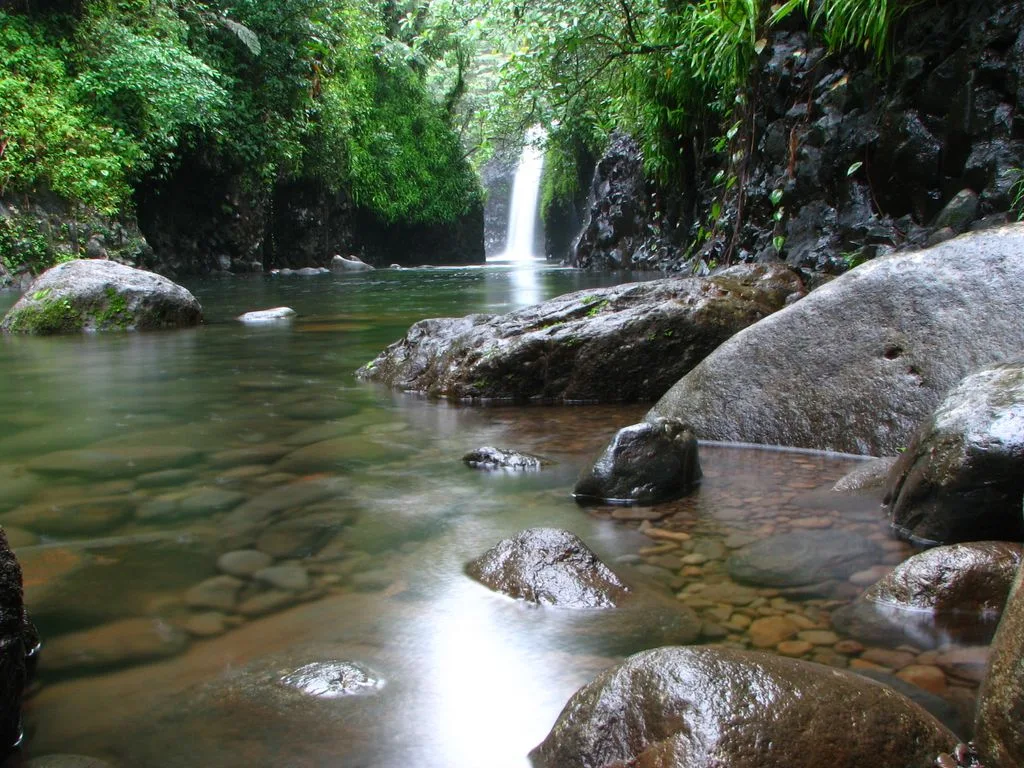
Bouma National Heritage Park protects the rainforest on Taveuni's eastern side, and its centerpiece is the Tavoro Waterfalls. A well-kept trail leads through the forest to three falls, each higher than the last. Swimming pools below the first fall give you a cool plunge after the walk.
The park also holds ancient village sites, birdlife and quiet forest paths. Giant tree ferns, orchids and vines line the trail, and the call of native birds fills the canopy. Rangers collect a small entrance fee that supports the local community and park upkeep.
Most visitors take the walk in the morning and keep the rest of the day for the Lavena Coastal Walk or a dive. The trail is slippery after rain, so wear shoes with grip and leave valuables at your lodge. Bring a swimsuit, a towel and insect repellent, and carry cash for the entrance fee.
Native birds live in the forest canopy, including the orange dove and the Taveuni silktail, which exists nowhere else in the world. Birdwatchers bring binoculars for the early-morning walk. Guides from the local community explain forest plants and their traditional uses, which adds depth to a short hike. The park suits families, since the trail is short and the pools are shallow.
20. Lavena Coastal Walk
The Lavena Coastal Walk is a 5 km trail on Taveuni's remote southeastern tip. It follows black volcanic beaches, crosses a suspension bridge and climbs through rainforest. Far fewer visitors hike here than at Tavoro Falls, which keeps the trail quiet.
The walk ends at Wainibau Falls, a twin waterfall at the head of a narrow canyon. To reach the base, you swim through a deep gorge between steep rock walls, with cool water funneling down from the falls. The swim feels like an adventure and not a stroll, which is why the walk is worth the effort.
Wear shoes you can get wet, bring a dry bag and carry water and snacks. The trail begins at Lavena Village, where you pay a small fee that supports the community. Allow a half day for the full walk and swim, and start early to leave time for the return.
Black volcanic sand, rock pools and coconut palms line the first part of the walk, and the sea stays in sight for long stretches. Lavena Lodge serves lunch and arranges guides and kayak trips along the coast. The area belongs to the Lavena community, and fees and meals support the village. Pack insect repellent, since the forest sections stay damp.
21. Waitavala Waterslide
The Waitavala Natural Waterslide is a rock chute in the rainforest where mountain water rushes down a smooth channel into a deep pool. Locals body-surf the chute for fun, and visitors join them. The slide is free, public and unlike any resort pool in Fiji.
Wear thick boardshorts or a rash guard, because the rock scrapes bare skin. Sit at the top, let the water carry you and keep your feet forward as you drop into the pool. Local children show visitors the best line, and a few tips from them make the ride easier.
The flow is strongest after rain and thin during dry spells, so ask your lodge for the current conditions. The site sits close to the main road, so it fits into a day with Bouma and Lavena. Leave valuables at your lodge and bring a towel and water shoes.
The pool at the base gives plenty of room to swim and rest between runs. Families from nearby villages come on weekends, and the atmosphere is friendly and relaxed. Ask a local to show you the safest entry point and the right line down the chute. The slide works best for confident swimmers, so children should go only with an adult at their side.
22. Savusavu
Savusavu is a small harbor town on the south coast of Vanua Levu, Fiji's second-largest island. Fiji Link flies from Nadi in 1 hour 10 minutes, and the town feels slow and welcoming after the mainland. Yachts shelter in the bay, and pearl farms and copra plantations ring the district.
The Nakama Geothermal Hot Springs bubble beside the road in the center of town, and the water is hot enough to cook. Locals place woven baskets of taro, cassava and fish into the steaming pools to cook their dinner. Visitors can watch the cooking, but the springs are working infrastructure, so stay clear of the pools.
Diving and snorkeling operators run trips to the reefs and marine reserves nearby, including the Namena area. Small lodges and boutique resorts line the bay, and local restaurants serve fresh fish and Indo-Fijian curries. The town makes a good base for Vanua Levu, with road links to Labasa and the north.
Savusavu's pearl farms grow Fiji's black pearls, and a visit shows how oysters become jewelry. Hot springs, a small yacht marina and Sunday church services add to the town's laid-back feel. The coastal road to Labasa passes villages, coconut plantations and bays that few tourists see.
23. Great Sea Reef
The Great Sea Reef, known locally as Cakaulevu, runs off the northern coast of Vanua Levu in the Macuata district. It is the third-longest continuous barrier reef system in the world and a rich habitat for fish, turtles and sharks. Local communities manage fishing grounds along the reef, which keeps the marine life healthy.
Most divers focus on the Coral Coast or the Somosomo Strait and skip the Great Sea Reef. The north offers quieter sites, fewer boats and healthy coral gardens that few visitors see. Eco-lodges on the Macuata coast, including Nukubati, run dive and snorkel trips and share conservation talks.
The coast also gives access to Yadua Taba, an uninhabited dry-forest island between Viti Levu and Vanua Levu that shelters the Fijian crested iguana. The emerald-green lizard with white bands was only discovered by science in 1979. Landing on the island requires conservation permits, so visitors view the iguanas on boat-based trips with conservation guides.
The reef system stretches along the northern coast and shelters turtles, sharks and rays. Local conservation groups work with communities to limit fishing and protect the best sites. Divers see healthy hard corals and a variety of reef fish, while snorkelers explore shallow lagoons. The Great Sea Reef is a model of community-led marine protection.
Off the Beaten Path (Places 24–25)
Two destinations sit well off the standard Fiji route, and both reward the extra effort. One is a nearly roadless island beside a giant reef, and the other is a preserved colonial port town.
24. Kadavu
Kadavu lies south of Viti Levu and has almost no roads. Travel between villages and eco-lodges happens by boat, and the quiet gives the island a slow rhythm. Fiji Link flies from Nadi in 50 minutes on a weekly schedule, and a ferry runs from Suva.
The island sits beside the Great Astrolabe Reef, the fourth-largest barrier reef in the world. Divers find manta rays, soft corals and healthy fish life, and snorkelers reach calm lagoons from the shore. Kayaking and village walks fill the days between dives.
Kadavu is also a birdwatcher's destination, home to the endemic Kadavu Shining Parrot and the Velvet Dove. Eco-lodges here cater to small groups, with simple rooms and home cooking. Plan flexible days, since small aircraft and boats run on weather and tide, and pack within the 15 kg domestic baggage limit. Dawn is the best time to hear the parrots in the forest.
Villages hold church services and kava circles that welcome visitors who ask first. Waterfalls, forest trails and quiet beaches fill the land side of the island. Meals arrive fresh from the sea and garden, and many lodges run on solar power. The silence at night, broken only by waves and insects, stays with visitors long after they leave.
25. Levuka
Levuka on Ovalau Island is Fiji's only UNESCO World Heritage Site, and the town looks like an untouched 19th-century frontier port. It served as Fiji's first colonial capital in the 1870s, and wooden clapboard storefronts still line the main street. Resort crowds never reached Levuka, and the pace of life stays slow.
The Royal Hotel, the oldest operating hotel in the South Pacific, anchors the waterfront. Walk the historic streets, climb the 199 Steps up Mission Hill for a view over the bay and visit the small museums. The mix of colonial architecture, Pacific scenery and local life makes Levuka feel like a time capsule.
Northern Air flies to Levuka from Nadi and Suva, and ferries connect Ovalau to Viti Levu. Delays of 4 to 12 hours are routine on domestic ferries, so never book one on the same day as your international flight home. Stay a night or two to see the town after the day visitors leave.
Colonial-era churches, old trading stores and a quiet waterfront line the main street. Local guides tell the stories of the beachcombers, traders and chiefs who shaped Fiji's first capital. Ovalau's green hills rise directly behind town, which keeps the setting compact and walkable.
Map of the Best Places in Fiji
The map below shows Fiji's main island groups, from the Mamanucas and Yasawas in the west to Taveuni in the northeast. Use it to see how far each region sits from Nadi and plan a route that keeps transfers short.
View the full pin list (25 places and key transport hubs)
| Pin | Description |
|---|---|
| Nadi | Gateway town with the Sri Siva Subramaniya Swami Temple |
| Denarau Island and Port Denarau | Resorts and the ferry hub for the Mamanucas and Yasawas |
| Natadola Beach | White-sand beach on the Coral Coast |
| Sigatoka Sand Dunes National Park | Coastal dunes and Lapita burial ground |
| Naihehe Cave | Largest cave system in Fiji, Sigatoka Valley |
| Pacific Harbour | Adventure hub and Beqa Lagoon shark diving |
| Beqa Island | Home of the Sawau firewalkers |
| Suva | Capital with the Fiji Museum and Colo-i-Suva Forest Park |
| Navala Village | Traditional bure village in the Nausori Highlands |
| Lautoka | Sugar City with a large municipal market |
| Rakiraki | Suncoast town and Ratu Udre Udre's tomb |
| Nananu-i-Ra | Kitesurfing island off Rakiraki |
| Moon Reef | Spinner dolphin sanctuary on the Tailevu coast |
| Mamanuca Islands | Resort islands with Cloud 9 and Cloudbreak |
| Monuriki | Cast Away filming island |
| Yasawa Islands | Remote volcanic chain served by the Yasawa Flyer |
| Sawa-i-Lau Caves | Swimmable limestone cave |
| Taveuni | Garden Island with Rainbow Reef diving |
| Bouma National Heritage Park | Tavoro Waterfalls and rainforest trails |
| Lavena Coastal Walk | Coastal trail to Wainibau Falls |
| Waitavala Waterslide | Natural rock waterslide |
| Savusavu | Harbor town and Nakama hot springs |
| Great Sea Reef | Barrier reef off northern Vanua Levu |
| Kadavu | Great Astrolabe Reef and roadless island life |
| Levuka | UNESCO-listed historic port town on Ovalau |
| Nausori Airport (Suva) | Hub for flights to Kadavu, Taveuni and Lau |
| Vuda Marina | Home of the Drua Experience |
Getting to Fiji from the USA
Fiji Airways flies nonstop to Nadi from Los Angeles, San Francisco and Honolulu. Flights from Los Angeles and San Francisco take 10.5 to 11.5 hours, and Honolulu to Nadi takes 6 hours 50 minutes. Travelers from the East Coast and Midwest connect through a West Coast airport, which brings the total travel time to 17 to 22 hours.
Overnight departures land in Nadi two calendar days later because the route crosses the International Date Line. A Sunday night flight from Los Angeles arrives on Tuesday morning, so book your first hotel night from the day you land. US passport holders enter Fiji without a visa for stays under four months, with a passport valid for six months beyond the entry date and a blank page.
How to Get Around Fiji
- Ferries from Port Denarau: the Yasawa Flyer, run by Awesome Adventures Fiji, serves the Yasawas, and South Sea Cruises and other operators serve the Mamanucas.
- Bula Pass: a hop-on hop-off pass for the Yasawa Flyer route that runs 5 to 15 days. It does not cover every Mamanuca resort, so book those transfers in advance.
- Domestic flights: Fiji Link, the domestic arm of Fiji Airways, connects Nadi and Suva with Taveuni, Savusavu, Labasa and Kadavu. Northern Air flies to Levuka. Both set a 15 kg checked-baggage limit and a 7 kg carry-on limit.
- Nadi versus Suva: international flights land in Nadi in the west, where the weather is best. Flights to Kadavu, Taveuni and Lau cost less and run more often from Nausori Airport in Suva.
- Seaplane and helicopter: a faster, pricier option for resort transfers in the Mamanucas and Yasawas.
- On Viti Levu: taxis, buses and hire cars. Agree on taxi fares before you start or check that the meter is on.
How Much Does Fiji Cost?
Fiji uses the Fijian dollar (FJD), and US$1 buys FJD 2.2, so FJD 1 equals US$0.44. The table shows daily costs per person for each travel style. Island transfers and activities such as diving and day cruises are the biggest extra costs.
| Travel Style | What It Looks Like | Daily Budget (FJD) | Daily Budget (USD) |
|---|---|---|---|
| Budget | Hostels or dorm-style lodges, local food, buses | FJD 100–200 | US$45–90 |
| Mid-range | Mid-range hotel or resort, some tours, ferries | FJD 250–500 | US$110–220 |
| Luxury | Private-island or luxury resort, transfers included | FJD 800 and up | US$350 and up |
Resorts accept credit cards, with a 3% to 5% surcharge. Rural ferries, village homestays, roadside fruit stalls and local taxis run on Fijian dollar cash or M-PAiSA, the Vodafone Fiji mobile wallet. Withdraw cash in Nadi, Suva or Lautoka before you head to the outer islands, where ATMs are rare.
Fiji Travel Insurance
Travel insurance matters in Fiji because the trip combines long flights, small aircraft, boats and cyclone season. Awesome Adventures Fiji requires valid travel insurance for every passenger on the Yasawa Flyer, and dive operators ask for proof of cover. Choose a policy with medical coverage, emergency evacuation, trip cancellation and delay protection, and add dive cover if you plan to scuba.
Buy the policy when you book your flights, so cancellation cover starts at once. Check that the policy covers adventure activities such as shark diving, river rafting and canyon swims. Keep the policy number, the insurer's emergency line and a copy of your passport in your phone.
Best Time to Visit Fiji
- Dry season (May–October): sunnier weather, lower humidity and calmer seas. Manta ray season in the Yasawas falls in this window.
- Wet season (November–April): warmer, more humid and rainier, and it overlaps with cyclone season. Prices drop, but ferry and flight disruptions rise.
- Taveuni and Suva: wetter all year than the west coast of Viti Levu.
- Rakiraki and the Suncoast: the driest part of the mainland, a good choice in the wet season.
- Cheapest months: February, March, October and November bring the best deals.
- Peak periods: school holidays and Christmas are the busiest, so book flights and transfers early.
Sample Fiji Itineraries
5 Days: Beach Basics
- Day 1: Arrive in Nadi. Visit the temple and the Garden of the Sleeping Giant.
- Days 2–4: A Mamanuca island, with a day trip to Monuriki or Cloud 9.
- Day 5: Return to Nadi and fly out.
7 Days: Mainland and Islands
- Days 1–2: Nadi, Natadola Beach and the Sigatoka Sand Dunes.
- Days 3–6: The Yasawas, with a visit to Sawa-i-Lau.
- Day 7: Return to Port Denarau and fly out.
10 Days: Beaches, Culture and Nature
- Days 1–2: Nadi and Denarau.
- Days 3–6: The Yasawa Islands.
- Days 7–9: Fly to Taveuni for Bouma, Lavena and diving.
- Day 10: Return to Nadi.
14 Days: Fiji in Full
- Days 1–3: Nadi, Navala Village and Lautoka.
- Days 4–6: Coral Coast, Pacific Harbour and Beqa Island.
- Days 7–10: Fly from Suva to Taveuni and on to Savusavu.
- Days 11–13: The Mamanucas or the Yasawas.
- Day 14: Return to Nadi and fly home.
Fijian Food and Drink
Fiji's food mixes Pacific, Indian and Chinese influences, and the best meals come from markets, roadside stalls and village kitchens. Kokoda is the national dish, fresh fish cured in lime juice and coconut milk, similar to ceviche. In a traditional lovo, an earth oven, food steams underground on hot volcanic stones.
Palusami, taro leaves stuffed with coconut cream and corned meat or fish, is the classic lovo dish. Kokoda is sometimes served in a bamboo joint, a presentation known as vakaviti. Indo-Fijian curries use coconut cream, cassava and river mussels, and they taste distinct from curries elsewhere.
Kava is the national drink. Outside resorts, Fijians drink it casually in neighborhood grog shops, marked by a single red or white light outside a house at night, or around a wooden bowl called a tanoa at municipal markets. Fiji Bitter is the working-class rugby beer, and Vonu Pure Lager is an eco-branded beer brewed with rainwater whose sales fund sea turtle conservation. Bounty Overproof Rum, at 58% alcohol, is the local favorite, mixed with Sprite or fresh coconut water.
Fijian Pronunciation and Village Etiquette
Fijian spelling follows its own rules, and a few quirks make you sound confident from your first Bula. The letter c is pronounced th, b is pronounced mb, d is nd and q is ngg. Locals appreciate every attempt, and a smile covers the rest.
- Mamanuca: Ma-ma-noo-tha
- Nadi: Nan-di
- Bula (hello): Mboo-la
- Beqa: Mbeng-ga
- Vinaka (thank you): vee-NAH-kah
Village visits follow clear rules. Never wear a hat or sunglasses inside a village, because it insults the chief. Never touch a Fijian's head, which is sacred, and always bring a small bundle of yaqona, kava root, as a sevusevu gift if you visit a village outside a resort. Dress modestly with shoulders and knees covered, and follow your host's lead.
What to Skip in Fiji
- Swimming at Nadi town beaches: go to the Coral Coast or the islands instead.
- Too many islands in one trip: each transfer costs time and money, so fewer stays work better.
- The Mamanucas on a tight budget: the Yasawas offer more budget choices.
- The wet season without flexibility: weather disrupts boats and flights, so avoid tight connections.
- Cloudbreak for non-surfers: it is an expert break and not a sightseeing stop.
- Resort firewalking shows: real Vilavilairevo belongs to the Sawau people of Beqa Island.
- Shark dives without research: choose operators with strong safety and conservation records.
Fiji Without Staying at a Resort
See how to visit Fiji without a resort
- Stay in backpacker lodges in the Yasawas.
- Book guesthouses and homestays on Viti Levu, Taveuni and Ovalau.
- Visit villages such as Navala with a local guide or through your host.
- Take day trips to Cloud 9, Monuriki or Malamala instead of booking a Mamanuca resort.
- Eat at local markets, curry houses and grog shops.
Rainy-Day Alternatives
See what to do when it rains
- Fiji Museum in Suva
- Sri Siva Subramaniya Swami Temple and Nadi's markets
- Lautoka Municipal Market and Indo-Fijian lunch
- Garden of the Sleeping Giant between showers
- Sabeto Hot Springs and mud pool
- Cultural performances and cooking classes
- Spas and resort day passes
Fiji Packing List
View the Fiji packing list
- Lightweight, quick-dry clothing and a rain jacket
- Modest clothes for villages and temples, with shoulders and knees covered
- Reef-safe sunscreen, hat and sunglasses
- Water shoes, a snorkel set and a rash guard for waterslides and canyon swims
- Dry bag and waterproof phone case
- Insect repellent and basic first-aid items
- Fijian dollars in small bills
- A kava root bundle for village sevusevu
- Soft duffel under 15 kg for boats and small planes
- Type I power adapter (Fiji uses Type I sockets, the same as Australia; US travelers need an adapter)
Know Before You Go
- Sunday shutdown: Fiji slows to a halt on Sundays. Shops close, domestic buses run skeleton schedules and villages spend the day at church and family lovo feasts, so plan transit and big excursions for Monday to Saturday.
- Sevusevu: when you visit a village you present kava to the chief. Dress modestly, remove hats and follow your host's lead.
- Cash: outer islands, villages and some excursions do not take cards, and ATMs are scarce.
- Ferry buffer: never book a domestic ferry, such as Patterson Brothers or Goundar Shipping to Ovalau and Vanua Levu, on the same day as your international flight home. Delays of 4 to 12 hours are routine.
- Baggage limits: domestic flights allow 15 kg of checked baggage and 7 kg of carry-on.
- Entry rules: US passport holders enter visa-free for under four months with a passport valid for six months beyond the entry date.
Frequently Asked Questions
Which is the best island in Fiji?
The best island depends on your trip. The Mamanucas are best for easy beach stays, the Yasawas for a remote and budget-friendly experience, and Taveuni for diving and nature.
Which part of Fiji is best for first-timers?
Nadi, Denarau and the Mamanuca Islands. They sit close to the airport and have frequent ferries and plenty of accommodation.
Is Fiji expensive to visit?
Fiji suits every budget. Luxury resorts cost a lot, but the Yasawas, the mainland and Ovalau offer budget and mid-range options, and island transfers and activities are the largest extra costs.
Is Fiji worth visiting?
Yes, for travelers who want beaches, snorkeling, diving and a friendly culture. It suits visitors who value nature and village life more than nightlife or city sightseeing.
Mamanuca vs. Yasawa Islands: which is better?
The Mamanucas are closer and more developed, which makes them good for families and short stays. The Yasawas are more remote with wider budget options, and they need more travel time.
Can you visit Fiji on a budget?
Yes. Stay in backpacker lodges and guesthouses, eat local food, use buses and the Yasawa Flyer, and limit paid activities.
How many days do you need in Fiji?
Five days is enough for the mainland and one island group. Seven to ten days lets you combine the Yasawas with Taveuni or Kadavu.
What is the best time to visit Fiji?
May to October is the dry season and the most popular time to go. November to April is wetter and carries cyclone risk, but it brings lower prices.
Can you visit Fiji without staying at a resort?
Yes. Backpacker lodges, guesthouses, homestays and village stays are all available across Viti Levu and the outer islands.
Do US citizens need a visa for Fiji?
US citizens do not need a visa for stays under four months. Your passport must be valid for six months beyond your entry date and have a blank page.
How long is the flight from the US to Fiji?
Nonstop flights from Los Angeles and San Francisco to Nadi take 10.5 to 11.5 hours, and Honolulu to Nadi takes 6 hours 50 minutes. Travelers from the East Coast and Midwest connect through the West Coast and spend 17 to 22 hours in transit.
Does Fiji shut down on Sundays?
Yes, most shops close and public transport runs reduced schedules on Sundays. Villages devote the day to church and family feasts, so plan transfers and tours for Monday to Saturday.
Final Thoughts
The best way to see Fiji is to pair a few days on the main island with one or two island groups. Start with Nadi and the Mamanucas on a first visit, add the Yasawas for a more adventurous trip, and head to Taveuni or Kadavu if diving is your priority. Add Navala Village, Levuka or the Suncoast for a side of Fiji that most visitors never see.
Fiji's beaches, private islands and resorts make a memorable setting for a ceremony. Start planning with our destination wedding guide for Fiji.

Kalyan Panja
Kalyan Panja is a travel writer, photographer, and founder of Travtasy, exploring off-the-beaten-track destinations since 2006. His writing and photography have been featured by National Geographic, Lonely Planet, Google Travel, and Getty Images. Kalyan prefers road trips, EV corridors, mountain routes, and hotel stays across Asia, Europe, and North America to provide verified, first-hand travel guides.
Full Bio, Media Kit →