33 Best Places to Visit in Winter in 2026 and 2027
Updated for winter 2026 and 2027.
There is a hush that settles over a place when winter takes it. Breath turns visible, the light drops low and gold by mid afternoon, and even a familiar street begins to feel like somewhere you have never been. Winter travel is that feeling, chased across continents, sometimes into snow and sometimes into the warmest sea you will ever swim in.
This guide is global, and it is built around the three moods in which people actually travel in winter. Thirty three places are grouped as Snow and Winter Wonderlands, Ski and Snowboard, Sun and Warm Escapes, and Budget and Off Season Havens. Every one carries a Quick Facts panel with real temperatures, best weeks, daily cost tier and logistics, plus a Plan It panel with a sample day, winter closures, where to stay and what US travellers need for flights and entry, so you can decide without opening ten other tabs.
The Quick Verdict Before You Wander
If you only have a minute, this table matches the winter mood you are in to the place that handles it best. Cost tiers run from $ for easy on the wallet to $$$$ for a serious splurge.
| Place | Best for | Best weeks | Cost |
|---|---|---|---|
| Nagano snow monkeys, Japan | Wildlife and hot springs | Mid January to mid February | $$ |
| Sapporo and Hokkaido, Japan | Snow festival and powder | First half of February | $$$ |
| Tromsø, Norway | Northern lights | November to February | $$$$ |
| Rovaniemi, Finland | Christmas with children | Early to mid December | $$$$ |
| Swiss Alps | Scenic trains and skiing | January to early March | $$$$ |
| Nuremberg, Germany | Christmas markets | Late November to 24 December | $$ |
| Maldives | Beach and honeymoon | January to March | $$$$ |
| Thailand Andaman coast | Beaches on a sensible budget | December to February | $$ |
| Dubai, UAE | City sun and desert | December to February | $$$ |
| Kerala and Goa, India | Backwaters and beaches | December to February | $$ |
| Budapest, Hungary | Thermal baths | January and February | $ |
| Hanoi, Vietnam | Street food on little money | January | $ |
- Northern lights: Tromsø, Iceland, Abisko, Fairbanks, Rovaniemi
- Christmas markets and festive trips: Nuremberg, Vienna, Strasbourg, Prague, Budapest, Rovaniemi
- Ski and snowboard: Colorado, Utah, Whistler, Sapporo and Niseko, Swiss Alps, Banff
- Warm places to escape winter: Maldives, Thailand Andaman coast, Dubai, Kerala and Goa, Canary Islands, Sri Lanka, Costa Rica, Florida, Hawaii
- Budget winter trips: Hanoi, Khajuraho, Ooty, Sri Lanka, Budapest, Prague, Lisbon, Marrakech
- Winter trips from the US without a long flight: Florida, Hawaii, Colorado, Utah, Fairbanks, Haines, Chiricahua, Whistler, Banff, Costa Rica, Iceland
- Asia: Nagano snow monkeys, Sapporo and Niseko, Maldives, Thailand Andaman coast, Kerala and Goa, Sri Lanka, Hanoi, Khajuraho, Ooty
- Europe: Tromsø, Iceland, Abisko, Rovaniemi, Swiss Alps, Nuremberg, Vienna, Strasbourg, Canary Islands, Budapest, Prague, Lisbon
- Middle East and Africa: Dubai, Marrakech
- Americas: Fairbanks, Haines, Banff, Colorado, Utah, Whistler, Costa Rica, Florida, Hawaii, Chiricahua
Snow and Winter Wonderlands: Where the World Turns White
These thirteen places earn their winter fame honestly, with deep snow, frozen light, festival fires and food that tastes better when your fingers are cold. Short days are part of the bargain, so plan your outdoor hours around the sun and your evenings around warm rooms.
Snow Monkeys at Jigokudani, Nagano, Japan
Where a wild troop bathes in steam while the valley disappears under snow
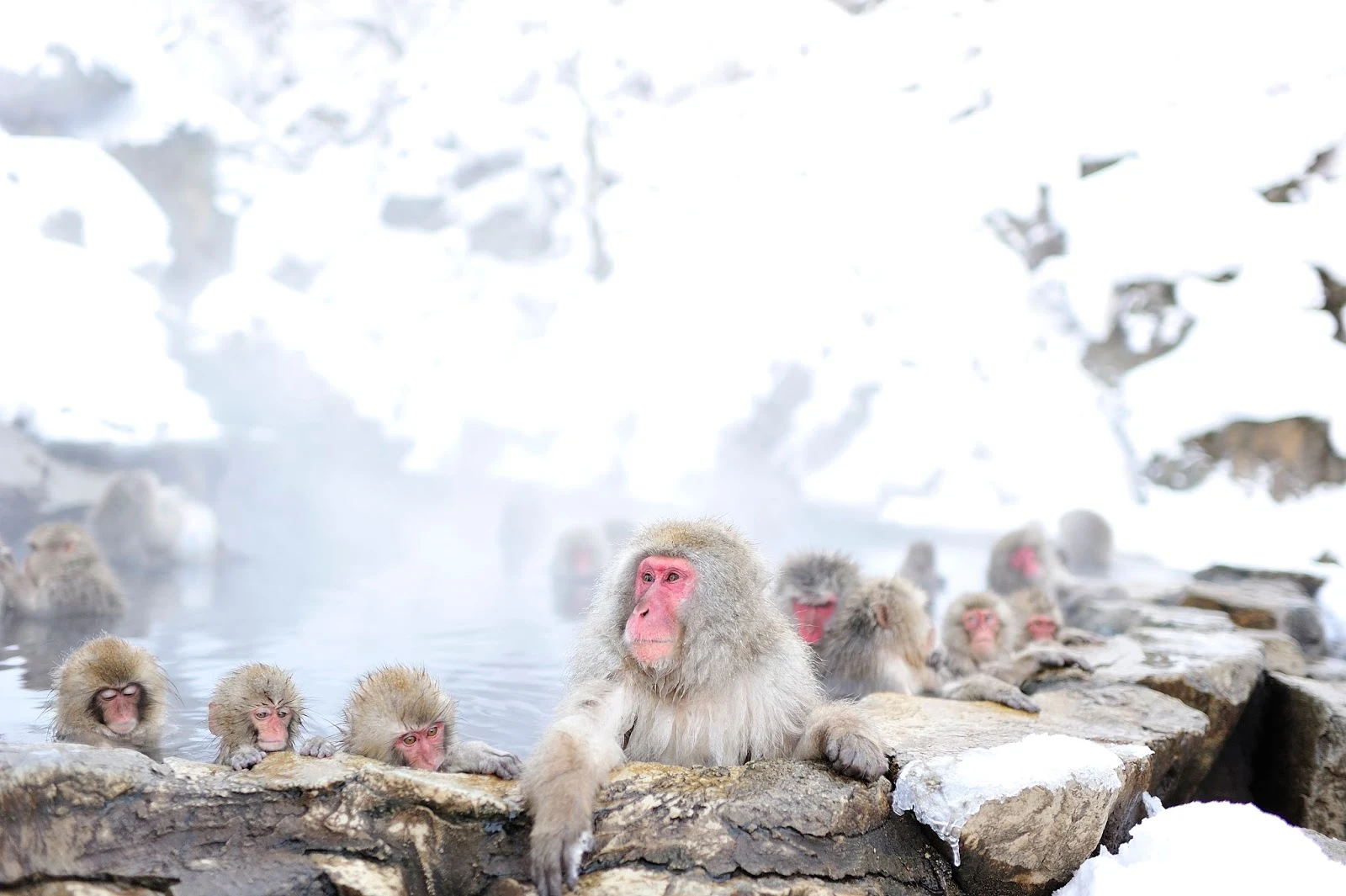
Jigokudani means Hell’s Valley, a name earned by the steam vents and boiling springs that burst from its cliffs, yet for the Japanese macaques who live here it is the gentlest place in the mountains. In winter the troop gathers around a hot spring pool in the Yokoyu River valley, and the sight of a monkey with frost on its fur and its eyes half closed in the heat is the image that made Nagano famous across the world. The park, officially Jigokudani Yaen Koen, opened in 1964 and welcomes visitors every day of the year.
The approach is half the pleasure. From Kanbayashi Onsen you walk a forest trail of roughly 25 to 30 minutes that is often packed snow and ice, and macaques sometimes appear on the path before you reach the gate. Beyond the pool you can look across the river to Korakukan ryokan, where humans soak in their own hot spring, and the Jigokudani steam vent just before the entrance is a registered natural monument.
The wider valley rewards a slow stay. Shibu Onsen, a short ride away, is a lantern lit hot spring village known for its nine public bathhouses, and Nagano city offers Zenko ji temple on the way back. Plan on Shinshu soba, sweet apples, and oyaki, the stuffed dumplings of this region, taken warm from a street stall in Nagano or at a village shop near Yudanaka station, followed by a night in a ryokan with a hot spring bath and a dinner of mountain vegetables.
Beyond the monkeys, Nagano prefecture rewards a slow stay. Zenko ji temple in Nagano city is among the most visited in Japan and holds an early morning service that visitors may join, while Shiga Kogen, one of the largest ski areas in the country, lies close to Yudanaka. Obuse, a small town east of the valley, is known for its chestnut sweets, and a chestnut dessert with green tea is a gentle reward after a cold day.
Food here follows the cold. Try nozawana pickles, the leafy turnip greens of the region, with rice at breakfast, hot soba with tempura at a noodle shop near Nagano station, and sweet apple pastries from a bakery in the city. In Shibu Onsen, ryokan dinners serve mountain vegetables, river fish and local rice wine, and the steam drifts through the lanes after dark.
The park introduced dated online tickets from August 2026, so winter 2026 and 2027 is the first season under the new system. Book your date before you travel and wear shoes with real grip or add clip on spikes for the trail.
- Typical winter climate
- Around 0°C by day and well below freezing at night, with heavy snow from December to March and about 10 hours of daylight in January.
- Peak and shoulder months
- Mid January to mid February for deep snow. December and March are quieter and still wintry.
- Seasonal exclusives
- Macaques bathing in snow, onsen village evenings, lantern lit streets in Shibu Onsen.
- Realistic daily budget
- $$. Park entry is 800 yen for adults and 400 yen for children, plus roughly 1,400 yen each way by bus from Nagano.
- Logistics
- Hokuriku Shinkansen from Tokyo to Nagano in about 80 minutes, then a bus of 40 to 45 minutes from Nagano station East Exit and the forest walk. Winter hours are 9:00 to 16:00. Nearest major international airports are in Tokyo.
- One realistic winter day
- Take the early bus from Nagano station, walk the forest trail to arrive at opening, watch the troop for an hour, then soak in Shibu Onsen and return for Zenko ji temple and soba in Nagano.
- Closed or limited in winter
- Dated tickets and parking limits apply in winter, the trail is icy, and the macaques follow their own schedule, so there are no guarantees.
- Where to stay and how to get around
- Stay in a ryokan at Yudanaka, Shibu Onsen or Kanbayashi, or base in Nagano city and use the Nagaden bus.
- From the US: flights and entry
- Round trip fares to Tokyo are often $850 to $1,300. US passport holders can enter Japan visa free for short tourist stays.
- What to pack
- Shoes with grip or clip on spikes, waterproof boots, a warm hat and a small towel for the onsen.
Sapporo and Niseko, Hokkaido, Japan
Snow sculpted into towers, ramen steaming in the cold, powder that squeaks underfoot
Hokkaido is Japan’s winter heartland, and early February is when it puts on its finest show. The Sapporo Snow Festival is confirmed for 4 to 11 February 2027 across three sites, Odori Park for the giant snow sculptures lit after dark, Susukino for clear carved ice, and Tsudome for snow play with children. General entry to all three sites is free, which makes it one of the best value spectacles in winter Asia.
Close by, the canal town of Otaru glows with candles during its Snow Light Path, which usually runs the same week as the festival, so an evening trip by train is easy. For skiers the pull is Niseko, a name that has become shorthand for deep, dry powder snow, and Sapporo itself has smaller hills within a short ride of the city.
Eat your way through the cold. Sapporo is the home of miso ramen and soup curry, and the lamb grill called Genghis Khan arrives sizzling at the table. Taste fresh crab and uni at Nijo market in the morning, then the local lager in the red brick Sapporo Beer Garden, and save an evening in Otaru for sushi built around Hokkaido seafood.
Beyond Sapporo, Hokkaido stretches into frozen scenery. Furano and Biei have rolling white hills and pale blue ponds, Asahiyama Zoo in Asahikawa lets you watch penguins waddle across the snow in winter, and hot springs at Noboribetsu steam above the snow as a restful stop after the cold. Late winter drift ice cruises near Abashiri add one more reason to extend the trip.
The food is as large as the landscape. Taste Hokkaido butter corn and milk soft serve from market stalls, a bowl of seafood rice with salmon roe at Nijo market, and the famous cheesecakes sold along Otaru’s Sakaimachi street. Beer lovers should reserve an evening in Sapporo’s Susukino district, where izakaya serve grilled scallops, crab and local sake.
Festival week is the most expensive and most booked week of Sapporo’s year. Fix your dates early, book a cancellable room, and keep a day free in case snow slows the trains from New Chitose airport.
- Typical winter climate
- February in Sapporo averages about minus 2°C, with frequent snowfall and sunset near 16:30 in January.
- Peak and shoulder months
- 4 to 11 February 2027 for the festival. Late January and the second half of February are calmer for skiing.
- Seasonal exclusives
- Snow Festival sculptures, Otaru Snow Light Path, Hokkaido powder skiing.
- Realistic daily budget
- $$$, rising toward $$$$ in festival week when hotel rates surge.
- Logistics
- Fly into New Chitose airport, about 40 minutes by rail to central Sapporo. Subway and walking cover festival days. Pack real snow boots because packed snow hides ice.
- One realistic winter day
- Walk Odori Park by day, ride the subway to Susukino for ice sculptures at dusk, then eat a bowl of miso ramen. On another day take the train to Otaru for the candle lit canal.
- Closed or limited in winter
- Festival week sells out, roads slow in heavy snow, and some Tsudome details were still being finalised at last check.
- Where to stay and how to get around
- Stay near Odori for the sculptures, Susukino for evenings, or Sapporo Station for the airport rail.
- From the US: flights and entry
- Fares to Sapporo usually run $1,000 to $1,500 via Tokyo. Entry is visa free for short tourist stays.
- What to pack
- Insulated boots with grip, thermal layers, a hat that covers the ears and glove liners.
Tromsø, Norway, for the Northern Lights
A town above the Arctic Circle where the sky itself becomes the attraction
Tromsø is the most dependable address in Europe for watching the aurora, and winter is when the city leans into it completely. The northern lights season runs from late August to early April, and November to February offers the longest nights. From late November to mid January the sun stays below the horizon and the polar night paints the hours around noon in blue, pink and violet twilight.
Days are for the Arctic itself. Husky sledding, reindeer sleigh rides, and in the early winter months fjord cruises to look for whales are all on offer, while the cable car above town gives a view over the harbour and the Arctic Cathedral. In the evenings small group tours drive out of the city to find clear skies, because the aurora needs clear weather as much as darkness.
Warm up with the northern kitchen. Try reindeer stew, fresh king crab and the dried and salted cod that built this coast, then finish at Ølhallen, the old pub attached to the Mack brewery, for a pint of local beer in a room that has not changed in decades. Fish soup in a harbour side cafe is the simplest and best lunch in the cold.
Tromsø offers more than the lights. The Arctic Cathedral across the bridge glows blue at night, the Polar Museum tells the story of Arctic hunters and explorers, and the Polaria aquarium brings Arctic seals indoors on dark days. A walk across the bridge to the cathedral at twilight is one of the simplest and best free pleasures of the trip.
Local food tastes best in the cold. Try bidos, the reindeer stew served at Sami gatherings, and the open sandwiches of smoked salmon and shrimp sold in harbour cafes. The Mack brewery, founded in 1877, makes the beer served at Ølhallen, and a slice of cloudberry cake finishes a meal at most traditional restaurants.
Nobody can promise the lights. Stay at least three nights so cloudy evenings do not decide your trip, and dress in layers that you can wear standing still for two hours in a wind off the fjord.
- Typical winter climate
- Around minus 4°C to 0°C with wind and wet snow, and about 4 hours of daylight in November before the polar night.
- Peak and shoulder months
- November to February for the longest nights. September, October and March are cheaper with decent aurora odds.
- Seasonal exclusives
- Northern lights, polar night twilight, winter whale watching, husky and reindeer rides.
- Realistic daily budget
- $$$$. Tours are the main cost and accommodation climbs around Christmas.
- Logistics
- Tromsø airport has flights from Oslo in under two hours. The town is walkable, and aurora tours include transport to dark sites.
- One realistic winter day
- Dog sledding in the blue twilight at midday, the cable car for a harbour view, a fish soup lunch, then an evening aurora tour that returns after midnight.
- Closed or limited in winter
- Some services scale back in the polar night, daylight lasts only a few hours, and tours cancel in poor weather.
- Where to stay and how to get around
- Stay in central Tromsø within walking distance of the harbour and book aurora tours on your first night so you keep spare nights in hand.
- From the US: flights and entry
- Expect $750 to $1,200 via Oslo or another European hub. US passport holders enter Norway visa free for up to 90 days, and ETIAS is expected to be required from late 2026, so check the start date.
- What to pack
- A windproof shell, wool layers, insulated boots, a tripod and spare camera batteries.
Iceland: Reykjavik, the Golden Circle and the South Coast
Ice caves glowing blue, steaming lagoons and green ribbons across a long dark sky
Iceland packs the biggest set pieces of winter into a few hours of driving from Reykjavik. On the shortest day the sun rises around 11:22 and sets around 15:29, so you get a little over four hours of daylight, while early November still offers about eight. The dark is the point, because northern lights season peaks from December to March and the ice caves inside Vatnajökull glacier open only when the ice is stable, from around November to March.
The Golden Circle gathers Gullfoss waterfall, the Geysir geothermal area and Þingvellir National Park into one easy day, and in winter the falls freeze into pale sculptures. The South Coast adds Seljalandsfoss, Skógafoss and the black sand of Reynisfjara, and farther east the Jökulsárlón glacier lagoon floats blocks of blue ice. Geothermal pools such as the Blue Lagoon, Sky Lagoon and Secret Lagoon are the perfect reward after a cold day.
Food here is built for the cold. Order kjötsúpa, the lamb and root vegetable soup, skyr with berries and a pylsur hot dog from Bæjarins Beztu Pylsur in Reykjavik, then try rye bread baked in geothermal ground at Laugarvatn. Smoked lamb called hangikjöt is the traditional Christmas dish and appears on many December menus.
Reykjavik itself deserves a half day. The tower of Hallgrímskirkja church gives a view over colourful rooftops, the glass panels of Harpa concert hall glitter at the harbour, and the old harbour has cafes and whale watching tours that sometimes find dolphins and orcas in winter. A short drive south, the Reykjanes peninsula adds lava fields and steaming vents close to the airport.
For more local tastes, try plokkfiskur, a creamy mash of fish and potato, and the fresh Arctic char that appears on most menus. Skyr cakes and kleinur, the twisted Icelandic doughnuts, fill bakery windows, and the brave can try fermented shark with a shot of brennivín in a harbour restaurant.
Check safetravel.is and the road conditions map before every drive, rent a car equipped for winter and plan sightseeing between roughly 10:00 and 16:00. Three to four days is enough for the Golden Circle and the South Coast.
- Typical winter climate
- Roughly minus 2°C to 4°C, with wind, rain and snow all possible, and about 4 to 5 hours of daylight at midwinter.
- Peak and shoulder months
- December to March for aurora and ice caves. November and late March bring more daylight.
- Seasonal exclusives
- Ice caves, aurora, frozen waterfalls and geothermal lagoons in snow.
- Realistic daily budget
- $$$$, with rental cars, tours and food all expensive.
- Logistics
- Keflavik airport is about 45 minutes from Reykjavik. A winter equipped car or a guided tour is the safest way to cover the sights.
- One realistic winter day
- Start early for the Golden Circle, eat lamb soup at a farm cafe, soak in a geothermal lagoon in the afternoon and watch for the aurora after dinner.
- Closed or limited in winter
- Daylight lasts about four hours at midwinter, roads can close with little warning, and ice cave tours cancel in poor conditions.
- Where to stay and how to get around
- Base in Reykjavik for flexibility, and use South Coast guesthouses if you plan longer drives.
- From the US: flights and entry
- Fares often run $350 to $600, among the lowest transatlantic prices. Iceland is in the Schengen area, with the same ETIAS note as Norway.
- What to pack
- A waterproof shell and trousers, microspikes for icy paths and swimwear for the lagoons.
Abisko and Kiruna, Swedish Lapland
A national park with its own pocket of clear sky and a hotel carved from ice
Abisko National Park sits on the shore of Lake Torneträsk in Swedish Lapland, and it has a long reputation among aurora watchers for clearer skies than the mountains around it. In December the sun stays below the horizon for a few weeks, and the light that remains is a soft blue that suits the frozen lake and birch forest. Nights are long, cold and quiet, which is exactly what the northern lights need.
The Aurora Sky Station on Mount Nuolja is reached by chairlift and gives you a dark viewpoint above the treeline, with warm food and a heated lodge when you need it. By day you can ski or snowshoe along frozen trails, join a husky ride or walk across the lake ice with a guide. A short journey away, the ICEHOTEL in Jukkasjärvi is rebuilt every winter from river ice and offers ice art, an ice bar and cold rooms for the brave.
The food is simple and warming. Try renskav, sautéed reindeer with mashed potato and lingonberries, Arctic char from the cold rivers and cloudberry desserts, then take a proper fika with a cinnamon bun and coffee at a mountain station cafe. Dinner at the lodges around Abisko and in Kiruna is where these dishes taste best after a day in the cold.
Daylight activities change with the weeks. In January a thin line of sun returns to the horizon, and skiers cross the frozen lake on marked tracks, while snowmobile and dog sled trips run across the open plain toward the Norwegian border. Cross country skiing on the Kungsleden trail gives a quiet taste of the mountains in winter.
Kiruna adds a human story. The town is being moved east because of the mine beneath it, and its landmark red wooden church, one of the largest wooden buildings in Sweden, now stands in the new town centre. In Jukkasjärvi, the village that holds the ICEHOTEL, Sami heritage is visible in craft shops and reindeer farm visits.
Abisko is remote and services are limited in the dark months, so book rooms, the Sky Station chairlift and meals ahead. Stay at least three nights so one cloudy evening does not decide your trip.
- Typical winter climate
- January temperatures commonly fall to minus 10°C to minus 15°C or lower, with a few weeks of polar night around the solstice.
- Peak and shoulder months
- December to March for aurora. February and March bring more daylight and milder days.
- Seasonal exclusives
- Aurora Sky Station, ICEHOTEL, frozen lake walks and husky rides.
- Realistic daily budget
- $$$$.
- Logistics
- Fly to Kiruna from Stockholm in about an hour and a half, or take the long train from Stockholm to Abisko. Taxis and tour transfers link Kiruna and Abisko.
- One realistic winter day
- Ride the chairlift up Mount Nuolja at dusk, eat hot soup at the Sky Station, watch for the aurora and finish with a sauna.
- Closed or limited in winter
- The area is remote, services are limited in the dark months and temperatures can be severe.
- Where to stay and how to get around
- Stay near Abisko Mountain Station, or in Kiruna with a night at the ICEHOTEL in Jukkasjärvi.
- From the US: flights and entry
- Fares via Stockholm often run $800 to $1,300. Sweden is in the Schengen area, with the same ETIAS note as Norway.
- What to pack
- A down parka, thermal boots, a balaclava and spare batteries.
Fairbanks, Alaska, USA
Cold so clean it rings, and a hot spring lake under a green sky
Fairbanks sits at 64 degrees north in Alaska’s interior, directly beneath the aurora oval, and the aurora season runs from late August to late April. Activity is often strong from November to January, and winter is also when the cold becomes part of the adventure, with average temperatures of about minus 23°C to minus 12°C. March brings milder weather and longer days with the lights still dancing.
The classic trip is Chena Hot Springs Resort, about 60 miles northeast of town, where you soak in an outdoor spring at about 41°C while your hair freezes into icicles and then visit the Aurora Ice Museum. Murphy Dome, a free viewpoint above the city, is another place to wait for the sky to open. Dog mushing, ice fishing, snowmobiling and a stop at Santa Claus House in North Pole fill the days, and late winter often brings the World Ice Art Championships to town.
The cooking is Alaskan and filling. Try reindeer sausage, wild salmon and halibut, sourdough pancakes for breakfast and a local craft beer, and eat at the restaurant at Chena Hot Springs Resort after your soak. Hot drinks and thick soups become essential at these temperatures.
The town adds its own pleasures. The University of Alaska Museum of the North holds mammoth and gold rush exhibits, the Georgeson Botanical Garden sleeps quietly under snow and the university’s research station offers glimpses of musk ox. In the evening, a heated yurt or cabin near the lights makes the wait for the sky more comfortable.
Dine like an Alaskan. Reindeer chili, a bowl of salmon chowder and thick stews appear on local menus, and the sweet of the season is a slice of blueberry pie with whipped cream. North Pole, a short drive away, has candy cane lamp posts and Santa Claus House, which sells holiday gifts and mails letters with a North Pole postmark.
Winter lodging books up a year ahead and aurora tours often return around 4 am. Rent arctic gear locally if you do not own it, and expect lows near minus 25°C on the coldest nights.
- Typical winter climate
- Roughly minus 23°C to minus 12°C in midwinter, with colder snaps, and under 4 hours of daylight in December.
- Peak and shoulder months
- November to January for strong aurora. March is milder with more light.
- Seasonal exclusives
- Aurora oval viewing, Chena hot spring soaks, Aurora Ice Museum and dog mushing.
- Realistic daily budget
- $$$.
- Logistics
- Fairbanks airport has flights from Anchorage and Seattle. Hotels offer tour pickups, and tours include transport to dark sites.
- One realistic winter day
- Take an afternoon dog sled ride, then drive to Chena Hot Springs for a soak and an aurora tour that returns near 4 am.
- Closed or limited in winter
- Extreme cold, short days, many summer attractions closed and lodges that book a year ahead.
- Where to stay and how to get around
- Stay in Fairbanks for flexibility or at Chena Hot Springs Resort for easy aurora watching.
- From the US: flights and entry
- Fares often run $450 to $900. This is a domestic trip, so no visa is needed, but air travel requires a REAL ID or a passport.
- What to pack
- A rated parka and boots, hand warmers, and rent arctic gear locally if you do not own it.
Haines and the Chilkat Bald Eagle Preserve, Alaska, USA
A river that refuses to freeze and thousands of eagles in the bare cottonwoods
Haines is the most dramatic wildlife spectacle on this list, and it begins in late October when the Chilkat River near town refuses to freeze. Upwelling water keeps a stretch of the river open while the rest of Alaska locks up, and a late run of chum and coho salmon draws somewhere between 2,000 and 4,000 bald eagles from across the north. They fill the cottonwoods in rows, so many that the bare branches look dressed in white blossoms.
The Alaska Chilkat Bald Eagle Preserve protects about 48,000 acres along the Chilkat, Kleheni and Tsirku rivers, and the main viewpoints sit along the Haines Highway between mile markers 18 and 21. The pullout at mile 19 has information displays and a short paved trail beside the river, and a longer riverside trail runs about two miles. Arrive after the light has climbed over the mountains, because the best light falls in late morning.
The Alaska Bald Eagle Festival runs from 6 to 8 November in 2026, with transport from Haines to the viewing areas, talks and photography sessions. The town itself is small and friendly, with the old army post of Fort Seward, a waterfront on the Lynn Canal and a handful of galleries and cafes that stay open in the cold. For the full month by month picture of where else to watch eagles, including the Skagit River in Washington and the Mississippi River in January, see our guide to the best places to see bald eagles in the USA.
Eat the coast. Smoked salmon, halibut and Dungeness crab appear on local menus, and the town’s craft brewery pours a pint after a cold morning on the river. A bowl of hot chowder at a cafe on Main Street is the simplest and best lunch after standing beside the water.
Haines is reached by small plane from Juneau, by ferry from Juneau or Skagway, or by road through Canada, so build slack into the plan because winter weather delays all three. Rooms fill up for the festival, so book months ahead.
- Typical winter climate
- Around minus 3°C to 3°C in November, with wind off the river and about 7 to 8 hours of daylight.
- Peak and shoulder months
- Late October to early December, with the festival in early November. The river freezes after early January.
- Seasonal exclusives
- Thousands of eagles on an open river, the Alaska Bald Eagle Festival and late salmon runs.
- Realistic daily budget
- $$$.
- Logistics
- Fly to Juneau and continue by small plane or ferry, or drive through Canada with a passport. The viewing area is about 20 miles from town, so a rental car or a guided tour is useful.
- One realistic winter day
- Arrive at the mile 19 pullout after the light climbs over the mountains, walk the paved riverside trail, eat chowder in town and return for the late afternoon light.
- Closed or limited in winter
- Services scale back outside summer, ferries run reduced winter schedules and weather can delay small planes.
- Where to stay and how to get around
- Stay at Hotel Halsingland in Fort Seward, Aspen Suites Hotel on Main Street or Captain’s Choice Motel, and book months ahead for festival week.
- From the US: flights and entry
- Fares to Juneau often run $450 to $900 via Seattle, then a small plane or ferry to Haines. This is a domestic trip, but carry a passport if you drive through Canada.
- What to pack
- Insulated boots, a windproof shell, binoculars, a tripod and spare camera batteries.
Rovaniemi, Lapland, Finland
Santa’s own doorstep on the Arctic Circle, wrapped in frost and woodsmoke
Rovaniemi is the gateway to Finnish Lapland, and it wears Christmas better than any city on earth. Santa Claus Village straddles the Arctic Circle line, and a walk across it with children in snowsuits is the memory most families bring home. Beyond the village the town offers reindeer farm visits, husky safaris through silent pine forest and snowmobile trails over frozen rivers.
Lapland is also a place for stillness. Glass roofed cabins and igloo style rooms let you lie in bed and wait for the aurora, and a traditional wood heated sauna followed by a roll in the snow is a Finnish winter ritual you can try in almost every lodge. Arktikum museum in town explains the culture and wildlife of the far north in a warm, light filled building.
The food is honest and hearty. Try poronkäristys, sautéed reindeer served with mashed potato and lingonberries, creamy salmon soup called lohikeitto, and leipäjuusto, the squeaky Lapland bread cheese eaten warm with cloudberry jam. Many cafes and restaurants in the town centre serve these dishes, and a fire lit lodge near the village is the best place to taste them after a day in the cold.
The Arctic Circle region offers more than Santa. Ranua Wildlife Park, about an hour south of town, keeps polar bears, lynx and wolverines in snowy enclosures, and Arktikum’s exhibits explain the Sami people and the northern lights. Ounasvaara hill, on the edge of Rovaniemi, has ski slopes and a lookout where you can watch the aurora with locals.
Local flavours are warming. Try hot lingonberry juice from a stall at Santa Claus Village, warm blueberry pie with vanilla cream at a lodge and strong coffee with a cinnamon bun in a town cafe. Many lodges also offer a fire lit evening with grilled salmon cooked on a plank beside the flames.
December is the premium month and the most crowded. If Santa is not the point of your trip, January and February give you the same snow and aurora for less money.
- Typical winter climate
- Often minus 10°C to minus 15°C in January and sometimes far colder, with only a few hours of blue twilight in December.
- Peak and shoulder months
- Early to mid December for Christmas. February and March for snow, sunlight and aurora at lower prices.
- Seasonal exclusives
- Santa Claus Village, husky and reindeer safaris, snowmobiling, glass cabin aurora watching.
- Realistic daily budget
- $$$$, with steep surge pricing in December.
- Logistics
- Rovaniemi airport receives flights from Helsinki in about an hour and a quarter, and a night train also runs from the capital. Cold weather clothing is often rented locally.
- One realistic winter day
- Join a husky safari in the morning, eat salmon soup for lunch, visit Santa Claus Village in the afternoon, then sauna and watch for the aurora at the lodge.
- Closed or limited in winter
- December is booked months ahead, daylight is brief, and some activities depend on snow depth.
- Where to stay and how to get around
- Choose a lodge or glass cabin outside town for dark skies, or a city hotel for flexibility.
- From the US: flights and entry
- Fares via Helsinki often fall between $750 and $1,200. Finland is in the Schengen area, with the same ETIAS note as Norway.
- What to pack
- An arctic suit that you can rent locally, thermal socks, a balaclava and chemical hand warmers.
The Swiss Alps, Switzerland
Cog railways climbing into the clouds and the Matterhorn burning pink at dawn
Switzerland packs a winter fairy tale into trains that actually run on time. Zermatt is car free and sits beneath the Matterhorn, whose pyramid catches first light in a flush of pink, while Grindelwald and Lauterbrunnen in the Bernese Oberland offer cliffs, frozen waterfalls and the cog railway toward Jungfraujoch. In the east, the Glacier Express rolls over viaducts and through tunnels on one of the great railway journeys of the world.
You do not need to ski to enjoy it. Winter walking trails are groomed and signposted, sledging runs are lit at night in several villages, and thermal baths and lakeside Christmas markets in Zurich and Montreux fill the days when the weather turns. Swiss rail and mountain lift passes can save real money if you plan three or more days of movement.
Come hungry. Raclette is scraped hot from a half wheel of cheese over potatoes, fondue arrives bubbling in a pot, and rösti turns up crisp beside almost everything. Taste them in mountain huts and village restaurants in Zermatt and Grindelwald, and end with hot chocolate that tastes of real chocolate and not powder.
Beyond the headline resorts, Switzerland’s smaller towns charm in winter. Lucerne has a lake lit at Christmas and a covered wooden bridge, Bern has arcaded lanes and a Christmas market near the Parliament, and Montreux holds a lakeshore market with the Alps behind it. Train travel between them is simple, and a Swiss rail pass covers most routes.
Taste the Alps in every village. Try Walliser raclette in Zermatt, Bündner nusstorte, a rich walnut and caramel tart from Graubünden, and a mug of Swiss hot chocolate in every cafe. A fondue dinner at a mountain hut followed by a night sledge ride is among the great winter evenings in Europe.
Check the live webcams before you buy a ticket up to Jungfraujoch. A cloudy day at the summit is an expensive white wall, and mornings often clear later than the forecast suggests.
- Typical winter climate
- Village highs of roughly minus 2°C to 3°C with nights well below freezing, and about 8 to 9 hours of daylight in midwinter.
- Peak and shoulder months
- Christmas and New Year are the most expensive. January to early March has the most reliable snow.
- Seasonal exclusives
- Glacier Express in snow, lit sledge runs, winter hiking trails, Christmas markets.
- Realistic daily budget
- $$$$, one of the costliest places in this guide.
- Logistics
- Fly into Zurich or Geneva and continue by train. Zermatt is reached by rail via Visp and Täsch because cars stop outside the village.
- One realistic winter day
- Ride the first train to a viewpoint, walk a groomed winter trail, eat rösti at a mountain hut and finish with fondue in the village.
- Closed or limited in winter
- Some high lifts and trails close in storms, summit visibility swings, and holiday weeks sell out.
- Where to stay and how to get around
- Zermatt is car free, Grindelwald and Lauterbrunnen suit rail travellers, and Swiss rail passes cover many transfers.
- From the US: flights and entry
- Fares to Zurich or Geneva often run $650 to $1,100. Switzerland follows Schengen entry rules, with the same ETIAS note as Norway.
- What to pack
- Layers, sunglasses and sun cream for the snow glare, waterproof gloves and microspikes for village paths.
Banff and Lake Louise, Alberta, Canada
Turquoise lakes locked in ice and the Rockies standing over a town built for winter
Banff is a small town inside a vast national park, and in winter the Canadian Rockies feel enormous. Lake Louise freezes into a skating rink with the Victoria Glacier at its head, and when conditions allow, an ice sculpture festival lines the shore in late January. The Banff Gondola lifts you to the top of Sulphur Mountain for a view of the whole valley.
Active travellers have plenty to do. Johnston Canyon becomes a frozen gorge where you can walk on the ice, the Banff Upper Hot Springs let you soak in steaming water while snow falls, and ski areas around Banff and Lake Louise cater to every level. Wildlife such as elk is common near the roads, so a slow drive pays off.
Eat like the mountains. Look for bison and elk dishes, Alberta beef, a plate of poutine after a cold day, and the fried pastry called a BeaverTail with cinnamon sugar from a stand on Banff Avenue. A big mug of hot chocolate in a lodge by the fire completes the picture.
The park extends far beyond town. Lake Minnewanka offers winter walks and ice fishing, Canmore to the east has a Nordic centre for cross country skiing and snowshoe trails, and Yoho and Kootenay national parks in British Columbia add frozen waterfalls and the Radium hot springs. The Icefields Parkway, when it is open, is one of the great winter drives in North America.
Warm up on local flavour. Try Alberta beef at a downtown steakhouse, an elk burger on Banff Avenue and craft beer from a local brewery. A cup of hot chocolate with a cinnamon roll from a Lake Louise bakery makes a satisfying break between skating sessions.
Moraine Lake road is closed in winter, so do not plan around it. A park pass is required, winter tyres are essential if you drive, and the Icefields Parkway can close with little warning.
- Typical winter climate
- January highs about minus 5°C to minus 8°C, lows to minus 15°C or lower, and about 8 hours of daylight in December.
- Peak and shoulder months
- Mid December to early January is busiest. February is excellent, and early December and March are quieter.
- Seasonal exclusives
- Frozen Lake Louise, Johnston Canyon icewalks, outdoor hot springs in snow.
- Realistic daily budget
- $$$, with high lodging prices over Christmas.
- Logistics
- Calgary airport is about 90 minutes by road, and shuttles run to Banff. A Parks Canada pass is needed for the park.
- One realistic winter day
- Skate on Lake Louise at opening, drive to Banff for the gondola and soak at the Upper Hot Springs at dusk.
- Closed or limited in winter
- Moraine Lake road is closed, the Icefields Parkway can shut without notice and daylight ends early.
- Where to stay and how to get around
- Stay in Banff town for restaurants or in Lake Louise village for sunrise skating.
- From the US: flights and entry
- Calgary fares often run $350 to $800. US citizens need no visa for Canada but must carry a valid passport.
- What to pack
- An insulated parka, face covering for wind, hand warmers and winter tyres on any rental car.
Nuremberg Christmas Market, Bavaria, Germany
Gingerbread, mulled wine and a Christkind who opens the season from a church balcony
Nuremberg’s Christkindlesmarkt is among the oldest and best known Christmas markets in the world, and its red and white striped stalls fill the Hauptmarkt below the Frauenkirche every year from late November. The 2026 market runs from 27 November to 24 December, and the opening ceremony on the first evening, when the Christkind speaks from the church balcony, is the best moment of all. The craft rules are strict, so what you see on the stalls is mostly handmade.
Beyond the market the old town is easy to cover on foot. Climb to the Kaiserburg imperial castle for a rooftop view, visit the Albrecht Dürer House, and walk the lanes along the Pegnitz river where timber framed houses lean in the cold. Day trips to Bamberg and Rothenburg ob der Tauber add a medieval chapter to the same Bavarian trip.
The edible list is short and serious. Order Nuremberg bratwurst, finger sized sausages served three in a bun, with a mug of hot Glühwein, then buy a box of Lebkuchen, the soft spiced gingerbread that the city is known for, from a stall on the square. Prune figurines called Zwetschgenmännle are the quirky souvenir.
The city also tells hard history. The Documentation Centre at the former Nazi Party rally grounds explains how propaganda shaped Germany, and the Palace of Justice where the Nuremberg trials were held opens to visitors on selected days when no court is sitting. The Germanisches Nationalmuseum, with its huge collection of German art, is a warm refuge on a freezing afternoon.
Food has other local stars. Try Schäufele, roast pork shoulder with crackling and a potato dumpling, at a traditional Franconian inn, and sample Franconian wine from the stubby bottle called a Bocksbeutel. At the market itself, craftspeople sell nativity carvings, hand painted baubles and wooden toys.
Mugs carry a small deposit, so return one for a refund or keep it as a souvenir. Weekends and evenings are crowded, so walk the market on a weekday morning.
- Typical winter climate
- December highs near 3°C and lows around minus 1°C, with sunset before 16:30.
- Peak and shoulder months
- Opening week and the final weekends are busiest. Early December weekdays are calm.
- Seasonal exclusives
- Christkindlesmarkt, Christkind opening ceremony, Lebkuchen and Glühwein.
- Realistic daily budget
- $$. Food and drinks at the market are modestly priced.
- Logistics
- Nuremberg has its own airport and fast rail links, and Munich is about an hour away by ICE. See our top things to do in Germany guide for the wider trip.
- One realistic winter day
- Climb to the Kaiserburg in the morning, visit the Dürer House, then spend the afternoon at the market with bratwurst and Lebkuchen and finish with Glühwein by the Frauenkirche.
- Closed or limited in winter
- The market closes on Christmas Eve, many shops shut on Sundays and public holidays, and weekends are packed.
- Where to stay and how to get around
- Stay inside the old town walls. ICE trains from Munich take about an hour.
- From the US: flights and entry
- Fares to Munich or Frankfurt often run $600 to $1,000. Germany is in the Schengen area, with the same ETIAS note as Norway.
- What to pack
- Warm shoes with thick soles, thermal socks, gloves and a bag for souvenirs.
Vienna Christmas Markets and Imperial Winter, Austria
Palace courtyards lit with lanterns, punch steaming in your hands and a waltz in every season
Vienna dresses for Christmas like a palace expecting guests. The big Rathausplatz market in front of City Hall opens in mid November and runs to 26 December, while the Schönbrunn Palace market continues into early January, so even a trip after Christmas can still find lights. Dates differ a little between listings, so check the city website before you book.
The imperial city is easy to enjoy on foot and by tram. Visit Schönbrunn Palace and its gardens, the Belvedere with its Klimt paintings, the Hofburg and St Stephen’s Cathedral, then book a night at the State Opera or a classical concert. Winter is also coffeehouse season, and an afternoon with a newspaper at Café Central or Café Sacher is a Viennese tradition.
The menu is rich and sweet. Order Wiener schnitzel at Figlmüller, Apfelstrudel and Kaiserschmarrn in a cafe, a slice of Sachertorte and hot Punsch or Glühwein at the market, and roasted chestnuts from street vendors. The Naschmarkt is the place for cheese, olives and bakery snacks.
Vienna’s other winter pleasures include classical music at the Musikverein, ice skating at the City Hall rink in season and an evening in the standing room section of the State Opera, which costs only a few euros. The Kunsthistorisches Museum is a warm refuge for art lovers on a freezing day.
For more bites, try Tafelspitz, boiled beef with horseradish, at a classic Beisl restaurant, Käsekrainer sausages from a street stand late at night and roasted chestnuts called Maroni from the vendors beside the markets. Coffeehouses serve melange, a milky coffee, with warm apple strudel.
Most shops close on Sundays and public holidays, so plan shopping for Saturdays. Market mugs carry a small deposit, and concert tickets for New Year sell out months ahead.
- Typical winter climate
- January highs around 2°C and lows near minus 3°C, with about 8 hours of daylight.
- Peak and shoulder months
- Late November to 26 December. January is quieter and cheaper.
- Seasonal exclusives
- Palace Christmas markets, ball and concert season and coffeehouse afternoons.
- Realistic daily budget
- $$$.
- Logistics
- Vienna airport is linked to the city by fast train, and trams and the metro cover the sights. Rail from Salzburg takes about two and a half hours.
- One realistic winter day
- Spend the morning at Schönbrunn, take coffee and Sachertorte in a historic cafe, then end the evening at the Rathausplatz market.
- Closed or limited in winter
- Most shops close on Sundays, the Rathausplatz market ends on 26 December and palace queues build by midday.
- Where to stay and how to get around
- Stay in the Inner City for walking or near Karlsplatz for transit. The metro and trams cover the sights.
- From the US: flights and entry
- Fares often run $600 to $1,000. Austria is in the Schengen area, with the same ETIAS note as Norway.
- What to pack
- Warm shoes, gloves and a smart outfit for concerts.
Strasbourg, Alsace, France, the Capital of Christmas
Half timbered lanes, a cathedral glowing in the lamplight and a market that smells of cinnamon
Strasbourg calls itself the Capital of Christmas and has earned the title. Its market, known locally as the Christkindelsmärik, spreads across the old town with more than 300 wooden chalets around Place Kléber, Place Broglie and the cathedral. The 2026 market runs from late November to Christmas week, and listings differ by a day or two, so confirm the exact dates.
The market is only part of the pleasure. Notre Dame Cathedral, with its astronomical clock, towers over the lanes, the half timbered houses of Petite France reflect in the canals and a boat tour on the Ill gives you a slow view of the old city. Colmar and the wine villages of the Alsace route, such as Riquewihr and Eguisheim, make easy day trips.
Alsace cooking is hearty and perfect for the cold. Order tarte flambée, a crisp thin pizza with cream and bacon, choucroute garnie with sausages and bredele Christmas biscuits, then warm your hands with vin chaud or a glass of Gewurztraminer. Traditional taverns called winstubs, especially around Petite France, are the best places to try them.
Strasbourg is also a European capital. The European Parliament sits across the river and the Orangerie park beside it is quiet in winter, while the Museum of Modern Art shows French and German artists. Day trips to Colmar, with its canals and small Christmas market, and to castle villages on the Alsace wine route are easy by train.
Add a few Alsatian specialities to the list. Try baeckeoffe, a slow baked casserole of meat and potatoes, Munster cheese with cumin and kougelhopf, a ring shaped yeast cake. Mulled wine at the market is served in a souvenir mug that changes every year, and many visitors collect them.
Weekend evenings are crowded, so visit on weekday afternoons and book winstub tables in advance. Opening day often begins in the afternoon rather than the morning.
- Typical winter climate
- December highs around 5°C and lows near 0°C, with about 8 hours of daylight.
- Peak and shoulder months
- Opening weekend and the weeks before Christmas. Early December weekdays are calmer.
- Seasonal exclusives
- Capital of Christmas market, the giant tree on Place Kléber and Alsace wine villages in lights.
- Realistic daily budget
- $$ to $$$.
- Logistics
- TGV trains reach Strasbourg from Paris in under two hours, and the old town is compact. Basel airport is also close.
- One realistic winter day
- See the cathedral and astronomical clock, take a boat tour on the Ill, eat tarte flambée for lunch and spend the evening at the markets in Petite France.
- Closed or limited in winter
- Crowds peak on weekends, markets can open in the afternoon on opening day and some wine villages are quiet in winter.
- Where to stay and how to get around
- Stay on the Grande Île. TGV trains reach Strasbourg from Paris in under two hours and Colmar is a short day trip.
- From the US: flights and entry
- Fares via Paris often run $650 to $1,100. France is in the Schengen area, with the same ETIAS note as Norway.
- What to pack
- A warm coat, waterproof shoes and a travel mug for mulled wine.
Ski and Snowboard: Where the Lifts Run Deep
Skiers have their own winter map. Niseko in Hokkaido, the Swiss Alps and Banff already carry serious terrain in the sections above, and these three North American mountain regions add the best options for US travellers who want to ski on a domestic or short flight.
Colorado Rockies: Aspen, Vail and Breckenridge, USA
Dry powder, blue sky and a mountain town on every pass
Colorado is America’s ski heartland, and the season usually runs from late November to April. Vail and Breckenridge deliver big terrain about two hours from Denver, Aspen blends four mountains with a polished old mining town, and Steamboat and Telluride add a quieter character. Dry powder, bright sun and wide groomed runs make it one of the most dependable ski regions in North America.
Non skiers are well looked after. Soak in the hot springs of Glenwood Springs, snowshoe through quiet forests, ride a snowmobile or sleigh, and wander the lit streets of Breckenridge or Aspen’s historic centre. Après ski culture is a big part of the visit, with fire pits, fondue and hot chocolate at slope side lodges.
Eat like a mountain town. Try elk or bison burgers, green chile smothering a breakfast burrito, Colorado craft beers and a hot toddy by the fire, and pick up a bottle at Breckenridge Distillery. Mountain lodges and village restaurants serve hearty stews, steaks and trout after long days on the slopes.
Beyond the big resorts, Colorado’s small towns shine in winter. Steamboat Springs has a hot spring pool and a cowboy character, Telluride is a box canyon town reached by a free gondola and Crested Butte is a favourite for steep skiing and a genuine mining town feel. Dog sled rides and fat bike trails add variety to a week on snow.
Taste the high country. Rocky Mountain trout, bison chili and green chile smothered burritos fill many menus, and après ski spots serve warm pretzels with beer cheese. Colorado also makes strong craft whiskey, and tasting rooms in Aspen and Breckenridge offer small flights.
Rail fans can continue the journey by train. Our guide to the best scenic train rides in the USA shows how a slow winter ride can become the highlight of a trip.
Weekend traffic on Interstate 70 can turn a two hour drive into five, and traction rules can apply in snow. Martin Luther King Jr. weekend in mid January and Presidents Day weekend in mid February are the busiest, so book early or go midweek.
- Typical winter climate
- Resort highs around minus 5°C to 2°C with cold nights, frequent snow and about 9 to 10 hours of daylight.
- Peak and shoulder months
- Christmas to New Year and the mid January and mid February holiday weekends. Early December and late March are cheaper.
- Seasonal exclusives
- Dry powder skiing, hot springs and après ski culture.
- Realistic daily budget
- $$$$, with lift tickets, lodging and rentals all costly.
- Logistics
- Denver airport is two to three hours from most resorts, and Eagle and Aspen have seasonal flights. Ikon and Epic passes cut costs for multi day skiers.
- One realistic winter day
- Ski the first chair in the morning, eat lunch on the mountain, soak in a hot spring in the afternoon and finish with fondue at a slope side lodge.
- Closed or limited in winter
- Interstate 70 can close in storms, passes may require traction devices and holiday weekends are packed.
- Where to stay and how to get around
- Stay slope side in Vail, Aspen or Breckenridge, or choose Frisco and Silverthorne for lower prices.
- From the US: flights and entry
- Domestic fares to Denver often run $250 to $600. Air travel requires a REAL ID or a passport.
- What to pack
- A ski jacket, goggles, helmet, neck gaiter and sunscreen for altitude.
Park City and Little Cottonwood Canyon, Utah, USA
Light, dry snow and a runway thirty minutes from the lift
Utah’s resorts are famous for light, dry powder and for how close they sit to a major airport. Park City, Deer Valley and Canyons Village connect lively streets to large ski areas, while Alta and Snowbird in Little Cottonwood Canyon are known for deep storms and steep terrain. Alta is a skiers only mountain, so snowboarders should plan around that.
Off the slopes, Utah Olympic Park near Park City, a legacy of the 2002 Winter Games, offers bobsled and zip line experiences. Soak in the Homestead Crater at Midway, a geothermal pool inside a limestone dome, or head to Salt Lake City for Temple Square and the Great Salt Lake. Park City’s Main Street glows at night, with galleries, bars and restaurants in historic mining buildings.
Food is friendly and hearty. Try a Salt Lake City pastrami burger with fry sauce, hot chocolate by a fire and a plate of funeral potatoes at a family restaurant. Main Street in Park City has the widest range of cafes and dinner spots.
Beyond Park City, Snowbasin near Ogden hosted the 2002 Olympic downhill and still feels uncrowded, and Midway, a Swiss style village in the valley, is lovely under snow. Salt Lake City has the Natural History Museum of Utah and a lively food scene in its downtown, which makes the city a good base for a non skiing day.
Winter food in Utah is hearty and friendly. Try a Utah scone, a piece of deep fried dough served with honey butter, hot cocoa at a Main Street cafe and local craft spirits from a distillery in Park City. After a day on the slopes, a steaming bowl of green chile stew in a Main Street bar feels perfect.
Little Cottonwood Canyon closes for avalanche control and may require traction devices, so arrive early and carpool. Parking lots at Alta and Snowbird fill on powder days.
- Typical winter climate
- Resort highs around minus 3°C to 1°C, with frequent snow and about 9 to 10 hours of daylight.
- Peak and shoulder months
- Christmas week and the mid January and mid February holiday weekends. The season usually runs from late November to mid April.
- Seasonal exclusives
- Light dry powder, close airport access and Olympic legacy sites.
- Realistic daily budget
- $$$$.
- Logistics
- Salt Lake City airport is about 40 minutes from Park City and the Cottonwood canyons. Rental cars and shuttles run daily.
- One realistic winter day
- Ski a powder morning at Alta or Snowbird, eat lunch in Park City and walk Main Street in the evening.
- Closed or limited in winter
- Little Cottonwood Canyon closes for avalanche control, and parking at resorts fills early on powder days.
- Where to stay and how to get around
- Stay in Park City for dining or in Salt Lake City for lower prices and easy airport access.
- From the US: flights and entry
- Domestic fares to Salt Lake City often run $200 to $550. Air travel requires a REAL ID or a passport.
- What to pack
- Ski kit, goggles for flat light and an avalanche beacon if you head into the backcountry.
Whistler Blackcomb, British Columbia, Canada
Two mountains, one village and a gondola strung across the sky
Whistler Blackcomb is among the largest ski areas in North America, with two huge mountains linked by the Peak 2 Peak gondola and a car free village at the base. The season typically runs from late November into April, with deep snow on the upper slopes and sometimes rain in the valley during warm spells. Skiers and snowboarders of every level find terrain here.
Off the slopes, the village is a pedestrian maze of restaurants and shops, and the Scandinave Spa offers hot baths and cold plunges in the forest. The drive from Vancouver along the Sea to Sky Highway passes Shannon Falls and the Sea to Sky Gondola in Squamish, while snowshoe tours, sleigh rides and ice skating fill the quieter hours.
Eat Canadian. Try poutine, maple glazed treats, BeaverTails pastry and craft beer from local breweries, then follow with a pot of hot chocolate in the village. In Vancouver, Granville Island Public Market is a fine place to eat before or after the drive.
Whistler’s side adventures include dog sledding and snowmobile tours, ice climbing and a quiet snowshoe walk to a frozen lake near the village. Lost Lake Park has groomed trails, and Olympic Plaza hosts an outdoor skating rink and winter festivals. Squamish, on the drive from Vancouver, is known for winter eagle viewing along the river near Brackendale.
Eat Whistler style. Try fondue at a village chalet, a bowl of hearty chowder with fresh bread and a Canadian breakfast with maple bacon, and drink local craft beer in the village. Vancouver adds Granville Island, Chinatown dim sum and a harbourfront walk before you fly home.
Winter tyres, marked with the mountain and snowflake symbol or M+S, are required on the Sea to Sky Highway from 1 October to 30 April. Valley rain can fall while the summit gets snow, so dress in waterproof layers.
- Typical winter climate
- Village highs around 0°C to 3°C, colder and snowier on the mountain, with about 8 hours of daylight.
- Peak and shoulder months
- Christmas to early January and February. Early December and April are cheaper.
- Seasonal exclusives
- Peak 2 Peak gondola, Scandinave Spa and village lights.
- Realistic daily budget
- $$$$.
- Logistics
- Vancouver airport is about two hours away by road or shuttle, and coach services run to the village.
- One realistic winter day
- Ride the Peak 2 Peak gondola, eat lunch at a mid mountain lodge and unwind at the spa in the evening.
- Closed or limited in winter
- Winter tyres are required on the Sea to Sky Highway until 30 April, valley rain is possible, and holiday weeks sell out.
- Where to stay and how to get around
- Stay in Whistler Village for access or Creekside for quieter evenings. Shuttles run from Vancouver.
- From the US: flights and entry
- Fares to Vancouver often run $300 to $700. US citizens need a valid passport but no visa.
- What to pack
- A waterproof shell, goggles, layers and tyre chains if you drive.
Sun and Warm Escapes: Where Winter Never Arrives
When the cold has stayed too long, these ten places hand the warmth back. Each sits in its dry season between December and March, so the sea is calm, the skies are clear and the only thing left to decide is how slowly to move.
The Maldives, Indian Ocean
Water in a hundred shades of blue and a horizon with nothing on it
The Maldives is a scatter of more than a thousand coral islands, and from December to April the dry season gives calm seas and some of the best underwater visibility of the year. Temperatures sit steadily around 29°C to 31°C, with a cooling ocean breeze that makes the afternoons easy. Resorts take one island each, but the local islands of the Malé region are now open to guesthouse stays that cost far less.
The house reef is the real attraction. Snorkelling straight off the beach brings reef sharks, turtles and rays, while South Ari Atoll is known for whale shark sightings and diving schools run boat dives for every level. Sandbank picnics, dolphin cruises at sunset and a night on a traditional dhoni fill the days that are not spent in a hammock.
Food on the local islands is a delight. Try mas huni, shredded smoked tuna mixed with coconut and onion and eaten with flatbread at breakfast, and garudhiya, a clear fish broth served with rice, lime and chilli. Tea shops on islands such as Maafushi serve hedhikaa, small fried snacks, in the late afternoon, and bodu beru drumming evenings are a lively cultural treat.
Beyond the resort, local islands show the real Maldives. Malé’s fish market sells tuna in the morning, the Hukuru Miskiy is a coral stone mosque from 1658 and Hulhumalé has a long walkable beach. On Maafushi and nearby islands you can join a sandbank trip, snorkel with turtles and eat lunch cooked by a local family.
More flavours are worth hunting down. Sample short eats like fish cutlets and bajiya, pastry parcels filled with tuna and onion, from a tea shop, drink fresh coconut water and finish with boakibaa, a baked coconut and rice cake. A lunch on a local island often includes tuna curry with roshi, a thin flatbread.
Seaplanes fly only in daylight, so a late arrival can mean a night in Malé or Hulhumalé before your resort. Alcohol is served only on resort islands, not on local guesthouse islands.
- Typical winter climate
- Around 29°C to 31°C by day, warm sea, little rain, and roughly 12 hours of daylight.
- Peak and shoulder months
- Mid December to early January is the priciest. January to March is calm and sunny, and April is hotter and cheaper.
- Seasonal exclusives
- Dry season diving visibility, calm lagoons, whale shark trips in South Ari Atoll.
- Realistic daily budget
- $$$$ at resorts, and $$ to $$$ on local islands.
- Logistics
- Velana International Airport in Malé, then speedboat, seaplane or domestic flight. Book transfers with your accommodation.
- One realistic winter day
- Snorkel the house reef at breakfast, take lunch on the beach and join a sandbank picnic or dolphin cruise at sunset.
- Closed or limited in winter
- Seaplanes fly only in daylight, alcohol is limited to resort islands and some boat trips cancel in rough seas.
- Where to stay and how to get around
- Resorts suit couples and local island guesthouses suit budgets, so decide early and book transfers together.
- From the US: flights and entry
- Fares usually run $1,300 to $2,100. US citizens normally receive a free visa on arrival, but check current rules.
- What to pack
- Reef safe sunscreen, a rash vest, light cover ups and a dry bag.
Phuket, Krabi and the Andaman Coast, Thailand
Limestone cliffs rising from jade water and night markets glowing with charcoal smoke
From November to March the Andaman coast is in its cool dry season, with temperatures around 27°C to 32°C and a steady blue sky. Phuket is the easy entry point, with beaches such as Kata and Nai Harn on the quieter south coast and a restored old town of colourful Sino Portuguese shophouses. Krabi, a short flight or drive away, offers Railay’s climbing cliffs and Koh Lanta’s slow beach villages.
Boats are the way to see the coast properly. Phang Nga Bay is a maze of limestone karsts and sea caves best explored by kayak, and island trips to the Phi Phi group or the quieter Hong islands bring clear water and white sand. The Gulf side islands such as Koh Samui can be wetter until December, so choose the Andaman coast for a guaranteed sunny start.
Come hungry to Phuket old town. Taste moo hong, braised pork belly in a sweet and peppery sauce, and mee hokkien noodles at a local shop on Thalang Road, then wander the Lard Yai Sunday market for dumplings and sweets. In Krabi, the weekend night market has grilled seafood and fresh coconut ice cream, and Thai curries such as massaman are on every menu.
Add inland and island variety to the coast. Khao Sok’s rainforest lake and limestone peaks are a few hours away, Koh Lanta’s Old Town has stilted sea gypsy houses and Koh Yao Noi offers quiet villages, rubber plantations and rice fields. Wat Chalong in Phuket and the Big Buddha viewpoint provide sunset views over the coast.
Taste the south, where the food is spicy. Try khua kling, a dry meat curry, and gaeng som, a sour fish curry, at a local restaurant in Krabi Town, plus roti with sweet milk from a street stall. In Phuket Old Town, dim sum for breakfast and coffee in a shophouse cafe is a local habit.
Late December to the end of January is peak season with the highest prices. Early December and the weeks after Chinese New Year give you the same weather with far fewer people.
- Typical winter climate
- 27°C to 32°C, mostly dry and sunny, with about 11 hours of daylight.
- Peak and shoulder months
- Late December to February is peak. November and March are cheaper shoulder months.
- Seasonal exclusives
- Calm seas for island hopping, Phang Nga Bay kayaking, Sunday night market in Phuket Old Town.
- Realistic daily budget
- $$, easy to stretch to $ with street food and guesthouses.
- Logistics
- Phuket and Krabi both have international and domestic airports. Ferries link the islands, and private boats suit day trips.
- One realistic winter day
- Take an early boat to Phang Nga Bay, kayak the sea caves, eat lunch at a beach shack and finish with a food walk in Phuket Old Town.
- Closed or limited in winter
- Maya Bay and some marine parks limit visitor numbers or close in set periods, and Gulf coast islands see rain until December.
- Where to stay and how to get around
- Stay in Phuket Old Town for food, Kata or Nai Harn for beaches and Krabi for climbing.
- From the US: flights and entry
- Fares often run $850 to $1,400. US citizens can enter visa free for 30 days from 15 September 2026, down from the earlier 60 days.
- What to pack
- Light clothes, reef safe sunscreen, water shoes and a rain layer.
Dubai, United Arab Emirates
Skyscrapers, spice souks and a desert that turns gold at the end of the day
Dubai is a summer furnace and a winter delight, and from November to March the temperatures are at their most comfortable, with January highs around 24°C. The city offers the Burj Khalifa observation decks, beach clubs along Jumeirah and an old Dubai that most visitors forget to see. Historic Al Fahidi lanes and the abra boats across the Creek are the real heartbeat of the city.
The desert is the best day out. Evening safaris roll over the dunes to a camp with falconry, henna and a barbecue under the stars, and day trips can take you to the mountains of Hatta or the Louvre in Abu Dhabi. Global Village, open in the cooler months, packs pavilions from dozens of countries into one huge fairground.
Eat your way across the Creek. Order a plate of shawarma in Deira, try machboos, the spiced rice and meat dish of the Emirates, and finish with luqaimat, sweet dumplings dipped in date syrup. Al Ustad Special Kebab in Bur Dubai is an old favourite for grills, and the Arabian Tea House in Al Fahidi serves karak chai and breakfast in a courtyard.
Add the contrasts to your plan. Al Seef along the Creek has restored old architecture and cafes, the Dubai Museum in Al Fahidi Fort tells the story of the pearl diving days, and the Gold Souk and Spice Souk fill Deira with colour and scent. For a modern view, the Dubai Fountain at the foot of the Burj Khalifa is a free evening show.
Dubai’s food spans the globe. Try balaleet, sweet vermicelli with eggs, for an Emirati breakfast at a traditional cafe, fresh seafood from the fish market in Deira and karak chai from a roadside stall for very little money. Friday brunch is a hotel ritual, and the city’s old Iranian bakeries sell warm flatbread each morning.
Hotel prices spike from mid December to early January and again during the Dubai Shopping Festival period. Visa rules depend on your passport, so check them well before booking.
- Typical winter climate
- Highs near 24°C and lows around 14°C in January, with sea temperatures near 22°C and about 10 hours of daylight.
- Peak and shoulder months
- Mid December to early January is the surge. November and February to March are calmer.
- Seasonal exclusives
- Comfortable desert safaris, Global Village, outdoor beach days without the summer heat.
- Realistic daily budget
- $$$, and $$$$ in peak holiday weeks.
- Logistics
- Dubai International Airport is linked to the city by metro and taxi. The metro covers most main sights.
- One realistic winter day
- Explore Al Fahidi and cross the Creek by abra in the morning, eat shawarma in Deira for lunch and take a desert safari at sunset.
- Closed or limited in winter
- Dress codes apply in mosques and malls, alcohol is sold only in licensed venues and desert safaris need booking in peak weeks.
- Where to stay and how to get around
- Stay Downtown for towers, the Marina and Jumeirah for beaches and Bur Dubai for heritage. The metro links the main areas.
- From the US: flights and entry
- Fares often run $900 to $1,500. US passport holders usually receive a visa on arrival, but confirm before you book.
- What to pack
- Light layers, a jacket for evenings, sunscreen and modest clothing for religious sites.
Kerala and Goa, India
Backwaters that glide by in green silence and beaches where the sun sets slowly
December to February is the golden season in coastal India, with days around 30°C to 33°C and cooler, drier nights than the rest of the year. Kerala is the quiet one, where houseboats drift along the Alleppey backwaters, Fort Kochi’s lanes smell of spice and old wood, and the hills of Munnar turn cool and misty above the tea. Goa is the lively sister, with long beaches from Palolem in the south to Ashvem in the north and the Latin Quarter of Fontainhas in Panjim.
Fort Kochi hosts a big New Year carnival, and Goa’s churches at Old Goa are a UNESCO site worth a morning. Our South India guide and our post on the best places to visit in India in December will help you stitch a longer route together.
The food is the reason many people come back. In Kerala, sit down to a banana leaf sadya or have appam with vegetable stew, and eat karimeen pollichathu, pearl spot fish wrapped in leaf and fried, in a backwater toddy shop. In Goa, fish curry rice, pork vindaloo and bebinca layer cake are the classics, and fresh poi bread arrives warm from village bakeries every morning.
Choose your slice of the south. Fort Kochi has Chinese fishing nets, the Dutch Palace and the antique shops of Jew Town, Munnar has tea museums and a cool misty climate, and Periyar Wildlife Sanctuary offers boat rides and forest walks. In Goa, the Fontainhas quarter has painted Portuguese houses and the Anjuna flea market runs on Wednesdays in season.
Add more food to the checklist. Try Kerala porotta with beef or vegetable curry in Kochi, pazhampori, banana fritters, from an evening tea stall and a toddy shop lunch on the backwaters. In Goa, a fish thali at a beach shack in Palolem, soft pao bread from a village bakery and sweet dodol finish the picture.
Prices roughly double between Christmas and the first week of January, and houseboats book out early. Visit in November or February to enjoy the same sunshine at a gentler rate.
- Typical winter climate
- Around 30°C to 33°C by day with low rain and about 11 hours of daylight. Munnar is much cooler at night.
- Peak and shoulder months
- 25 December to 5 January is peak. Late November and February are quieter and cheaper.
- Seasonal exclusives
- Houseboat season, Fort Kochi New Year carnival, beach shacks in full swing.
- Realistic daily budget
- $$, with luxury stays at $$$.
- Logistics
- Fly into Kochi, Thiruvananthapuram or either Goa airport. Trains and taxis link the main stops, and Kerala backwater tours run daily.
- One realistic winter day
- Cruise the Alleppey backwaters on a houseboat, eat fish curry on board and watch the sunset at Fort Kochi beach.
- Closed or limited in winter
- Peak week fills houseboats, some days are humid and temples have dress codes.
- Where to stay and how to get around
- Choose Fort Kochi homestays, Alleppey houseboats, or beach huts at Palolem or Ashvem in Goa.
- From the US: flights and entry
- Fares often run $1,100 to $1,800. US citizens need an Indian e visa before travel.
- What to pack
- Light cotton, a sun hat, mosquito repellent and a shawl for temples.
The Canary Islands, Spain
Spring weather floating in the Atlantic while the whole of Europe shivers
The Canary Islands are the closest guaranteed winter sun for Europeans, with Gran Canaria reaching about 20°C in the day and 13°C at night in January and six to seven hours of sunshine daily. Each island has its own character. Tenerife has the mighty Teide volcano that can carry snow at the summit, Gran Canaria has the Maspalomas dunes, Lanzarote has black volcanic landscapes and Fuerteventura has long white sand beaches.
Days can be as active as you like. Hike through the cloud forest and cliff villages around Masca, take the cable car up Teide, ride a boat to see pilot whales and dolphins off Tenerife’s southwest, or kitesurf at Corralejo. Evenings are cool and breezy, so pack a light jacket.
Eat Canarian. The classic is papas arrugadas, small salted potatoes served with spicy red and green mojo sauces, plus fresh grilled fish, gofio, a toasted grain flour used in stews, and a barraquito coffee layered with condensed milk and liqueur. In Tenerife, look for guachinches, small family run wine houses in the northern hills, for home cooking at very low prices.
Each island offers more than its beaches. Tenerife’s north has the UNESCO listed town of La Laguna and the Anaga forest trails, Gran Canaria has the Roque Nublo rock and the old quarter of Vegueta in Las Palmas, and Lanzarote has the volcanic art of César Manrique. Whale watching boats leave from Los Cristianos in Tenerife all year.
Add a few Canarian specialities. Try conejo en salmorejo, rabbit in a garlic marinade, almogrote cheese spread, honey rum called ron miel and the wine of Lanzarote’s volcanic vineyards at La Geria. A coffee stop in Tenerife’s mountain villages often ends with a barraquito, which suits the cool evenings.
The sea is cool for swimming and hotel pools may not be heated, so treat these islands as sunny walking and sightseeing breaks rather than tropical beach weeks.
- Typical winter climate
- About 20°C to 23°C by day and 13°C to 16°C at night, with about 10 hours of daylight.
- Peak and shoulder months
- Christmas to Easter is busy. Early December and late January are better value.
- Seasonal exclusives
- Snow capped Teide above sunny beaches, whale watching, mild hiking weather.
- Realistic daily budget
- $$ to $$$.
- Logistics
- Each island has an airport with flights of about four hours from northern Europe. Hire a car for the volcano and mountain roads.
- One realistic winter day
- Walk in Masca or ride the Teide cable car in the morning, eat papas arrugadas for lunch and spend the afternoon at the beach.
- Closed or limited in winter
- The Teide road or cable car can close in wind or snow, the sea is cool for swimming and hotel pools may be unheated.
- Where to stay and how to get around
- The south coasts are sunniest, with resorts around Playa de las Américas, Maspalomas and Costa Teguise.
- From the US: flights and entry
- Fares usually run $600 to $1,000 with a connection in Madrid or Lisbon. Spain is in the Schengen area, with the same ETIAS note as Norway.
- What to pack
- A light jacket, walking shoes, swimwear and sun cream.
Galle, Mirissa and Sri Lanka’s South Coast
A Dutch fort at sunset, blue whales offshore and trains winding through tea hills
From December to March the south and west coasts of Sri Lanka are in their dry season, with temperatures around 28°C to 31°C and calm, bright days. Galle Fort is the heart of it, a Dutch era walled town of cafes, boutiques and ramparts with a lighthouse, where the evening walk along the wall at sunset is a ritual. Nearby beaches such as Unawatuna, Weligama for surf lessons and Mirissa for whale watching fill the coast.
The dry season is also whale season, and Mirissa is one of the few places where blue whales are seen from a boat. Inland, the scenic train from Kandy to Ella climbs through tea country, and Yala National Park offers leopard safaris in the lowlands. It is a country where beach, wildlife and hill country sit within a day’s journey of each other.
Come hungry. Eat egg hoppers for breakfast, kottu roti chopped loudly on a hot griddle in the evening, and fish ambul thiyal, a sour and peppery curry. In Galle Fort, cafes serve crab curry and king coconut, and a slice of watalappan, a spiced coconut and jaggery custard, is the dessert of choice.
Look beyond the beach. Dambulla’s cave temples, Sigiriya’s rock fortress and the ancient capital of Polonnaruwa form the Cultural Triangle, and Nuwara Eliya’s tea hills feel like an English village on a cool morning. In Galle, the Dutch church, Maritime Museum and lighthouse form a short walking route inside the fort.
Add more tastes to the trip. Try rice and curry with several vegetable dishes, devilled prawns, string hoppers with coconut sambol and sweet kokis, crisp flower shaped biscuits. At Mirissa beach shacks, fresh grilled fish and lime arrive at sunset, and Galle Fort tea rooms serve kiribath, milk rice, with spicy lunu miris.
The east coast has its wet spell during these months, so stay west and south. Many nationalities need an electronic travel authorisation, which should be applied for online before departure.
- Typical winter climate
- 28°C to 31°C on the south and west coast with little rain, and about 11 hours of daylight.
- Peak and shoulder months
- December to February is peak. March is warm and quieter.
- Seasonal exclusives
- Blue whale season off Mirissa, calm surf lessons, scenic train journey in clear weather.
- Realistic daily budget
- $ to $$.
- Logistics
- Fly into Colombo, then use the expressway or train to reach Galle. Tuk tuks and hired drivers cover local distances.
- One realistic winter day
- Go whale watching from Mirissa at dawn, eat crab curry for lunch and walk the Galle Fort ramparts in the afternoon.
- Closed or limited in winter
- The east coast is wet, whale tours depend on sea conditions and the hill country train books out well ahead.
- Where to stay and how to get around
- Choose Galle Fort boutique stays, Mirissa and Weligama beach guesthouses, or Ella for the hill country.
- From the US: flights and entry
- Fares usually run $1,200 to $1,900. An electronic travel authorisation is needed, so apply online before flying.
- What to pack
- Light cotton, seasickness tablets for boat trips, sun cream and modest dress for temples.
Costa Rica’s Pacific Coast
Howler monkeys in the canopy at dawn and surf rolling in at dusk
Costa Rica’s dry season begins in December and the Pacific side turns warm and bright, with temperatures around 28°C and days made for the outdoors. Guanacaste has wide beaches such as Tamarindo and Playa Hermosa, while Manuel Antonio packs rainforest, monkeys and sloths against a white sand cove. Inland, Arenal volcano is surrounded by natural hot springs and Monteverde’s cloud forest brings hanging bridges and hummingbirds.
The wildlife list is long. You can spot toucans, scarlet macaws and caimans on river boats, and turtles nest on some beaches in the right months. Coffee harvest in the highlands runs through the early winter months, so farm tours are lively and the beans are fresh.
The food is simple and filling. Order a casado, a plate of rice, beans, plantain and meat, or gallo pinto with eggs at breakfast, and eat fresh ceviche on the coast. Small local eateries called sodas serve all of this at low prices, and tres leches cake and patacones, fried green plantain, are the usual extras.
Beyond the headline parks, Costa Rica has the Nicoya peninsula’s wild beaches, Santa Teresa’s surf and the Osa peninsula’s Corcovado, one of the most biodiverse places on earth reached by boat or small plane. Arenal’s hanging bridges and the La Fortuna waterfall are an easy day from the hot springs.
Add a few extra tastes. Try arroz con pollo, sopa negra, a soup of black beans and egg, fresh fruit smoothies and a coffee tasting at a farm in the Central Valley or Monteverde. Seafood on the Pacific beaches comes grilled with garlic, and a chorreada, a corn pancake, is a morning treat.
Sunset falls around 17:30, so plan your outdoor hours early. Parks such as Manuel Antonio close one day a week and cap daily entries, so check opening days before you build your route.
- Typical winter climate
- Around 28°C with low rain on the Pacific side and about 11 hours of daylight.
- Peak and shoulder months
- 20 December to early January is peak. Early December and April are cheaper.
- Seasonal exclusives
- Dry season wildlife viewing, coffee harvest tours, clear volcano views.
- Realistic daily budget
- $$$.
- Logistics
- Fly into San José or Liberia, which has many direct flights from the United States. Roads are slow, so allow extra time between regions.
- One realistic winter day
- Walk the wildlife trails at Manuel Antonio at dawn, eat a casado for lunch at the beach and take a surf lesson before sunset in Guanacaste.
- Closed or limited in winter
- Parks close one day a week and cap daily entries, roads are slow and dry season brings dust.
- Where to stay and how to get around
- Choose Guanacaste for beaches, Arenal for hot springs and Monteverde for cloud forest.
- From the US: flights and entry
- Fares often run $350 to $750 with many direct flights. US citizens do not need a visa for short tourist stays.
- What to pack
- Quick dry clothes, insect repellent, binoculars and a light rain jacket.
Florida Keys, the Everglades and the Gulf Coast, USA
A sun that still means it in January and sea breezes that ignore the calendar
Winter is the dry, golden season in Florida. Orlando averages around 21°C in January, Miami and the Keys reach the mid 20s by day, and the humidity that smothers the state in summer is gone. It is the best time to visit the Everglades, where cooler dry weather concentrates birds and alligators along the trails.
The Florida Keys are the great road trip, with the Overseas Highway running from Key Largo past Islamorada and Marathon to Key West and its sunset celebration. On the Gulf coast, Sanibel and Captiva are famous for shell collecting, and Clearwater and Siesta Key for white sand. Manatees gather in the warm springs around Crystal River from November to March, and Miami adds Art Deco South Beach and the murals of Wynwood.
Eat the coast. Order Key lime pie in the Keys, grouper sandwiches and conch fritters at beachside shacks and a Cuban sandwich with café cubano in Miami’s Little Havana, with Versailles on Calle Ocho as a classic stop. Stone crab season runs from mid October to early May, and Joe’s Stone Crab in Miami Beach is the famous place to try it.
Key West adds the Hemingway Home, the southernmost point marker and the sunset crowd at Mallory Square, while Dry Tortugas National Park is reached by ferry or seaplane for snorkelling around a Civil War fort. Kennedy Space Center on the east coast is a popular winter day trip from Orlando.
Add Florida flavours to the list. Try stone crab claws with mustard sauce, smoked fish dip, Cuban pastelitos with guava and café con leche from a walk up window in Little Havana. In the Keys, a conch fritter and a slice of Key lime pie on a stick are playful local treats.
Christmas to Easter is peak season, and Keys rooms book early. The sea is cool for swimming in January, so bring a light wetsuit if you want to snorkel. The Overseas Highway is one road, so a crash can cause long delays.
- Typical winter climate
- Highs about 21°C to 25°C and lows from 11°C in Orlando to 18°C in the Keys, with about 10 to 11 hours of daylight.
- Peak and shoulder months
- Late December to April. Early December and January after New Year are better value.
- Seasonal exclusives
- Everglades dry season wildlife, manatee season and stone crab season.
- Realistic daily budget
- $$$.
- Logistics
- Fly into Miami, Fort Lauderdale, Orlando, Tampa or Fort Myers. Rental cars suit the Keys and the Gulf coast.
- One realistic winter day
- Ride an airboat in the Everglades in the morning, eat Cuban sandwiches for lunch, enjoy the beach in the afternoon and finish with stone crab.
- Closed or limited in winter
- Peak holiday weeks sell out, the sea is cool for swimming and some Keys properties close for repairs.
- Where to stay and how to get around
- Choose Key West for nightlife, Sanibel for shells or Miami Beach for city energy.
- From the US: flights and entry
- Domestic fares often run $150 to $450. Air travel requires a REAL ID or a passport.
- What to pack
- Sun cream, light layers and a rain jacket.
Maui, Oahu and the Big Island, Hawaii, USA
Humpbacks breaching beyond the lanai and the biggest waves of the year on the North Shore
Hawaii in winter is warm and alive, with Honolulu highs around 27°C and ocean temperatures near 24°C. It is also whale season, with humpback whales visiting the islands from about December to April and peaking from January to March. On Oahu’s North Shore, winter brings the biggest surf of the year, and watching the waves at Waimea Bay and the Banzai Pipeline is a spectacle.
Each island has its own character. Maui offers the Road to Hana, whale watching off Lahaina and Kaanapali and sunrise at Haleakalā, which requires an advance reservation. The Big Island has Hawaii Volcanoes National Park and the snowy summit of Mauna Kea, while Oahu mixes Honolulu, Pearl Harbor and Waikiki’s beaches with the quieter windward coast.
Eat island style. Try fresh poke, a plate lunch with kalua pork, loco moco, shave ice and warm malasadas from Leonard’s Bakery in Honolulu, plus Giovanni’s Shrimp Truck on the North Shore for garlic shrimp. Kona coffee on the Big Island is a perfect take home gift.
Add the islands’ best moments to the plan. Oahu offers Hanauma Bay for snorkelling and the Diamond Head sunrise hike, both of which need reservations, while Maui has Molokini crater snorkel trips and the Big Island has the black sand beach at Punalu’u where green turtles rest. Kauai’s Na Pali coast is best seen by boat on a calm winter day.
Add Hawaiian flavours as well. Try açaí bowls, fresh pineapple from a Haleiwa fruit stand, shave ice at Matsumoto in Haleiwa, spam musubi from a convenience store and laulau with poi at a Hawaiian restaurant. A slice of lilikoi pie is the sweet to save for last.
Haleakalā sunrise needs a timed reservation booked well ahead. Winter swells make shore breaks dangerous on many beaches, so read the lifeguard signs. Windward coasts are wetter than the leeward sides in winter.
- Typical winter climate
- Highs about 26°C to 28°C and lows near 19°C to 21°C, with about 11 hours of daylight and rain on the windward coasts.
- Peak and shoulder months
- Mid December to March. Early December and April are cheaper.
- Seasonal exclusives
- Humpback whale season, North Shore big waves and snow on Mauna Kea.
- Realistic daily budget
- $$$$.
- Logistics
- Fly into Honolulu, Kahului, Kona or Hilo, and use short inter island flights between islands.
- One realistic winter day
- Watch the sunrise from a viewpoint, snorkel in the morning, join a whale watch in the afternoon and eat a plate lunch at dusk.
- Closed or limited in winter
- Haleakalā sunrise needs a reservation, windward coasts are rainy and winter shore breaks are dangerous.
- Where to stay and how to get around
- Choose Waikiki for convenience, the Maui west coast for resorts or Kona for dry weather.
- From the US: flights and entry
- Fares range from $450 to $1,100 depending on where you start. Air travel requires a REAL ID or a passport.
- What to pack
- Reef safe sunscreen, a rain jacket and water shoes.
Chiricahua National Park and Southern Arizona, USA
Stone spires in clean winter light and a night sky heavy with stars
Southern Arizona is where winter feels like a gift. In the far southeastern corner of the state, Chiricahua National Park rises as a forest of rhyolite spires, balanced boulders and hoodoos in a Madrean sky island, and the cold, bright days of winter suit hiking far better than the heat of summer. Entry is free and the gate never closes, which makes it one of the least expensive winter trips in this guide.
Drive Bonita Canyon Scenic Drive, about eight miles of paved switchbacks, to Massai Point at 6,870 feet for sunrise, then walk the Echo Canyon Loop of about 3.3 miles through the Grottoes. Heart of Rocks, Sugarloaf Mountain and the old Faraway Ranch fill a second day, and ice can linger in the shaded slots of the trails, so wear shoes with real grip. Our full guide to the best things to do in Chiricahua National Park covers every trail, the Apache history and the stargazing in detail.
Evenings are the reward. Chiricahua became an International Dark Sky Park in 2021, and the Milky Way pours across the sky from Massai Point or the campground, so bring a red light headlamp and a warm jacket. Tucson, about two hours away, is the nearest big city, and its Sonoran hot dogs wrapped in bacon, carne asada tacos and prickly pear sweets are a very local way to begin or end the trip.
Stock up before you go, because the park has no gas, food or store, and the nearest supplies are in Willcox, about 36 miles away. Willcox’s tasting rooms pour wines from the surrounding vineyards, and the historic mining town of Bisbee makes a good extra day if you have time to spare.
Cell service is weak or absent, so download maps before you leave Willcox. Check Bonita Canyon Drive conditions in winter, because ice or snow can close it in hazardous weather.
- Typical winter climate
- Daytime highs around 10°C to 15°C, nights near or below freezing, and about 10 hours of daylight.
- Peak and shoulder months
- November to March are the quiet months. Spring and autumn weekends are busier.
- Seasonal exclusives
- Winter hiking among stone spires, International Dark Sky stargazing and quiet trails.
- Realistic daily budget
- $ to $$, with free entry and a campsite near $25 a night.
- Logistics
- Tucson is the nearest major airport, about 120 miles away, and Willcox is the nearest town. The park sits at the end of a dead end road with no fuel, food or store inside.
- One realistic winter day
- Watch sunrise at Massai Point, hike the Echo Canyon Loop, picnic near the visitor center, tour Faraway Ranch and return to the point for stargazing.
- Closed or limited in winter
- There is no gas, food or store in the park, cell service is weak and ice or snow can close Bonita Canyon Drive in hazardous weather.
- Where to stay and how to get around
- Stay in a Willcox motel or at Bonita Canyon Campground, about $25 a night through Recreation.gov.
- From the US: flights and entry
- Domestic fares to Tucson often run $200 to $550. Air travel requires a REAL ID or a passport.
- What to pack
- Layers, shoes with real grip, a red light headlamp, a warm jacket for the night and plenty of water.
Budget and Off Season Havens: Winter on a Sensible Wallet
Winter is also the season when prices fall and queues shrink. These seven places are at their most welcoming and affordable between December and February, as long as you arrive with a warm coat and an appetite.
Budapest, Hungary
Steam rising from thermal baths while the Danube glitters under cold lamplight
Budapest is made for winter. Temperatures hover around 0°C in January, the Danube is wide and grey, and the grand Parliament building glows gold at dusk. The city sits on natural hot springs, and an evening at Széchenyi baths, with its steaming outdoor pools set against yellow neo baroque walls, is the finest way to spend a freezing night.
Walk across the Chain Bridge to Buda Castle and Fisherman’s Bastion, explore the Great Market Hall and wander the old Jewish quarter and its ruin bars, where Szimpla Kert is the original. Christmas markets on Vörösmarty tér usually run from mid November into the first days of January, and after that the city drops into a quieter and cheaper rhythm.
Hungarian food is built for the cold. Order goulash soup, paprika rich pörkölt stew and a plate of chicken paprikash with nokedli dumplings. Upstairs at the Great Market Hall sells lángos, deep fried dough with sour cream and cheese, and kürtőskalács, a chimney cake rolled in sugar, is the sweet to hold while you walk.
Add Budapest’s other districts. The Citadella lookout on Gellért Hill gives a free sunset view, Margaret Island has quiet paths and the Opera House and House of Terror line Andrássy Avenue. The Christmas fair at St Stephen’s Basilica has a nightly light show projected on the facade, and a guided tour of the Parliament building is the finest indoor hour in the city.
Add more food to the plan. Try töltött káposzta, stuffed cabbage, halászlé, a paprika fish soup, and Túró Rudi, a chocolate covered curd bar sold in every shop. Hungarian wine bars pour Tokaji aszú and Egri Bikavér, and the grand New York Café is the place for a slow coffee and a slice of cake.
Go to the baths on a weekday evening and buy tickets online to skip the line. Bring a swimsuit and flip flops, because not every bath provides them.
- Typical winter climate
- Highs about 3°C and lows about minus 2°C in January, with about 8 to 9 hours of daylight.
- Peak and shoulder months
- December is busiest. January and February are the cheapest.
- Seasonal exclusives
- Steaming outdoor thermal baths, Christmas markets, quiet museums.
- Realistic daily budget
- $ to $$.
- Logistics
- Budapest airport is linked to the centre by the 100E bus, and trams and metro cover the main sights.
- One realistic winter day
- Visit the Great Market Hall in the morning, Buda Castle in the afternoon, soak in the Széchenyi baths in the evening and finish at a ruin bar.
- Closed or limited in winter
- Some outdoor attractions close in snow, the baths have busy hours and the Christmas markets end in early January.
- Where to stay and how to get around
- Stay in District V near the Danube or the Jewish quarter in District VII. Trams and the metro are efficient.
- From the US: flights and entry
- Fares usually run $550 to $950. Hungary is in the Schengen area, with the same ETIAS note as Norway.
- What to pack
- A swimsuit and flip flops, a warm coat and waterproof boots.
Prague, Czech Republic
Spires in the mist and a medieval square lit for Christmas
Prague is one of Europe’s best preserved capitals, and winter turns it into a postcard. The Old Town Square market for 2026 is scheduled from 28 November to 6 January 2027, one of the latest closing dates in Europe, so a trip after Christmas still finds the lights on. Highs in January sit near 2°C, with early sunsets that cast the Vltava in pink.
Start at the Astronomical Clock, walk across Charles Bridge at first light before the crowds arrive, and climb to Prague Castle for the view of the red roofs. Petřín Hill and the quiet Vyšehrad fortress are good for a slower afternoon, and the former Jewish Quarter is atmospheric in the cold. Day trips to Kutná Hora and Český Krumlov add a fairy tale side to the visit.
Czech food is hearty and cheap. Order svíčková, beef in a creamy root vegetable sauce with bread dumplings, and a hot mulled wine called svařák at the market, then wash it down with a Pilsner beer in a traditional pub such as a Lokál. Fried sausage from the stalls and warm pastries from a corner bakery keep you moving.
Add Prague’s quieter corners. Vyšehrad’s ramparts are peaceful in winter, Letná Park gives a view across the river and the Strahov Monastery library holds painted ceilings and old maps. The Lennon Wall, the Josefov synagogues and evening classical concerts in historic churches fill the dark hours.
Add a few Czech tastes. Try vepřo knedlo zelo, roast pork with dumplings and sauerkraut, smažený sýr, fried cheese in a bun, and bramboráky, potato pancakes with garlic. A slice of medovník, a layered honey cake, is a good coffee companion, and Czech pubs pour Pilsner and dark lager.
After 6 January hotel prices fall sharply. Visit the major sights early in the morning or late in the evening to see them without the tour groups.
- Typical winter climate
- Highs about 2°C and lows about minus 3°C in January, with about 8 hours of daylight.
- Peak and shoulder months
- Late November to Christmas is busiest. Mid January to February is quiet and cheap.
- Seasonal exclusives
- Christmas markets to 6 January, snow dusted rooftops, quiet bridges at dawn.
- Realistic daily budget
- $ to $$.
- Logistics
- Václav Havel airport is connected to the centre by public bus and metro. The Old Town is compact and best explored on foot.
- One realistic winter day
- See Charles Bridge at first light, spend the morning at the castle, eat goulash in a pub and sip mulled wine at the market in the evening.
- Closed or limited in winter
- Some castle gardens close in winter, the Christmas markets run to 6 January and daylight is short.
- Where to stay and how to get around
- The Old Town and Malá Strana are walkable, and trams cover the rest.
- From the US: flights and entry
- Fares usually run $550 to $950. Czechia is in the Schengen area, with the same ETIAS note as Norway.
- What to pack
- A warm coat, waterproof shoes, gloves and a power bank.
Lisbon, Portugal
Yellow trams on steep hills and custard tarts warm from the oven
Lisbon is the mildest of Europe’s capitals in winter, with highs around 15°C and an atmosphere that is slower and more local than in summer. The hills of Alfama, the wooden trams and the viewpoints over the Tagus river are all open to you without the queues. Rain does come, so build your days around a cafe, a museum and a viewpoint.
Belém is the great morning trip, with the Jerónimos Monastery and the Tower of Belém, and Sintra, a short train ride away, is at its most dreamy under winter mist. The Alfama district, LX Factory and the miradouros give you plenty of free pleasures, while fado evenings in small Alfama houses are best in the cold season.
Eat well for little. Pastéis de Belém, the custard tarts made since 1837, are worth the line, and a plate of bacalhau, salted cod, is the national dish. Warm caldo verde soup, a bifana pork sandwich at a counter and a glass of ginjinha, the sour cherry liqueur, complete the standard route, while Cervejaria Ramiro is a popular address for seafood.
Add Lisbon’s other highlights. The Fado Museum in Alfama explains the history of the music, São Jorge castle has a fine lookout, and Time Out Market at Cais do Sodré gathers many of the city’s kitchens under one roof. On a rainy day, the Oceanário at Parque das Nações is an excellent indoor stop, and Cascais with the cliffs of Cabo da Roca is an easy day trip.
Add more tastes. Try ginjinha at a tiny bar near Rossio, a tosta mista toasted sandwich for lunch and grilled sea bream with boiled potatoes. Pastéis de nata from the Manteigaria stall at Time Out Market, vinho verde and Douro reds round out a very good day.
The hills are steep and the cobbles slick in rain, so wear shoes with grip. Winter is the cheapest time of year for hotels, and many offer free cancellation.
- Typical winter climate
- Highs near 15°C and lows near 8°C in January with some rain, and about 9 to 10 hours of daylight.
- Peak and shoulder months
- Christmas and New Year are busiest. January and February are the cheapest.
- Seasonal exclusives
- Fado evenings, misty Sintra, empty viewpoints.
- Realistic daily budget
- $$.
- Logistics
- Lisbon airport has a metro line to the centre. Trams, trains and buses cover Belém and Sintra.
- One realistic winter day
- Visit Belém for tarts and the monastery, ride Tram 28 through Alfama and enjoy fado in the evening.
- Closed or limited in winter
- Rain can close viewpoints, Sintra is often misty and some seasonal cafes shut.
- Where to stay and how to get around
- Stay in Baixa, Chiado or Alfama. The metro reaches the airport.
- From the US: flights and entry
- Round trip fares often run $450 to $750 and can drop in January. Portugal is in the Schengen area, with the same ETIAS note as Norway.
- What to pack
- A waterproof jacket, shoes with grip and layers.
Marrakech, Morocco
Rose coloured walls, mint tea steam and the Atlas Mountains white on the horizon
Winter is the easy season in Marrakech. Daytime highs sit around 18°C, the sun is bright without the fierce summer heat, and the Atlas Mountains behind the city are often capped with snow. The medina is a walkable maze, and the great square Jemaa el Fna comes alive each evening with food stalls, musicians and storytellers.
Visit Majorelle Garden in cobalt blue, the Bahia Palace and the Saadian Tombs, then lose a morning in the souks buying lanterns, leather and spices. A hammam, a traditional steam bath, is a lovely way to warm up, and a day trip to Imlil or the Ouzoud waterfalls takes you into the mountains.
The food is rich and slow. Order a lamb tagine with prunes, harira soup to break a cold evening, and pastilla, a sweet and savoury pie of pigeon or chicken dusted with sugar. The stalls of Jemaa el Fna serve grills at night, while Café des Épices on the spice market square is a pleasant rooftop for mint tea and msemen pancakes.
Add Marrakech’s quieter pleasures. The Menara Gardens have olive groves with the Atlas Mountains behind them, Le Jardin Secret is a restored palace garden and the Yves Saint Laurent Museum stands beside Majorelle Garden. The Ben Youssef Medersa, an old Islamic college, is a masterpiece of carved cedar and zellige tile.
Add a few local dishes. Try tangia, the slow cooked lamb pot unique to Marrakech and traditionally cooked in the embers of a hammam furnace, sfenj doughnuts for breakfast and fresh orange juice from the stalls on Jemaa el Fna. Mint tea poured from a height is the ritual that closes every meal.
Nights in riads can be properly cold, and many have no central heating, so ask about heaters before you book. Agree taxi fares before you set off, and visa rules depend on your passport.
- Typical winter climate
- Highs near 18°C and nights of 6°C to 7°C, with about 10 hours of daylight.
- Peak and shoulder months
- Christmas and New Year are busiest. January and early February are quiet and good value.
- Seasonal exclusives
- Snow on the Atlas Mountains, comfortable souk walking, hammam evenings.
- Realistic daily budget
- $ to $$.
- Logistics
- Marrakech Menara airport is a short taxi ride from the medina. Riads inside the old town need a porter or a short walk from the nearest gate.
- One realistic winter day
- See Majorelle Garden at opening, walk the souks, eat lunch on a rooftop, enjoy a hammam and have dinner on Jemaa el Fna.
- Closed or limited in winter
- Nights are cold in unheated riads, Atlas passes may be snowy and some guesthouses limit hot water.
- Where to stay and how to get around
- Stay in a riad inside the medina or a hotel in Gueliz for easy taxis.
- From the US: flights and entry
- Fares usually run $650 to $1,000. US citizens can enter Morocco without a visa for short stays.
- What to pack
- A fleece, scarf, comfortable shoes for cobbles and a small daypack.
Hanoi, Vietnam
Cool mist over the Old Quarter and a bowl of pho in every doorway
Northern Vietnam has a real winter, with Hanoi settling at around 14°C to 20°C and a soft drizzle that makes the lakes and temples look painted. The Old Quarter’s 36 streets are best explored on foot, and Hoan Kiem Lake, the Temple of Literature and the Hoa Lo prison museum are all easy to visit in cool weather. Train street cafes and weekend walking streets give the city its personality.
The countryside is close. Ninh Binh, with its limestone peaks and rice fields, is a day trip or an overnight stay, Ha Long Bay is calm and misty in winter, and Sapa in the far north can be cold enough for snow on the highest days. Take warm layers for these trips.
Hanoi is one of the great food cities. Start with pho at dawn, eat bun cha, grilled pork and noodles, at lunch, and try egg coffee, whisked yolk and condensed milk on top of strong coffee, at Cafe Giang. Cha ca, turmeric fish with dill, banh mi from a street cart and fresh spring rolls make a full food tour for a few dollars a day.
Add Hanoi’s calmer corners. The red bridge to Ngoc Son temple on Hoan Kiem Lake, the Vietnam Museum of Ethnology, a traditional water puppet show and Long Bien Bridge at sunrise show different sides of the city. An evening walk around West Lake is a local ritual, and Hoa Lo prison recalls the city’s colonial history.
Add more food to the day. Try bun rieu, a crab and tomato noodle soup, banh cuon, steamed rice rolls, and xoi, sticky rice with fried shallots, for breakfast. Bia hoi, fresh draught beer served on small plastic stools at Old Quarter corners, is a local pleasure that costs almost nothing.
Tet, the Lunar New Year, falls in early February 2027. Many shops close, transport sells out and prices climb, so either plan around it or visit in January. Many travellers need an e visa before arrival.
- Typical winter climate
- 14°C to 20°C with drizzle and mist, and about 10 to 11 hours of daylight.
- Peak and shoulder months
- Tet in early February is the surge. January and late February are good value.
- Seasonal exclusives
- Misty Ha Long Bay, cool weather street food walks, Tet decorations.
- Realistic daily budget
- $.
- Logistics
- Noi Bai airport is about 45 minutes from the Old Quarter by bus or taxi. Trains and buses link Ninh Binh and Sapa.
- One realistic winter day
- Eat pho at dawn, visit the Temple of Literature, drink egg coffee in the afternoon and have bun cha for dinner.
- Closed or limited in winter
- Tet closes many shops, mist can hide Ha Long Bay and Sapa roads can ice over.
- Where to stay and how to get around
- Stay in the Old Quarter for food or the French Quarter for calm.
- From the US: flights and entry
- Fares usually run $950 to $1,500. US passport holders generally need an e visa, and Vietnam asks for a health declaration within seven days before travel from 1 July 2026.
- What to pack
- A light rain jacket, layers and comfortable shoes.
Khajuraho and Madhya Pradesh, India
Sandstone temples glowing in low winter sun and tiger forests waking in the mist
Central India is at its best from November to February, with days of about 23°C, crisp mornings and little crowd pressure outside the Christmas week. Khajuraho’s temples, built by the Chandela dynasty, are carved with dancers, musicians and gods in warm sandstone that glows in the late afternoon. Our Khajuraho guide and the post on the best places to visit in Madhya Pradesh map out the details.
The Western Group is the main site and needs an ASI ticket, while the Eastern and Southern Groups sit among quiet village lanes. Panna National Park, nearby, has tigers and a gorge landscape along the Ken river, and the Raneh Falls canyon is a striking nearby stop. The Khajuraho Dance Festival, usually held in February in front of the temples, is a rare chance to see classical dance in its ancient setting, so confirm the dates before booking.
Taste local. Breakfast is poha with jalebi from a morning stall, and lunch is a simple thali of dal, vegetables and fresh bread in a family run restaurant near the Western Group. Sweet shops in the main market sell fresh milk sweets and winter specials made with jaggery and sesame.
Add the area’s quieter sights. Raneh Falls canyon, Pandav Falls and the Ken Gharial Sanctuary lie within a day trip, while the Jain temples of the Eastern Group and the small archaeological museum show how rich the Chandela art was. Orchha, with its palaces and riverside chhatris, is the natural next stop to the northwest.
Add more tastes for winter. Chai in clay kulhad cups, hot samosas with green chutney and gajar halwa made from fresh winter carrots are good at village stalls. Dal bafla, baked wheat balls dunked in ghee and lentils, is a regional favourite found in restaurants around the Western Group.
Winter fog can delay flights and trains on this route, so build a spare day into your plan. Mornings are cold, so bring a warm layer that you can take off by noon.
- Typical winter climate
- About 23°C in the afternoon and as low as 8°C at night, with foggy mornings and about 10 hours of daylight.
- Peak and shoulder months
- Late December and the dance festival in February are busier. November and January are calm.
- Seasonal exclusives
- Khajuraho Dance Festival, comfortable temple walking weather, tiger safaris in Panna.
- Realistic daily budget
- $.
- Logistics
- Khajuraho has its own small airport with domestic flights, and rail and road links run from Jhansi and Satna.
- One realistic winter day
- See the Western Group at sunrise, eat a slow thali lunch, visit the Eastern Group in the afternoon and watch the evening light and sound show.
- Closed or limited in winter
- Winter fog delays flights, the Western Group closes at sunset and some Panna safari zones close on set days.
- Where to stay and how to get around
- Stay in a heritage hotel near the Western Group or a budget guesthouse in the village.
- From the US: flights and entry
- Fares often run $1,200 to $1,900 with a connection in Delhi. US citizens need an Indian e visa.
- What to pack
- A warm layer for mornings, a sun hat and walking shoes.
Ooty and the Nilgiri Hills, India
Tea slopes in cold morning light and a blue toy train curling through the hills
Ooty in the Nilgiri Hills is the cool escape of South India, and winter is when the cold is real. Days are mild, but nights can drop to near freezing in December and January, which brings frost on the lawns. Our complete Ooty travel guide covers the sights in detail.
The Government Botanical Garden, Ooty Lake and the view from Doddabetta peak form the classic list. The Nilgiri Mountain Railway, a UNESCO listed toy train, climbs through tunnels and tea country toward Coonoor, where Sim’s Park and the tea estates make a peaceful afternoon. The Pykara and Avalanche roads lead to lakes and forests that feel far from the town.
Bring home the local flavours. Ooty varkey, a flaky buttery biscuit, is the regional speciality, and home made chocolate shops line the main bazaar. Taste fresh Nilgiri tea at a plantation or in a town cafe, and try the hearty vegetable and millet dishes of the Badaga community at local eateries.
Add the hills around Ooty to your plan. The Government Rose Garden, Stone House, St Stephen’s Church and boating on Pykara lake fill a gentle day, while Coonoor’s Dolphin’s Nose viewpoint and Lamb’s Rock look across the plains. Mudumalai Tiger Reserve is within reach for a winter safari.
Add a few Nilgiri tastes. Masala tea and hot vegetable bonda from a roadside stall, Nilgiri tea bought straight from a factory outlet, and home made chocolates and varkey biscuits from the main bazaar make good gifts. Coonoor’s small bakeries sell warm cakes and breads in the cool air.
Vehicles entering the Nilgiris currently need an e pass, so check the latest rules before you drive. Nights are cold, so pack a proper jacket and a woollen cap.
- Typical winter climate
- Mild days around 20°C and nights that can fall to near 0°C to 5°C, with frost possible, and about 11 hours of daylight.
- Peak and shoulder months
- Late December is busy. January and early February are quieter and cheaper than the April and May summer peak.
- Seasonal exclusives
- Frost covered lawns, misty tea estate mornings, toy train rides in cool light.
- Realistic daily budget
- $ to $$.
- Logistics
- The nearest major airport is Coimbatore, about 90 km away, and the toy train starts from Mettupalayam.
- One realistic winter day
- Ride the toy train to Coonoor in the morning, visit a tea estate and shop for chocolates in the evening.
- Closed or limited in winter
- Frost can delay early morning garden visits, vehicle e pass rules apply and fog may hide Doddabetta.
- Where to stay and how to get around
- Stay in Ooty town for convenience or Coonoor for quiet.
- From the US: flights and entry
- Fares via Coimbatore usually run $1,200 to $1,900. US citizens need an Indian e visa.
- What to pack
- A jacket, woollen cap and sturdy shoes.
Winter Travel Reality Check: 5 Things Nobody Tells You About Visiting the Mountains in January
The mountains of northern India are among the most beautiful winter destinations in Asia, and also among the least forgiving. These five truths decide whether a January trip is magical or miserable, so read them before you book a room.
1. The Heating Gap in Mountain Stays
Budget and midrange hotels in the Himalayan towns of Manali, Shimla and Dharamshala rarely have central heating. Most rely on small electric blowers, which dry out the air, or on traditional wood stoves called bukharis, and power cuts during heavy snowfall are common.
Before you book, ask specifically about electric blankets or bed warmers and about a power backup. Carry a personal hot water bag, which is cheap, light and the most reliable heater you can own.
2. The December Fallacy and the Real Snow Windows
Many travellers arrive in December expecting powdery snow and find bare ground. In most Himalayan tourist belts that are not glaciated, late December brings dry frost, severe cold and smog, while the heaviest and most photogenic snowfall tends to arrive with Western Disturbances between mid January and mid February.
Plan fresh snowfall trips for that window, and treat late December as the season of frozen trails, hard ice and clear blue mornings. Ask your hotel about the most recent snowfall before you drive up, because a trip a week too early can mean ice instead of powder.
3. Frozen Pipes and the Morning Bathroom
Generic guides promise hot showers, but in sub zero places such as Ladakh, Spiti, upper Manali, Gulmarg and Tawang the exposed plumbing and rooftop water tanks freeze solid from midnight until roughly 10 or 11 in the morning. Do not expect running tap water first thing.
Most stays offer bucket service with water heated on wood stoves, and in the most extreme regions you may meet dry toilets. Treat it as part of the adventure, pack wet wipes and plan your morning around the sun reaching the pipes.
4. Black Ice on Mountain Roads
Shaded bends freeze into transparent black ice, most dangerously between about 6:00 and 10:00 in the morning. A road that looks merely wet can be a sheet of glass.
Avoid early morning and late night drives in snow prone sectors. Hire a four wheel drive vehicle with an experienced local hill driver rather than self driving a regular hatchback or sedan, and let the driver decide when the road is safe.
5. Cold Weather Battery Drain
Lithium ion batteries in phones, cameras and drones can lose a third to half of their charge within minutes in sub zero places such as Ladakh, Spiti and Gulmarg. A phone that showed 60 percent in the hotel may shut down at the viewpoint.
Keep spare batteries in an inner jacket pocket close to your body, and do not charge a cold battery the moment you walk indoors, because condensation can form inside. Let it warm up for a while first.
What the Brochures Hide: 7 Uncomfortable Truths About Winter Travel in India
Winter is the best season for most of India, but the brochures leave out the details that shape a real trip. These seven are the ones travellers mention most after they come home.
1. The South Indian Hill Station Shock
Travellers assume South India means warmth all year, but high elevation spots in the Western Ghats such as Sandynallah near Ooty or Top Station near Munnar often record dawn temperatures of 0°C to 4°C with heavy frost. Open valleys add a bitter wind chill.
Budget stays in these hills rarely have room heating or insulated windows. Pack at least one mid weight fleece or a thermal inner layer, and see our Ooty travel guide for cold weather planning.
2. Desert Swings and Tent Insulation
Promotional photos show romantic bonfires in Jaisalmer or the Rann of Kutch, but the desert can reach 28°C under midday sun and drop to between 2°C and 5°C by 3:00 in the morning. Canvas tents lose their heat quickly after midnight.
Pack dedicated thermal sleepwear, not just day jackets. Avoid tents pitched directly on open sandbanks without a windbreak, and ask what bedding and heaters are provided before you pay.
3. Winter Safari Visibility
Guides list Ranthambore, Jim Corbett and Kaziranga as great in winter, but early morning safaris between about 6:00 and 8:30 in December and January often meet heavy ground fog and nearly zero visibility over open grassland. Big cats stay tucked in thickets to conserve body heat.
Choose afternoon slots between about 1:30 and 5:00 when the winter sun warms forest clearings, water holes and rocky ridges. Predator sightings rise sharply in that warmer window.
4. Gear Rental Traps on Snow Roads
On the access roads to Solang Valley, Rohtang and Gulmarg, aggressive vendors push oversized, worn synthetic snowsuits that are not truly waterproof, and charge inflated rates. They also tend to be unhygienic after a season of use.
A pair of water resistant trekking pants layered over thermal leggings is warmer and cleaner. The only rentals worth paying for on site are gumboots, snow shoes and ski gear.
5. The Winter Air Quality Inversion
Winter temperature inversions trap fine particles near the ground across the northern and eastern plains, including Delhi, Agra, Varanasi and Patna. The haze can hide the monuments and irritate the lungs.
Travellers with asthma, dust allergies or sinus problems should visit open air monuments such as the Taj Mahal and the Varanasi ghats in the late afternoon, after the sun has begun to disperse the smog. Better still, choose coastal, north eastern or Western Ghats destinations where winter air stays clean.
6. Diesel That Freezes
Ordinary diesel contains wax that can begin to crystallise below about minus 5°C, and overnight halts at Sissu, Keylong, Tawang or Leh can leave a standard tourist cab unable to start in the morning. Winter grade diesel with a very low pour point is sold in cold regions such as Ladakh.
Ask your driver to use winter grade fuel or an anti gel additive, to park facing downhill or in a sheltered garage, and to let the engine warm for 20 to 30 minutes before departure. Avoid early morning starts on the coldest days.
7. The Northern Fog Corridor
From mid December through January, dense fog across the Indo Gangetic plain causes multi hour delays and cancellations on train routes through Delhi, Agra, Varanasi and Amritsar. Flights into Delhi and Srinagar can also face morning ground stops.
Never book tight same day connections between flights, trains and cabs in North India in peak winter. Build in a buffer day of 12 to 24 hours before any onward booking that you cannot change.
Eat Like the Locals: Winter Foods That Keep India Warm
Generic guides stop at instant noodles and masala tea, but each region of India has its own winter table. Look for these dishes in homes, village stalls and local restaurants, and you will taste the season the way the locals do.
In Kashmir, harissa is a ritual rather than a meal, a slow cooked and finely pounded spiced meat dish eaten in the early winter mornings, with saffron scented kahwa tea to follow. In Himachal Pradesh and Uttarakhand, siddu, a steamed and stuffed wheat bun, arrives with a pool of hot ghee, and teliya mah and kulath dal, curries made from horse gram, are the heating comfort food of the hills.
In Gujarat, a winter lunch invitation often comes with the words that undhiyu is on, a mixed vegetable dish made from the season’s beans and root vegetables. In Gujarat and Rajasthan you will also find bajra rotla eaten with jaggery, and sesame sweets such as gajak and chikki sold in every market through January.
Compare All 33 at a Glance
Use this table to compare weather, timing, crowds, flight cost and entry rules in one place. Fares are indicative winter economy ranges from major US hubs, rounded from recent fare tracking, so always compare live prices before you book.
| Place | Winter weather | Best months | Crowds | US flight | Trip length | Entry for US passports |
|---|---|---|---|---|---|---|
| Nagano snow monkeys | Minus 8 to 3°C, snow | Mid Jan to Feb | Medium | $850 to $1,300 | 2 to 3 nights | Visa free |
| Sapporo and Niseko | Minus 8 to minus 1°C | Early Feb | High in festival week | $1,000 to $1,500 | 4 to 5 nights | Visa free |
| Tromsø | Minus 6 to 0°C | Nov to Feb | Medium | $750 to $1,200 | 4 nights | Schengen, ETIAS note |
| Iceland | Minus 2 to 4°C | Dec to Mar | Medium | $350 to $600 | 4 to 5 nights | Schengen, ETIAS note |
| Abisko | Minus 15 to minus 8°C | Dec to Mar | Low | $800 to $1,300 | 3 to 4 nights | Schengen, ETIAS note |
| Fairbanks | Minus 25 to minus 10°C | Nov to Mar | Medium | $450 to $900 | 4 nights | Domestic, REAL ID |
| Haines | Minus 3 to 3°C | November | High on festival weekend | $450 to $900 | 3 to 4 nights | Domestic, REAL ID |
| Rovaniemi | Minus 15 to minus 5°C | Dec to Mar | High in Dec | $750 to $1,200 | 4 nights | Schengen, ETIAS note |
| Swiss Alps | Minus 10 to 3°C | Jan to early Mar | High at holidays | $650 to $1,100 | 5 to 7 nights | Schengen, ETIAS note |
| Banff | Minus 15 to minus 5°C | Jan to Feb | Medium | $350 to $800 | 4 to 5 nights | Passport, no visa |
| Nuremberg | Minus 1 to 3°C | Late Nov to Dec | High | $600 to $1,000 | 3 nights | Schengen, ETIAS note |
| Vienna | Minus 3 to 2°C | Late Nov to Dec | High | $600 to $1,000 | 3 to 4 nights | Schengen, ETIAS note |
| Strasbourg | 0 to 5°C | Late Nov to Dec | High | $650 to $1,100 | 3 nights | Schengen, ETIAS note |
| Colorado | Minus 10 to 2°C | Jan to Mar | High at holidays | $250 to $600 | 5 to 7 nights | Domestic, REAL ID |
| Utah | Minus 8 to 1°C | Jan to Mar | Medium | $200 to $550 | 4 to 6 nights | Domestic, REAL ID |
| Whistler | Minus 5 to 3°C | Jan to Mar | High at holidays | $300 to $700 | 5 nights | Passport, no visa |
| Maldives | 27 to 31°C | Jan to Mar | High at New Year | $1,300 to $2,100 | 5 to 7 nights | Visa on arrival |
| Thailand Andaman coast | 24 to 32°C | Dec to Feb | High | $850 to $1,400 | 7 to 10 nights | Visa free 30 days |
| Dubai | 14 to 25°C | Dec to Feb | High at New Year | $900 to $1,500 | 4 to 5 nights | Visa on arrival |
| Kerala and Goa | 21 to 33°C | Dec to Feb | High at New Year | $1,100 to $1,800 | 7 to 10 nights | E visa |
| Canary Islands | 13 to 23°C | Jan to Mar | Medium | $600 to $1,000 | 5 to 7 nights | Schengen, ETIAS note |
| Sri Lanka | 24 to 31°C | Dec to Mar | Medium | $1,200 to $1,900 | 8 to 10 nights | Online ETA |
| Costa Rica | 22 to 30°C | Dec to Mar | High at New Year | $350 to $750 | 7 to 10 nights | Visa free |
| Florida | 12 to 25°C | Jan to Mar | High | $150 to $450 | 4 to 7 nights | Domestic, REAL ID |
| Hawaii | 20 to 28°C | Jan to Mar | High | $450 to $1,100 | 7 to 10 nights | Domestic, REAL ID |
| Chiricahua | Minus 4 to 15°C | Nov to Mar | Low | $200 to $550 | 2 nights | Domestic, REAL ID |
| Budapest | Minus 2 to 3°C | Jan to Feb | Low | $550 to $950 | 3 to 4 nights | Schengen, ETIAS note |
| Prague | Minus 3 to 2°C | Jan to Feb | Low | $550 to $950 | 3 to 4 nights | Schengen, ETIAS note |
| Lisbon | 8 to 15°C | Jan to Feb | Low | $450 to $750 | 3 to 5 nights | Schengen, ETIAS note |
| Marrakech | 6 to 18°C | Jan to Feb | Low | $650 to $1,000 | 4 nights | Visa free |
| Hanoi | 14 to 20°C | Jan | Low, high at Tet | $950 to $1,500 | 4 to 5 nights | E visa |
| Khajuraho | 8 to 23°C | Nov to Jan | Low | $1,200 to $1,900 | 2 to 3 nights | E visa |
| Ooty | 5 to 20°C | Jan to Feb | Low | $1,200 to $1,900 | 3 nights | E visa |
Entry notes reflect rules at the end of October 2026 for US passport holders. ETIAS, the new European travel authorisation, is scheduled for the last quarter of 2026 with a fee of about 20 euros, so check the official start date before any Schengen trip. Thailand cut its visa free stay for US citizens to 30 days from 15 September 2026.
Winter By Month: Which Place Fits Which Week
Winter is not one season, and the right place shifts week by week. This table matches the month to the best three picks from the list above.
| Month | Best choices | Why |
|---|---|---|
| November | Strasbourg, Tromsø, Khajuraho | Early Christmas markets, early aurora season and mild temple weather |
| December | Nuremberg, Rovaniemi, Kerala and Goa | Christmas markets, Santa and reliable beach sun |
| January | Maldives, Thailand Andaman coast, Budapest | Dry season seas and the cheapest city breaks after the holidays |
| February | Sapporo, Swiss Alps, Khajuraho | Festival snow, strong ski conditions and the temple dance festival |
| March | Fairbanks, Canary Islands, Hawaii | Milder aurora nights, spring sun and the tail of whale season |
Who Each Winter Trip Suits
If you know who is travelling, this table narrows the list quickly. Use it to match the trip to the people who will actually be in the car, on the plane or at the table.
| Traveller | Best picks | Why |
|---|---|---|
| Couples | Maldives, Strasbourg, Vienna, Swiss Alps, Lisbon | Romance comes from the setting, whether that is an island, a lit old town or an Alpine view. |
| Families | Rovaniemi, Sapporo and Niseko, Florida, Hawaii, Canary Islands | Snow play, easy beaches and short transfers keep children happy. |
| Solo travellers | Hanoi, Lisbon, Budapest, Iceland, Nagano snow monkeys | Safe, walkable cities and well organised tours make travelling alone simple. |
| Budget travellers | Hanoi, Khajuraho, Sri Lanka, Budapest, Prague, Ooty, Chiricahua | Low daily costs and cheap winter lodging stretch every dollar. |
| Photographers | Tromsø, Abisko, Nagano snow monkeys, Banff, Iceland, Haines, Marrakech | Aurora, steam, ice and colour give you strong frames in short winter light. |
| Adventure and ski friends | Colorado, Utah, Whistler, Fairbanks | Lifts, dog sleds and hot springs suit groups that want action. |
Winter Travel Insurance, Rental Cars and Booking Smart
Winter plans fail for reasons nobody controls. A storm closes a mountain road, a small plane sits grounded by weather, or ice cancels a festival weekend, so the protection you choose before you pay matters as much as the destination.
Look for travel insurance that covers trip cancellation and interruption for severe weather, missed connections and medical care away from home, since a fall on an icy path is a more realistic risk than most travellers expect. If you plan to ski or snowboard, check that winter sports are covered and what the limits are, and confirm cover for camera and lens loss, because a long lens is often the most expensive item in the bag. Read the exclusions before paying, because cover varies widely.
For remote trips such as Alaska, Iceland and northern Scandinavia, medical evacuation cover deserves attention, because help can be hours away by road or air. If you want the freedom to cancel for any reason, ask about that upgrade, which usually reimburses only part of the cost and must often be bought soon after your first payment.
Rental cars are the second big winter cost. Book all wheel drive for mountain routes, confirm whether winter tyres are included, because they are not guaranteed everywhere, and check whether your own auto policy or your card covers rentals before you pay for extra cover at the counter. Fit chains where the law requires them and keep the tank above half on remote roads.
Book Christmas and New Year flights and hotels as early as you can, choose refundable or flexible hotel rates wherever possible and compare total prices including bag fees. A card with no foreign transaction fees saves money on every purchase abroad, and an eSIM or local data plan is cheaper than roaming for most trips.
Snow Glare and Sun at Altitude
High altitude winter places such as Auli, Ladakh and Gulmarg expose you to intense UV light reflected off snowfields, which can cause snow blindness and severe sunburn even at sub zero temperatures. The same applies to ski areas in Colorado, Utah and the Alps.
Wear polarised sunglasses that block UV fully, preferably Category 3 or 4, use a mineral sunscreen and a heavy lip balm, and reapply in the middle of the day. Travellers forget these items more often than gloves.
The Winter Packing List That Actually Helps
- Thermal base layers and a warm mid layer such as fleece
- Waterproof outer jacket and insulated trousers
- Boots with real grip and clip on spikes for icy trails
- Warm hat, gloves and a neck warmer
- Spare batteries and a power bank, because cold drains phones and cameras quickly
- Lip balm and moisturiser for dry air
- UV blocking sunglasses and mineral sunscreen for snow glare
- A hot water bag, because many mountain stays in India have no central heating
- Reef safe sunscreen and a hat
- Light cotton clothes and one warm layer for cool evenings
- Swimwear and quick dry towels
- Insect repellent for tropical evenings
- Modest clothing for temples and mosques
Questions Travellers Ask Before a Winter Trip
Where is the cheapest place to travel in winter?
Hanoi, Khajuraho, Ooty, Sri Lanka’s south coast and Budapest give the lowest daily costs in this list. January and February are the cheapest months almost everywhere in Europe once the holiday weeks are over.
Where is it warm and sunny in December and January?
The Maldives, Thailand’s Andaman coast, Dubai, Kerala and Goa, Sri Lanka’s south coast and Costa Rica’s Pacific side are all in their dry season. The Canary Islands are mild and sunny rather than hot.
What are the best winter destinations for non skiers?
Tromsø, Rovaniemi, Nagano, Nuremberg and Banff all work without skis, thanks to northern lights, huskies, hot springs, Christmas markets and frozen lakes. Swiss villages also offer winter walking trails and scenic trains.
Which are the best winter destinations in Europe?
Tromsø for northern lights, Rovaniemi for Christmas, the Swiss Alps for scenery and skiing, Nuremberg and Prague for Christmas markets, and Budapest for thermal baths. The Canary Islands and Lisbon are the mild options.
When should I book winter trips?
Book Christmas and New Year trips several months ahead, and festival weeks such as the Sapporo Snow Festival as soon as your dates are fixed. Off season city breaks in January and February can often be booked a few weeks out.
What are the best winter destinations in the USA?
Colorado and Utah for skiing, Fairbanks for the northern lights, Florida and Hawaii for warm sun, and the Florida Keys for a road trip are the standouts. All are domestic for US travellers, so no visa is needed, but air travel requires a REAL ID or a passport.
Where can I see the northern lights in winter?
Tromsø in Norway, Iceland, Abisko in Swedish Lapland, Rovaniemi in Finland and Fairbanks in Alaska are the most dependable places, mostly from November to March. Stay at least three nights so clouds do not decide your trip.
Which are the best Christmas markets for a winter trip?
Nuremberg, Vienna, Strasbourg, Prague and Budapest are the strongest picks. Most open in mid to late November and close by Christmas, while Prague runs into early January, so check dates for your year.
Do US travellers need ETIAS for Europe in winter 2026 and 2027?
ETIAS is scheduled to start in the last quarter of 2026 for visa exempt travellers including US citizens, with a fee of about 20 euros and approval valid for up to three years. The exact start date is announced months ahead, so check the official EU website before you book.
What are the best winter trips in the USA besides skiing?
Fairbanks for the northern lights, Haines for thousands of bald eagles each November, southern Arizona for winter hiking and dark skies at Chiricahua, and the Florida Keys and Hawaii for warm sun are the standouts. All are domestic for US travellers, so no visa is needed. Rail fans should see our guide to the best scenic train rides in the USA.
Which winter trips need advance tickets or permits?
Jigokudani Monkey Park now uses dated online tickets from the 2026 and 2027 winter season, and many travellers need an e visa or travel authorisation for Vietnam and Sri Lanka. Check entry rules for your own passport before you pay for flights.

Kalyan Panja
Kalyan Panja is a travel writer, photographer, and founder of Travtasy, exploring off-the-beaten-track destinations since 2006. His writing and photography have been featured by National Geographic, Lonely Planet, Google Travel, and Getty Images. Kalyan prefers road trips, EV corridors, mountain routes, and hotel stays across Asia, Europe, and North America to provide verified, first-hand travel guides.
Full Bio, Media Kit →