11 Things to Do in Thailand - Bangkok + Phuket
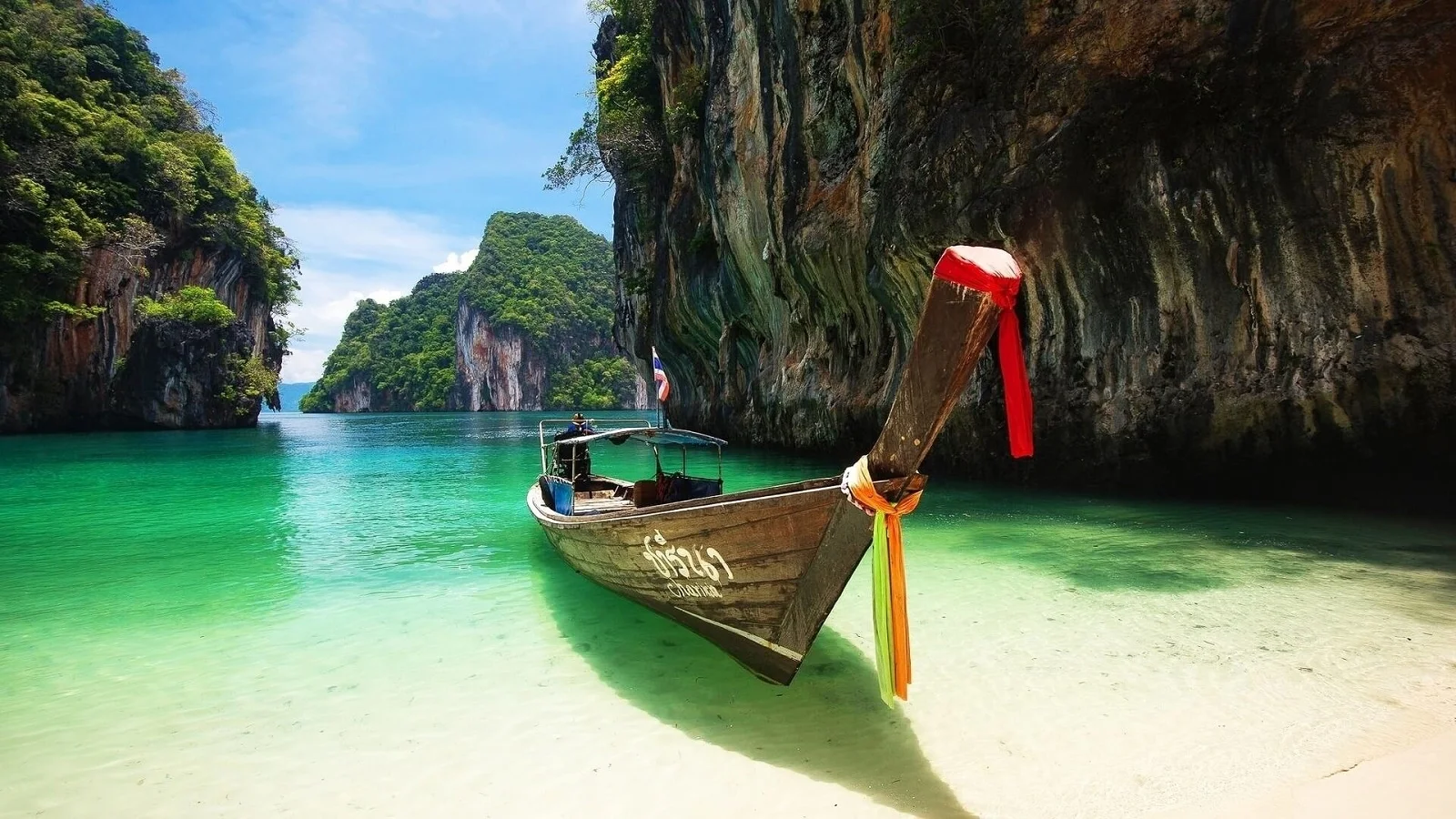
I want to write this the way the trip actually felt. Nine days, Bangkok first and then Phuket, and by the end I had river water on my sandals, chilli oil on a hostel t shirt I never fully got clean, and a bag full of things I bought because a woman at a market told me exactly why they were worth buying. What follows is not twenty five bullet points. It is the two cities in the order I lived through them, with the getting there, the eating cheap, and the shopping folded into the days themselves, because that is how it actually happens on the ground.
Landing in Bangkok, and the mistake I almost made
My flight put me into Suvarnabhumi a little after eleven at night, and the plan had been to grab an early Grab straight to Chinatown for a room I had booked near Yaowarat, because it was cheap and close to everything I wanted to eat. I had also, in a fit of budget optimism, booked my onward Phuket flight out of Don Mueang three days later, without checking that Don Mueang sits on the opposite side of the city from where I had just landed. A driver at the taxi rank pointed this out to me with the patient exasperation of a man who has explained it a hundred times that month. I kept the Suvarnabhumi to Chinatown ride, and quietly rebooked my Phuket flight to leave from Suvarnabhumi instead, eating a small change fee that was nothing compared to what a rush hour crossing of the city would have cost me in both money and nerves. That one phone call, made before I even unpacked, set the tone for the whole trip. Match your airports before anything else.
The second decision I made in that same taxi was to not fight the jet lag. I had read enough forum complaints from travellers who landed close to midnight and then either tried to sightsee the same morning or bolted straight onto an early onward flight, arriving everywhere after that a full step behind themselves. So instead of chasing Yaowarat's street food that first night, I let myself have one quiet bowl of boat noodles from a stall that was somehow still going at half past midnight, a shower, and a proper night's sleep, and did not open a single temple gate until the next morning. It cost me nothing but a slightly boring first evening, and I noticed the difference in how sharp I felt walking into the Grand Palace fresh rather than running on fumes.
Exploring the Grand Palace and Wat Phra Kaew
I got to the Grand Palace complex just after eight in the morning, which the woman at my guesthouse had told me was the only way to beat both the heat and the tour buses, and she was right on both counts. The walk in from the river side gate, past the guards in white ceremonial dress standing so still they looked staged, gives you almost no warning for what is coming. You round a corner and the roofline of Wat Phra Kaew hits you all at once, tier after tier of orange and green ceramic tile catching the early light, gold chedis rising behind them like something assembled by a jeweller rather than a builder. I had read that the Emerald Buddha housed inside the main hall is actually carved from a single block of jade rather than emerald, and standing in the crowd looking up at that small green figure sitting impossibly high on its gilded altar, the misnomer stopped mattering. It is a room built to make you feel very small and very lucky to be standing in it.
What nobody had told me was how much walking the complex itself involves once you are past the temple hall. The murals along the inner cloister wall run for nearly two kilometres if you follow the whole gallery, telling the entire Ramakien epic in continuous painted panels, and I spent almost as long tracing that story along the walls as I had inside the temple itself. By the time I came back out through the main gate the heat had properly arrived and so had the crowds, thick enough that I was glad I had not waited.
Admiring the Reclining Buddha at Wat Pho
Wat Pho sits close enough to the Grand Palace that I walked it, past a row of street vendors already grilling skewers for the lunch crowd, and the contrast inside could not have been sharper. Where Wat Phra Kaew is vertical and gilded and slightly overwhelming, the hall housing the Reclining Buddha is horizontal and quiet in a way that took me a moment to adjust to. The statue itself runs forty six metres along the hall, gold leafed, the soles of its feet inlaid with mother of pearl panels depicting the auspicious signs of the Buddha, and you have to walk the entire length of the hall just to take in the whole figure, which is the point. You cannot see it all from one spot. You have to move the way you would move around any enormous thing that will not be rushed.
There is a row of a hundred and eight bronze bowls running along that same corridor, and the local custom is to drop a coin into each one as you pass for merit, the string of soft metallic clinks following you the whole walk. I bought a small cup of coins from an attendant near the entrance for twenty baht and made the walk properly, coin by coin, and it turned a five minute photo stop into a genuinely meditative fifteen. Wat Pho is also, for what it is worth, considered the birthplace of traditional Thai massage, and there is a massage school on the temple grounds where an hour long treatment runs a fraction of what a hotel spa charges. I booked one for later that evening and spent most of it thinking about the gold soles of that statue's feet.
Visiting Wat Arun at sunset
You cannot walk to Wat Arun from Wat Pho, the river sits between them, and this turned out to be one of the better forced decisions of the whole trip. A cross river ferry runs from the pier just behind Wat Pho for a few baht, a boat so small and utilitarian it barely feels like transport, more like stepping across a very wide puddle. I timed the crossing deliberately for an hour before sunset, on the advice of a fellow traveller I had met at breakfast, and it was exactly the right call.
Wat Arun, the Temple of Dawn despite being at its best at dusk, is built almost entirely from broken Chinese porcelain set into the plaster of its central prang, thousands of tiny fragments of old rice bowls and plates pressed into flower patterns by workers centuries ago who apparently used whatever ceramic scraps were on hand. As the light dropped, the whole structure shifted through amber and then a deep rose gold, the porcelain catching the last sun in a way that no photograph I took actually captured. You can climb partway up the steep central steps, steep enough that you go up gripping a rail with both hands, and from partway up the view back across the river toward the Grand Palace and Wat Pho, both lit gold in the same failing light, is the single image I would use if someone asked me to describe Bangkok in one frame.
Cruising the Chao Phraya River on an express boat
By my second morning I had abandoned taxis for getting up and down the river entirely and switched to the orange flag express boats that locals actually use to commute, which cost next to nothing and move faster than traffic ever could along the same route. You buy your ticket from a conductor who walks the boat collecting fares mid crossing, hanging half out over the water to reach every passenger, and the boats do not really stop so much as slow down enough for you to step on and off at speed, which the first time genuinely startled me.
I used the river boats to string together an entire day, hopping off at Tha Tien for Wat Pho, back on toward the Flower Market at Pak Khlong Talat where wholesalers were unloading orchids and marigolds by the truckload at an hour when most of the city was still asleep, then further north to wander the old shophouse streets near Banglamphu before doubling back. The river is the actual spine of old Bangkok, older than any expressway, and once I stopped treating it as a scenic extra and started treating it as my main transport for the day, I saw more of the city for less money and less stress than at any other point in the trip.
Riding the Saen Saep canal commuter boat
If the river boats are Bangkok showing you its postcard side, the Saen Saep canal boats are Bangkok showing you how it actually gets to work. These run through a narrow klong that cuts east west across the city, well away from the river and almost entirely away from tourist attention, and the boats themselves come in fast, churning up a wake against plastic tarpaulin sides that get raised specifically to keep splashing canal water off the commuters packed in beside you. I rode it from Pratunam, after a stop to see the wholesale clothing stalls there, out toward the Golden Mount, and the whole ride cost less than a bottle of water and felt more like a piece of local infrastructure I had been let in on than a tourist activity.
Wear something you do not mind getting a little canal water on, and hold the rail. It is not dangerous, but the boats accelerate and stop harder than the river boats do, and the tarps only keep out most of the spray, not all of it.
Street food crawl along Yaowarat Road in Chinatown
I had booked my guesthouse in Chinatown specifically so I could do this on foot after dark without planning a single logistic around it, and it remains the single best decision of the Bangkok leg. Yaowarat Road properly wakes up after the sun goes down, neon signs in Chinese characters flickering on one by one above stalls that had been shuttered all afternoon, woks the size of dustbin lids throwing flame two feet into the air outside restaurants with queues already forming by seven.
I did not plan a route so much as follow the crowd and my nose. Grilled satay from a stall with a laminated menu held together with tape, a bowl of bird's nest soup from a shopfront that has apparently been serving it since before the road had electric light, oyster omelette cooked in a pan blackened from decades of the same dish, and a final stop for mango sticky rice from a cart that sold out and packed up within twenty minutes of me arriving, forcing me to circle back the following night to actually get some. None of it cost more than the price of a coffee back home, and the whole crawl across two visits probably ran me under six hundred baht total, which for the sheer volume and variety of what I ate is close to unbeatable value anywhere in the city.
Browsing stalls at Chatuchak Weekend Market
Chatuchak only runs on weekends, which meant building the rest of my Bangkok days around making sure I was in the city on a Saturday for it, and it is worth that scheduling effort. It is not one market so much as a sprawling grid of more than eight thousand stalls organised into loosely themed sections, though the theming breaks down fast once you are inside and simply get pulled sideways by whatever catches your eye. I went in with a rough plan, vintage clothing in one section, ceramics and home goods in another, and abandoned the plan within twenty minutes.
The real skill of Chatuchak, which nobody explains well in advance, is bargaining without being obnoxious about it. I watched a woman ahead of me at a leather goods stall get a bag down by nearly a third simply by smiling, naming a fair counter price, and being willing to actually walk away when the vendor did not immediately meet it, only for the vendor to call her back before she had gone three steps. I used the same approach on a set of hand thrown ceramic bowls later that afternoon and ended up paying maybe seventy percent of the opening price, which the vendor seemed entirely satisfied with, suggesting the opening number had built in exactly that much room from the start. Go with cash, go early before the heat and crowds both peak around midday, and eat at the market itself rather than saving your appetite, the food stalls threaded through the market are as good as anything on Yaowarat.
Wandering through Jim Thompson House
After two days of temples and markets I wanted something quieter, and the Jim Thompson House delivered exactly that. The compound is a cluster of traditional teak houses that an American silk entrepreneur assembled from several older buildings around the country and relocated here in the nineteen fifties, filled with the Southeast Asian art he collected before he vanished without explanation on a walk in the Malaysian highlands in 1967, a disappearance that has never been solved and that the guide leading my small group tour brought up with a kind of relish, clearly aware it was the detail everyone remembered afterward.
The houses themselves sit raised on stilts around a garden and a canal, deliberately positioned so the breeze moves through the open plan interiors without air conditioning, and walking through them barefoot, as required, on cool old teak floorboards after the heat outside felt like stepping into a completely different climate. The silk shop attached to the museum is not cheap, but it is the real thing, woven on the looms of the same weaving communities Thompson worked with, and I bought a single scarf there rather than the cheaper printed versions sold elsewhere in the city, reasoning that one real thing beats three fakes.
Late-night food run along Ban That Thong Road
Ban That Thong sits near a cluster of universities, and it shows in the crowd, students and shift workers eating at midnight and later at prices clearly calibrated for student budgets rather than tourist ones. I ended up there almost by accident, following a recommendation from the same fellow traveller who had tipped me off about Wat Arun's sunset timing, and it became the place I went back to twice more before leaving Bangkok simply because nowhere else I found matched the combination of quality and price after eleven at night.
A plate of pad kra pao with a fried egg on top and rice, made to order over open flame at a stall no wider than a doorway, ran me around fifty baht. A round of grilled pork skewers from the cart two doors down cost less than a single skewer would at a tourist strip closer to the river. What struck me most was the pace, nobody rushing, groups of students sharing plates and staying for hours at plastic tables set up on the pavement, and I found myself doing the same, in no hurry to be anywhere else, which after three days of temple hopping was exactly the kind of evening I needed.
Walking the elevated mangrove boardwalks of Bang Krachao
Bang Krachao sits in a bend of the river close enough to central Bangkok that you can see the skyline from parts of it, and yet it feels like an entirely different country, a green lung of mangrove forest and orchard gardens that has been deliberately kept undeveloped. Getting there is part of the experience, a small ferry across the river that takes motorbikes and pedestrians for a few baht, followed by a walk or a rented bicycle along raised concrete boardwalks that snake through the mangroves a few feet above the muddy ground.
I rented a bicycle from a stall right at the ferry landing for the whole day for less than the price of one coffee shop drink back near my guesthouse, and spent the morning pedalling narrow elevated paths under a canopy thick enough to cut most of the heat, past small temples, a floating market that only really comes alive on weekends, and the Sri Nakhon Kuenkhan Park with its raised metal walkway rising above the treeline for a full view across the green expanse below. It is the closest thing Bangkok has to genuine quiet, and after the volume of Yaowarat and Chatuchak, I needed that morning more than I expected to.
Inspecting amulets at Tha Phra Chan Market
Tha Phra Chan sits near Thammasat University, a market I would have walked straight past if a monk I got talking to outside Wat Mahathat had not specifically pointed me toward it, telling me it was where serious collectors went rather than where tourists were sold souvenirs. He was right. Rows of vendors sit behind glass cases and magnifying lenses examining tiny clay and metal amulets with the same intensity a jeweller might bring to loose diamonds, some of these small pendants changing hands for sums that would buy a used motorbike, based purely on which temple cast them, which monk blessed them, and how rare that particular batch is considered.
I did not buy anything serious, my knowledge of amulet lineages being roughly zero, but I spent close to an hour there simply watching the trade happen, vendors and buyers debating authenticity in rapid Thai over a single small disc of clay, and picked up one inexpensive amulet from a stall the friendly monk had specifically pointed out as reputable, less as an investment and more as a physical reminder of that one conversation outside the temple.
Touring Siriraj Medical Museum
This is not a stop for everyone, and I will say that plainly before describing it. Siriraj Hospital houses a set of medical museums that between them display anatomical specimens, preserved organs, and the remains associated with some of Thailand's most notorious historical crimes, all presented with a clinical, educational framing rather than a sensational one. I went in expecting something closer to a curiosity cabinet and came out having actually learned a considerable amount about forensic pathology and Thai medical history, delivered by exhibit labels that read more like a university course than a tourist trap.
Getting there means crossing to the Thonburi side of the river, most easily by the cross river ferry near Wang Lang pier, which drops you close enough to the hospital campus to walk in a few minutes. Entry is inexpensive, the museum itself is not large, and I would only send someone who is genuinely comfortable with that subject matter, but for those who are, it remains one of the more unusual and least crowded stops in the entire city, and I did not see another tourist the whole time I was inside.
Exploring street art and alleys in Talat Noi
Talat Noi sits between Chinatown and the river, a tangle of narrow alleys lined with century old shophouses, small machine repair workshops still operating out of ground floor garages, and murals that have turned up on walls over the past decade, some officially commissioned and some clearly not. I spent a full afternoon here with no destination beyond the next alley, which is really the only way to do Talat Noi properly, since half its character is in dead ends and half hidden courtyards that no map marks.
The neighbourhood's centrepiece is So Heng Tai, a two hundred year old Chinese courtyard mansion that now doubles as a free diving school, meaning you can wander into a family's ancestral home from the eighteenth century and find a pool sunk into the central courtyard where students practise static breath holds beneath the same wooden beams their host family's ancestors would have walked under. A short walk further brings you to Talat Noi's most photographed corner, a mural of an old man's face wrapped around a street junction that has become something of an unofficial neighbourhood emblem, with locals going about actual daily business, hanging laundry, repairing motorbike engines, entirely unbothered by the small stream of visitors stopping to photograph the wall beside them.
Getting to Phuket, and the ticket trick that saved me a day
I had gone back and forth before the trip on whether to do Phuket first and Bangkok second, landing straight into the calm of the island after the long haul flight rather than into the noise of the capital. In the end I chose Bangkok first on purpose, reasoning that I would rather absorb the traffic, the heat, and the general sensory overload of the city while I still had the patience for it, and let the trip ease downward into the slower rhythm of the island rather than build up toward it. Both orders have real arguments behind them, and I do not think either is wrong, but starting loud and ending quiet suited the way I actually wanted to feel on the flight home.
I had briefly looked at the train south before booking anything, and it is worth saying plainly since it trips a lot of people up, there is no direct rail line to Phuket at all. The tracks run only as far as Surat Thani, after which you would still need a bus onward, turning what a flight covers in under ninety minutes into something closer to thirteen hours door to door. Once I saw that, flying was not really a decision anymore. I flew out of Suvarnabhumi, the same airport I had landed at, a decision made in that first midnight taxi conversation that kept paying off. I had also booked an open jaw ticket back at the very start of the trip, flying into Bangkok and out of Phuket at the end rather than a round trip that would have forced me back through Bangkok a second time, and it meant I never had to retrace a single step of the itinerary. The flight itself runs a shade under an hour and a half, and I landed in Phuket by early afternoon with enough daylight left to check into a guesthouse in the Old Town and take a first slow walk before dinner, rather than losing that first evening to travel logistics the way I nearly had in Bangkok.
Walking the Sino-Portuguese streets of Old Phuket Town
Old Phuket Town caught me off guard, in the best sense, because nothing about the island's beach heavy reputation prepares you for streets like Thalang and Dibuk Road, rows of Sino Portuguese shophouses painted in mustard yellow, dusty rose, and pale blue, their facades carrying ornate plasterwork that came from the same tin mining wealth that built similar architecture in Penang and Melaka across the strait. I spent my first evening simply walking these streets as the shopfronts lit up one by one, old pharmacies and hardware stores sitting beside new boutique cafes that had clearly moved into buildings without gutting their original character.
I ate that first night at a small family run shophouse restaurant a local guesthouse owner pointed me toward, mee hokkien served in a dark, slightly sweet sauce that the owner told me was a Phuket specific take on the dish, distinct from the Bangkok or Penang versions, made with a recipe her grandmother had brought over from Fujian generations ago. It cost next to nothing and remains, honestly, one of the two or three best individual meals of the entire trip.
Taking a day boat excursion to Phang Nga Bay
I booked this through a small operator recommended by my guesthouse rather than one of the large tour desks lining the main tourist strips, mainly because the smaller boat meant a group of a dozen rather than fifty, and it made a real difference. Phang Nga Bay is a drowned karst landscape, limestone towers rising directly out of flat green water, some of them draped in hanging vegetation, the whole bay looking like something painted rather than photographed.
The boat wound between towers toward Koh Panyi, a village built almost entirely on stilts over the water by fishing families who settled there generations ago, its mosque, school, and floating football pitch all constructed on the same wooden platforms above the tide. We stopped for lunch there, fresh caught seafood grilled at a floating restaurant run by one of the village families, and afterward continued to James Bond Island, the narrow limestone spire made famous by a film scene decades ago and now inevitably crowded with boats, though our guide timed our arrival for the tail end of the afternoon rush, giving us a stretch of nearly ten minutes with the beach almost to ourselves before the bigger tour boats caught up. The whole day, boat, lunch, and guide included, cost considerably less than the beachfront hotel tour desks were quoting for the identical route.
Visiting the Big Buddha atop Nakkerd Hill and the sunset from Promthep Cape
The Big Buddha sits on Nakkerd Hill roughly halfway up the island's ridge, forty five metres of white Burmese jade marble visible from most of southern Phuket on a clear day, and I made the trip up by rented scooter in the cooler light of early morning specifically to avoid both the heat and the tour bus crowds that arrive from midmorning onward. The final approach up the hill road is steep enough that the scooter needed a lower gear than anything else I rode that week, and the reward at the top is a three hundred and sixty degree view across the island, Chalong Bay spread out on one side and the interior hills rolling away on the other.
What I had not expected was the sound. Small bells hang around parts of the platform surrounding the statue, and a light morning wind kept them moving in a soft, constant chime that somehow suited the scale of the place better than silence would have. Devotees leave small gold leaf squares pressed onto a secondary Buddha image near the main statue, and a monk stationed at a small shaded pavilion ties white string bracelets onto visitors' wrists while murmuring a blessing, a gesture that costs nothing but a small donation and that I still had on my wrist a week after I got home.
I saved Promthep Cape, the island's southern tip, for that same evening, since three separate people had already told me it was the single best sunset spot on Phuket, which is exactly the kind of consensus recommendation that usually disappoints. This one did not. The cape juts out with unobstructed views over open water in three directions, and as the sun dropped, the small offshore islands scattered across that stretch of sea turned to silhouette one after another while the sky behind them ran through a slow gradient of orange into a deep violet. A cluster of food carts sets up in the car park behind the viewpoint every evening specifically for the sunset crowd, and I bought a cup of grilled corn and a bag of fried banana from two different vendors and ate both sitting on the rocks below the lighthouse while the whole headland went quiet around dusk, phones lowered, everyone facing the same direction at once.
Relaxing on Kata Noi and Nai Harn beaches
After several days of moving constantly, I gave myself a full day of doing genuinely nothing, split between two beaches close enough together on the island's southwest coast that I could walk between them along a coastal path rather than needing a scooter at all. Kata Noi is smaller and steeper than its more famous neighbour Kata Beach, tucked beneath a headland that blocks most of the afternoon crowd noise from drifting over, and I spent the morning there with a rented sun lounger and a paperback I had been carrying unread since Bangkok.
Nai Harn in the afternoon felt different again, a wider curve of sand backed by a lake and a temple rather than a strip of beach bars, popular with a local crowd of Thai families on weekends rather than only tourists. I swam out past the point where most people stopped, the water turning from pale turquoise to a deeper blue, and came back in to eat grilled squid from a beachside vendor whose entire kitchen was a single charcoal grill set directly on the sand. It remains the one day of the whole Phuket leg where I did not check a map once.
Exploring Wat Chalong and the Sunday Walking Street Market on Thalang Road
Wat Chalong is Phuket's largest and most revered temple, and it carries a very different energy from the grand ceremonial stillness of Bangkok's royal temples. This is a working local temple, incense smoke thick around a central chedi holding a relic of the Buddha, worshippers lighting firecrackers in a designated pit near the entrance as offerings, the crack and smoke of it going off in bursts through the whole visit. A pair of revered monks from the temple's nineteenth century history are honoured with statues covered almost entirely in gold leaf applied by generations of visitors, layer over layer until the original features beneath are nearly obscured.
I timed my visit deliberately for a Sunday, because Thalang Road in Old Town closes to traffic that evening for its weekly Walking Street market, stalls running the full length of the historic street selling local snacks, handicrafts, and secondhand goods, with a small stage at one end hosting local musicians. I bought a batik sarong from a stallholder who talked me through the difference between the machine printed versions sold to tourists elsewhere and her hand waxed technique, the wax lines slightly imperfect in a way that machine printing cannot replicate, and paid perhaps double what the printed version would have cost, which felt entirely fair for what I actually got.
Hiking to Black Rock Viewpoint (Pa Hin Dum)
Black Rock, known locally as Pa Hin Dum, took some finding, tucked away on a stretch of the island's west coast without the signage that marks Phuket's more established viewpoints. A local scooter rental owner drew me a rough hand sketch of the turnoff on a napkin, and even with that I doubled back twice before spotting the narrow dirt track leading toward it. The short hike in cuts through dry coastal scrub before opening onto a cluster of dark volcanic rock outcrops standing above the sea, a viewpoint locals clearly use far more than tourists do, based on the small shrine and offerings left at the base of the rocks by fishermen.
I arrived in the late afternoon and had the entire outcrop to myself for close to forty minutes, waves breaking directly below against the black rock in a way that felt more dramatic than the calmer beaches elsewhere on the island, before a small group of local teenagers arrived to watch the sunset from the same spot, one of them bringing a speaker and the others simply talking quietly as the light dropped. It remains the closest thing to a genuinely undiscovered spot I found anywhere on Phuket.
Sampling southern Peranakan breakfast at Ranong Road Morning Market
The Ranong Road morning market runs from before dawn until roughly mid morning, and going there meant setting an alarm earlier than anything else on the whole trip demanded, but it delivered the single most memorable breakfast of the nine days. This is where Old Town residents actually shop and eat before work, rows of stalls selling fresh produce and dried goods giving way to a food section serving distinctly Peranakan dishes, the fusion cuisine that grew out of generations of intermarriage between Chinese immigrants and local Thai and Malay communities in this part of southern Thailand.
I ate o aew, a chilled dessert of seaweed jelly and syrup that a stallholder insisted was the correct way to start a hot day, followed by a bowl of mee sua noodle soup and a plate of dim sum from a steamer that had clearly been going since well before sunrise. None of it appears on any restaurant menu aimed at visitors, and the vendor working the noodle stall, noticing I was the only tourist in that section of the market, made a point of slowing down and explaining each dish before I ate it, visibly pleased that someone had bothered to show up.
Snorkeling at Ao Sane Beach
Ao Sane sits just around the headland from Nai Harn, small and rocky where its neighbour is wide and sandy, and it is exactly that rockiness that makes the snorkeling worthwhile, coral growing directly off the shoreline rather than requiring a boat trip out. I rented a mask and fins from a small stand run out of someone's front yard rather than a formal shop, paid a fraction of what resort dive centres elsewhere on the island were charging, and spent close to two hours in the water working my way along the rocky shoreline.
The visibility that particular afternoon was good enough to make out parrotfish picking at the coral and a small reef shark that kept a careful, unbothered distance, and I came out of the water with a stinging line across one calf from brushing too close to a rock, a minor injury that the beach's owner treated with iodine from a first aid kit kept behind the rental stand without being asked, waving off my attempt to pay extra for it. It is a small beach easy to miss on a map, and precisely because of that, one of the least crowded stretches of water I swam in all week.
Trekking Khao Phra Thaeo virgin rainforest between Ton Sai and Bang Pae waterfalls
Khao Phra Thaeo is the last significant stretch of virgin rainforest left on an island otherwise given over heavily to development, and walking into it from the Ton Sai trailhead felt like a genuine shift in altitude and air even though the elevation gain is fairly modest. The trail connects Ton Sai waterfall to Bang Pae waterfall over a few kilometres of forest path, humid and dense enough that the noise of cicadas at points became loud enough to make conversation difficult, which I did not mind at all.
I stopped partway at the Gibbon Rehabilitation Project near Bang Pae, a sanctuary working to reintroduce gibbons rescued from illegal captivity back into protected forest, and hearing their calls carrying through the canopy before I could actually see them was one of the more affecting moments of the whole trip, a sound that carries a genuinely long way through dense forest and that I had assumed, before hearing it in person, would be exaggerated by guidebooks. It was not. I finished the trek at Bang Pae waterfall itself, running reasonably full from recent rain, and sat with my feet in the cool water for a good half hour before the return walk, glad of an excuse to slow down after the forest's steady incline.
Scrambling down the jungle track to Freedom Beach
Freedom Beach saved itself for the very end of the trip, and in hindsight that felt right. There is no road access, only a steep jungle track down from a small car park where a handful of motorbike taxis wait to run visitors partway, or a longtail boat from Patong for those unwilling to make the descent on foot. I chose the walk, a genuinely steep scramble over exposed roots and loose red earth that had me grabbing at tree trunks more than once, made considerably harder by the humidity, but the payoff at the bottom justified every slippery step.
The beach itself is a short curve of pale sand backed by dense forest on both headlands, with none of the beach chair rows or jet ski operators that crowd Phuket's more accessible stretches of coast, just a couple of small family run drink stands selling coconuts and grilled corn from coolers they had clearly carried down the same track I had just fought my way along. I swam until the light started to go gold, ate a coconut cracked open right in front of me, and made the climb back up before dark, arriving at the top with my legs properly aching and the distinct, specific satisfaction of having ended nine days on the one beach that had made me work to reach it.
Staying Cheap Across Both Cities
Threaded through all of the above, a few things that kept the whole nine days affordable without ever feeling like I was cutting corners. Guesthouses in Bangkok's Chinatown and Phuket's Old Town consistently undercut anything near the main beaches or river tourist strips by a wide margin, while sitting closer to better food. River boats and the Saen Saep canal boats cost a fraction of taxis for identical or better routes across Bangkok. On Phuket, a rented scooter for a few hundred baht a day opened up Black Rock, the Big Buddha, and Ao Sane, all places a taxi would have made prohibitively expensive to string together in a single day. And in both cities, the best individual meals of the entire trip, Yaowarat's midnight mango sticky rice, the mee hokkien in Old Phuket Town, the Ranong Road breakfast, cost less combined than a single mediocre hotel breakfast would have.